

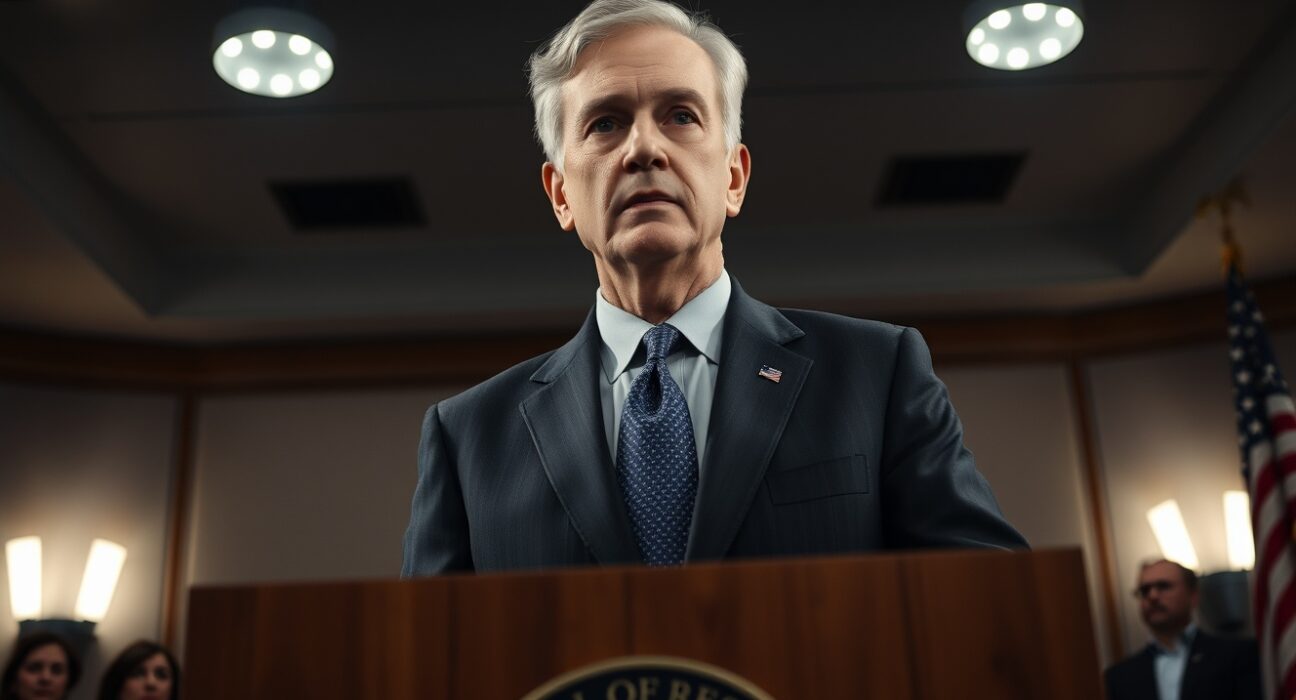
Federal Reserve Bank of Richmond President Thomas Barkin expressed confidence this week that the central bank’s current monetary policy stance is well-equipped to navigate ongoing economic disruptions, signaling a steady approach amid persistent uncertainty.
Policy Resilience in a Volatile Environment
Speaking at an economic forum in Virginia, Barkin noted that the Federal Reserve’s interest rate framework has provided sufficient flexibility to respond to a series of unexpected shocks, including supply chain disruptions, labor market tightness, and geopolitical tensions. He emphasized that the current policy path is not overly restrictive nor too accommodative, striking a balance that supports maximum employment while maintaining price stability.
Barkin’s remarks come as the U.S. economy continues to face headwinds from global trade frictions and lingering inflationary pressures. The Richmond Fed president, a voting member of the Federal Open Market Committee (FOMC) this year, has consistently advocated for a data-dependent approach, avoiding pre-commitment to specific rate moves.
Market and Analyst Reactions
Financial markets reacted modestly to Barkin’s comments, with Treasury yields holding steady and equity markets showing little change. Analysts interpreted his remarks as reinforcing the Fed’s willingness to maintain rates at current levels until more clarity emerges on inflation and employment trends.
Economists note that Barkin’s confidence reflects a broader consensus within the Fed that the economy has proven more resilient than many expected. However, some caution that prolonged high interest rates could eventually weigh on consumer spending and business investment.
What This Means for Borrowers and Investors
For consumers, Barkin’s stance suggests that borrowing costs will remain elevated in the near term. Mortgage rates, credit card APRs, and auto loan rates are likely to stay at current levels, potentially cooling demand in interest-sensitive sectors. Investors, meanwhile, should anticipate a slower pace of rate cuts than previously hoped, with the Fed prioritizing inflation control over stimulus.
Conclusion
Barkin’s vote of confidence in the current policy framework underscores the Fed’s cautious optimism. While the central bank remains vigilant against new shocks, its message is clear: the tools in place are sufficient to manage volatility without abrupt changes. The coming months will test whether that confidence is warranted as the economy navigates an unpredictable landscape.
FAQs
Q1: What did Fed’s Barkin say about the current monetary policy?
He stated that the current policy is in a good place to respond to ongoing economic shocks, indicating confidence in the Fed’s interest rate stance.
Q2: How might Barkin’s comments affect interest rates?
His remarks suggest the Fed is likely to hold rates steady for now, reducing the probability of near-term rate cuts or hikes.
Q3: Why does Barkin’s opinion matter?
As a voting FOMC member, Barkin’s views influence Fed policy decisions and provide insight into the central bank’s thinking on inflation and employment.
Disclaimer: The information provided is not trading advice, Bitcoinworld.co.in holds no liability for any investments made based on the information provided on this page. We strongly recommend independent research and/or consultation with a qualified professional before making any investment decisions.
