

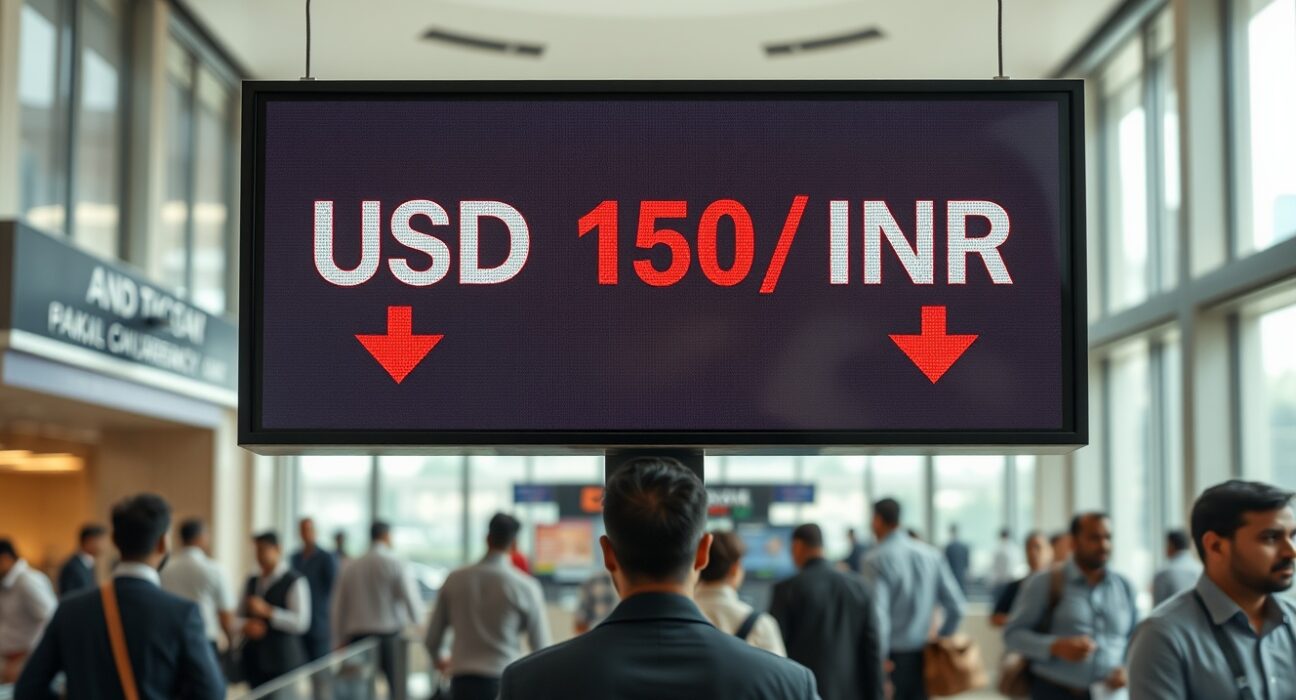
The Indian rupee is trading dangerously close to its all-time low against the US dollar, prompting fresh action from the Reserve Bank of India (RBI). According to a recent analysis by DBS Bank, the central bank has intensified its intervention in the foreign exchange market to curb excessive volatility and prevent a disorderly slide in the currency.
Rupee Under Pressure: Key Drivers
The rupee’s weakness is driven by a confluence of global and domestic factors. A strong US dollar, fueled by resilient American economic data and delayed expectations of Federal Reserve rate cuts, has put emerging market currencies under widespread pressure. Additionally, rising crude oil prices, which increase India’s import bill, and persistent foreign portfolio outflows from Indian equities have added to the downward momentum. The USD/INR pair has been inching closer to the 84 mark, a level that market participants view as a critical psychological and technical support zone.
RBI’s Intervention Strategy: What DBS Reports
The DBS report highlights that the RBI has been actively selling US dollars through state-run banks to prevent the rupee from breaching its record low. The central bank’s approach is not to defend a specific level but to manage the pace of depreciation and prevent speculative attacks. By smoothing out sharp moves, the RBI aims to maintain orderly market conditions. The report notes that India’s foreign exchange reserves, though slightly depleted from their peak, remain robust at over $600 billion, providing ample firepower for sustained intervention if needed.
Impact on Importers, Exporters, and Inflation
A weaker rupee has a dual impact on the Indian economy. For import-dependent sectors such as oil, electronics, and machinery, the cost of raw materials and finished goods rises, potentially squeezing margins and fueling imported inflation. This can complicate the RBI’s monetary policy stance, as it may need to keep interest rates higher for longer to manage price pressures. Conversely, exporters in sectors like IT services, pharmaceuticals, and textiles benefit from a weaker currency, as their goods and services become more competitive in global markets. The net effect on the current account deficit depends on the elasticity of trade volumes.
Market Outlook and Forward Guidance
Analysts suggest that the rupee’s trajectory will largely depend on the US dollar’s strength and the RBI’s willingness to intervene. The DBS report expects the central bank to remain vigilant, especially around key resistance levels. Market participants are closely watching for any shift in the RBI’s communication or policy signals. In the near term, the rupee is likely to trade in a narrow range with a slight depreciation bias, barring any major external shock. The upcoming US inflation data and the Federal Reserve’s policy meeting will be critical events for the currency pair.
Conclusion
The Indian rupee’s journey toward its record low underscores the challenges facing emerging markets in a high-dollar environment. The RBI’s proactive intervention, as highlighted by DBS, provides a buffer against excessive volatility, but the fundamental pressures remain. For businesses and investors, understanding the interplay between global monetary policy, commodity prices, and central bank actions is essential for navigating the current landscape. The coming weeks will determine whether the rupee can stabilize or if further depreciation is in store.
FAQs
Q1: What is the current record low for the Indian rupee against the US dollar?
The Indian rupee’s all-time low is near the 83.50-84.00 range against the US dollar, touched in late 2023 and early 2024. The exact level fluctuates with market conditions.
Q2: How does the RBI intervene in the forex market?
The RBI typically intervenes by selling US dollars from its reserves through authorized state-run banks. It can also use tools like adjusting interest rates, altering cash reserve ratios, or implementing administrative measures to influence capital flows.
Q3: Will a weaker rupee lead to higher inflation in India?
A weaker rupee increases the cost of imported goods, particularly crude oil, which can feed into higher domestic inflation. However, the impact is often gradual and depends on the extent of depreciation and the pass-through to consumer prices. The RBI closely monitors this risk in its monetary policy decisions.
Disclaimer: The information provided is not trading advice, Bitcoinworld.co.in holds no liability for any investments made based on the information provided on this page. We strongly recommend independent research and/or consultation with a qualified professional before making any investment decisions.
