

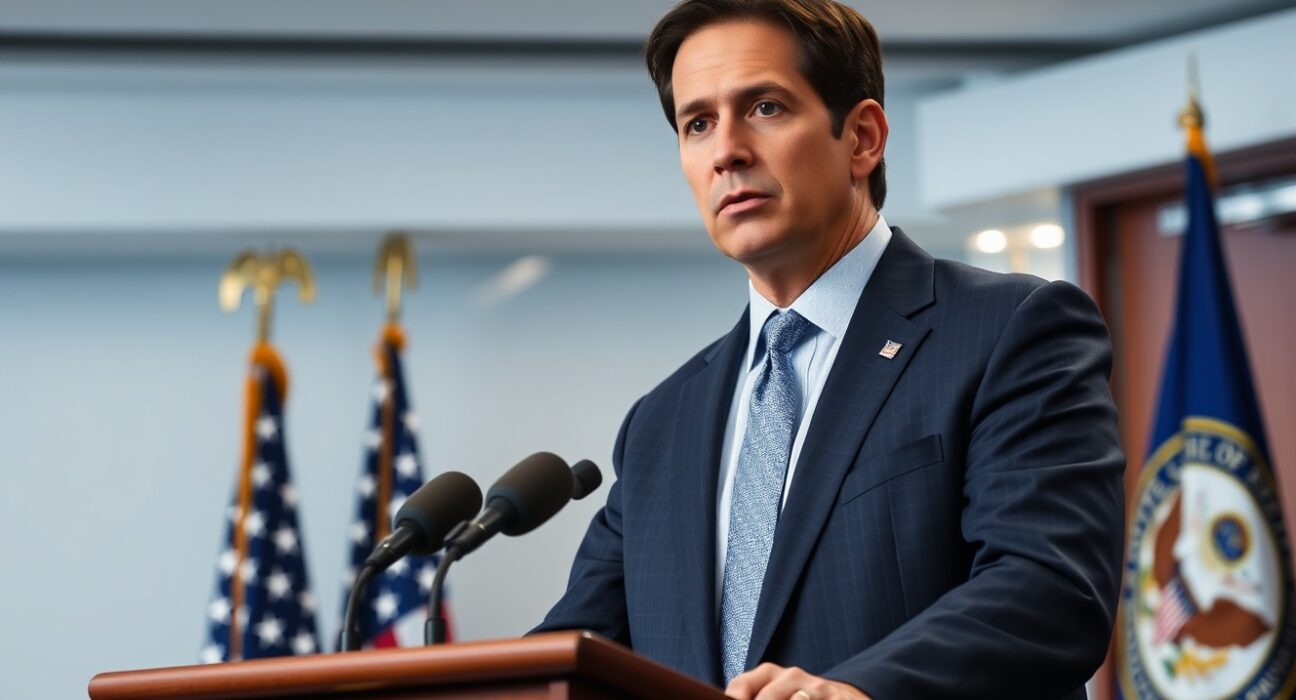
US Secretary of State Marco Rubio acknowledged on Tuesday that negotiations with Iran over a renewed nuclear agreement remain far from completion, stating plainly that the United States and its allies are not there yet. The remark, delivered during a press briefing at the State Department, underscores the significant diplomatic challenges that continue to stall progress on one of the most complex foreign policy issues facing the current administration.
Diplomatic Stalemate and Key Sticking Points
Rubio’s cautious assessment comes after weeks of indirect talks between American and Iranian representatives, mediated by European and Gulf state officials. While neither side has publicly detailed the precise obstacles, sources familiar with the discussions point to persistent disagreements over uranium enrichment levels, the scope of sanctions relief, and Iran’s ballistic missile program. The Secretary of State emphasized that the United States remains committed to a diplomatic solution but will not accept a deal that fails to verifiably prevent Iran from acquiring nuclear weapons.
Implications for Global Markets and Regional Stability
The lack of a breakthrough has immediate consequences for global oil markets, where traders have priced in the possibility of renewed sanctions enforcement. Iran’s crude exports have fluctuated in recent months, and any escalation in tensions could disrupt supply chains through the Strait of Hormuz. European allies, particularly France and Germany, have urged Washington to maintain diplomatic channels while preparing contingency measures. Meanwhile, Israel has publicly warned against a deal that leaves Iran with a threshold nuclear capability, adding another layer of complexity to the negotiations.
What This Means for Investors and Policymakers
For market participants, Rubio’s statement reinforces the expectation that Iranian oil will not return to global markets in significant volumes in the near term. This supports current price floors for crude but also raises the risk of sudden volatility if talks collapse entirely. Policymakers in the Gulf region are closely watching the outcome, as any agreement would reshape security dynamics across the Middle East. The United States continues to coordinate with the International Atomic Energy Agency (IAEA) on monitoring and verification measures.
Conclusion
Secretary Rubio’s frank acknowledgment that the United States is not there yet on an Iran deal reflects the reality of painstaking diplomacy. While the door to negotiations remains open, significant gaps persist. The coming weeks will be critical in determining whether the two sides can bridge their differences or whether the region faces a renewed period of uncertainty. For now, the message from Washington is clear: progress is possible, but it is not imminent.
FAQs
Q1: Why did Secretary Rubio say the US is ‘not there yet’ on an Iran deal?
He indicated that negotiations have not reached a final agreement due to unresolved issues, including uranium enrichment levels and sanctions relief. The statement reflects the current diplomatic stalemate.
Q2: How does the Iran nuclear deal affect global oil prices?
Any potential deal could lead to the lifting of sanctions on Iranian oil exports, increasing global supply and potentially lowering prices. The lack of a deal maintains current supply constraints.
Q3: What are the main obstacles to a new Iran nuclear agreement?
Key sticking points include the extent of Iran’s enrichment program, the verification mechanisms, the timeline of sanctions relief, and Iran’s ballistic missile capabilities.
Disclaimer: The information provided is not trading advice, Bitcoinworld.co.in holds no liability for any investments made based on the information provided on this page. We strongly recommend independent research and/or consultation with a qualified professional before making any investment decisions.
