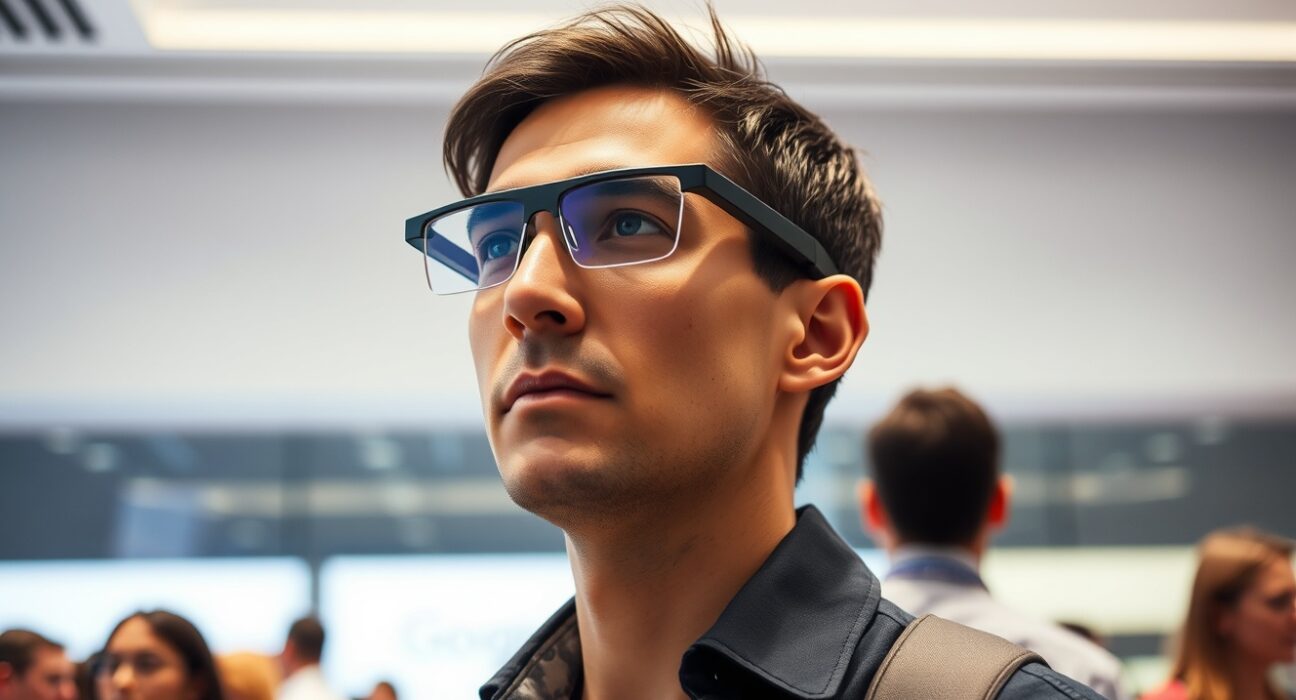
At Google’s I/O developer conference this week, we had the opportunity for a brief hands-on with its upcoming AI-powered glasses — not the audio-only glasses that Google said will begin shipping this fall but rather the glasses that offer a combined audio and visual experience. First announced at last year’s event, these Android XR glasses feature an in-lens display that overlays helpful information — widgets for weather, walking directions, Uber pickup details, live translation, and more — directly onto the real world. The experience is polished but still feels like a work in progress.
What the glasses can do — and what they can’t yet
The prototype we tested was designed to let Google experiment freely with display technology and battery life, rather than focusing on cosmetic details. The reps were clear: the shipping version will look and feel very different, with partnerships from Warby Parker, Gentle Monster, and Samsung shaping the final design. The current prototype lacks the head-detection sensor planned for the final product, and the single display over the right eye (though dual-display and audio-only versions are supported) was a bit fuzzy — likely due to our prescription contacts, but eye strain was noticeable after a short session.
Activating Gemini requires a two-second press on the right frame. A chime signals it’s listening. In the demo, the camera automatically turned on with Gemini, but the final version will let users configure this. Music playback via the glasses was audible but not crisp — fine for outdoor walks or chores, but not a replacement for quality earbuds. Tapping the frame once turns the music off.
Translation and navigation: the standout features
The most impressive demo was live translation. A demonstrator spoke rapid Spanish, and the glasses automatically displayed English text on the lens while Gemini spoke the translation in our ear. For travelers, this alone could be a compelling reason to buy. The translation feature will also work on the audio-only glasses, though without the visual overlay — the transcription would appear on your phone instead.
Navigation via Google Maps was also promising. You can ask Gemini to navigate to a destination (even a vague one like “the nearest coffee shop”), and the glasses display turn-by-turn directions. Looking down shows your blue dot on a map; looking up clears the view. Saved destinations like “home” and “work” are already available. The experience is tied to your phone’s Google Maps, so you never need to pull it out of your pocket.
Object identification and AI manipulation
We tested the glasses’ ability to identify objects and answer questions. It initially struggled with a replica Monet painting — the camera had to be manually enabled from the app — but eventually identified it after we pointed out the signature. Other tests, like identifying a plant or answering questions about a recipe book, were smoother. Still, these are tasks you could already do with Google Lens on your phone. The value is in doing them hands-free.
We also tried asking Gemini to take a photo and turn the person into an anime character. The photo was sent to the phone, processed via Gemini and Nano Banana servers, and returned in about 45 seconds — a long wait, but likely due to heavy Wi-Fi load at the venue.
Why this matters — and what’s next
Google is positioning the audio-only glasses as a practical first step, while the display version is still in development. This is a smart way to manage expectations, especially with Meta and Snap already shipping similar products. The audio glasses will also provide access to Gemini, allowing users to listen to music, take photos, make calls, and tap into phone apps — all without a display.
Google says it will have more to share about its Android XR display glasses later this year, when it expands its trusted tester program. For now, the glasses are “almost there” — impressive in key areas like translation and navigation, but still rough around the edges in display clarity, battery optimization, and everyday comfort.
Conclusion
Google’s AI glasses represent a genuine step forward in wearable computing, particularly for real-time translation and hands-free navigation. But the prototype’s limitations — fuzzy display, eye strain, and reliance on phone processing — make it clear that the technology isn’t ready for mainstream consumers yet. The audio-only version arriving this fall will be a more practical entry point. For those waiting for the full visual experience, patience will be required.
FAQs
Q1: When will Google’s display glasses be available?
Google hasn’t announced a release date. The company says it will share more later this year when it expands its trusted tester program. The audio-only version is expected to ship this fall.
Q2: Will the glasses work with iPhones?
Yes. Google confirmed that both the audio-only and display versions will pair with iOS and Android phones.
Q3: Can the glasses be used with prescription lenses?
Yes. Google is partnering with Warby Parker, Gentle Monster, and Samsung to offer different styles and presumably prescription options, though specific details haven’t been announced.
Disclaimer: The information provided is not trading advice, Bitcoinworld.co.in holds no liability for any investments made based on the information provided on this page. We strongly recommend independent research and/or consultation with a qualified professional before making any investment decisions.