

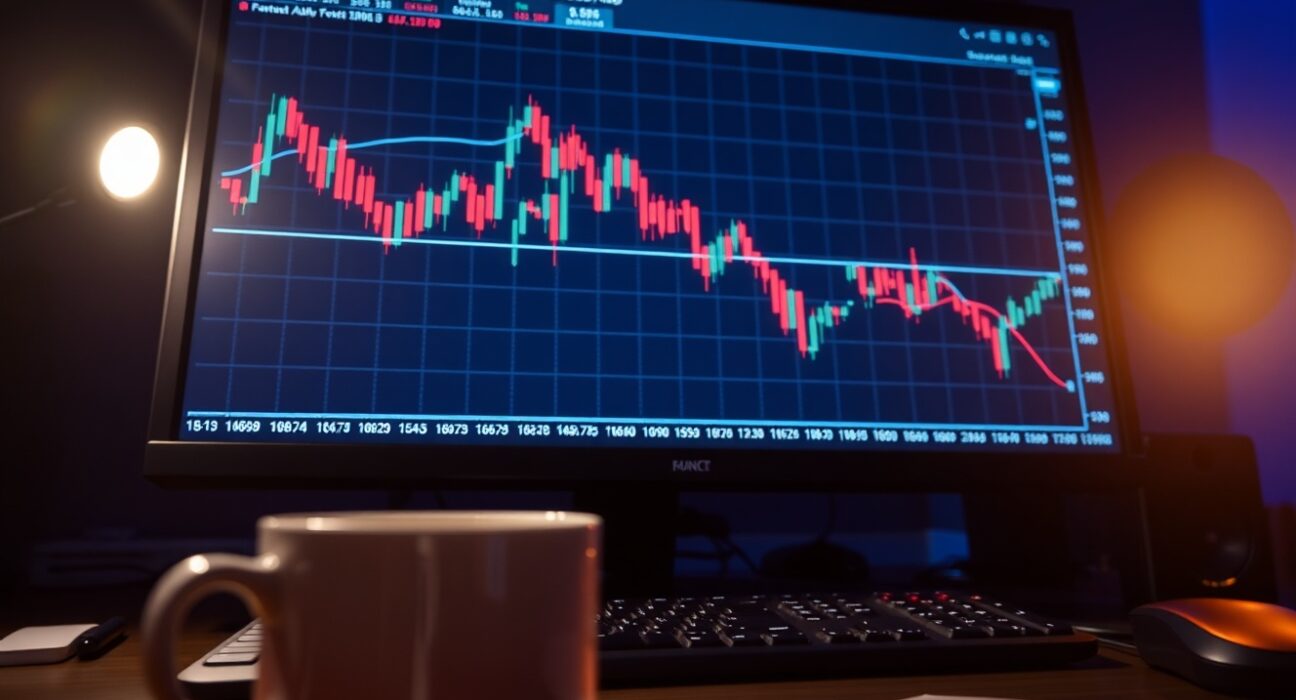
The AUD/USD currency pair continues to trade within a tight range, caught between two key simple moving averages (SMAs) as technical indicators flash a bearish signal. The Relative Strength Index (RSI) has turned downward, suggesting that selling pressure may be building in the near term.
Technical Overview: SMA Resistance and Support
The pair is currently sandwiched between the 50-day SMA, which is acting as resistance near the 0.6620 level, and the 200-day SMA, providing support around 0.6540. This narrowing range reflects indecision among traders, with neither bulls nor bears able to establish a clear directional trend.
A decisive break above the 50-day SMA would open the door toward the 0.6680 resistance zone, while a drop below the 200-day SMA could accelerate losses toward the 0.6480 support level. The consolidation pattern has been in place for several sessions, and a breakout may be imminent as volatility compresses.
RSI Turns Bearish: What It Means
The daily RSI has dipped below the 50 neutral mark, moving toward oversold territory. This shift indicates that momentum is favoring sellers. However, the RSI has not yet reached extreme levels, meaning further downside could still unfold before a potential reversal.
Traders should watch for a sustained RSI reading below 40 to confirm bearish momentum, or a bounce back above 50 to signal renewed buying interest. The RSI divergence from price action will be key in the coming sessions.
Fundamental Context: External Pressures
The Australian dollar has been under pressure from a stronger US dollar, driven by resilient US economic data and hawkish Federal Reserve commentary. Meanwhile, softer commodity prices and uncertainty around China’s economic recovery have added to headwinds for the Aussie.
Market participants are now pricing in a higher probability of further Fed rate hikes, which has widened the interest rate differential in favor of the greenback. This macro backdrop is likely to keep AUD/USD capped in the near term.
Conclusion
The AUD/USD pair remains at a technical crossroads, with key SMAs defining the immediate trading range. The bearish RSI signal adds a downside bias, but a breakout above resistance could quickly shift sentiment. Traders should monitor the 0.6540–0.6620 range for a decisive move, while keeping an eye on US economic data and Fed rhetoric for directional cues.
FAQs
Q1: What are the key SMA levels for AUD/USD?
The 50-day SMA near 0.6620 acts as resistance, while the 200-day SMA around 0.6540 provides support. A break above or below these levels could determine the next trend.
Q2: What does a bearish RSI signal mean for AUD/USD?
A bearish RSI, especially when it falls below 50, indicates that selling momentum is increasing. It suggests that further downside may be likely in the short term.
Q3: What fundamental factors are affecting AUD/USD?
The Australian dollar is pressured by a strong US dollar due to hawkish Fed policy, resilient US data, and uncertainty around China’s economic recovery, which weighs on commodity-linked currencies like the Aussie.
Disclaimer: The information provided is not trading advice, Bitcoinworld.co.in holds no liability for any investments made based on the information provided on this page. We strongly recommend independent research and/or consultation with a qualified professional before making any investment decisions.
