

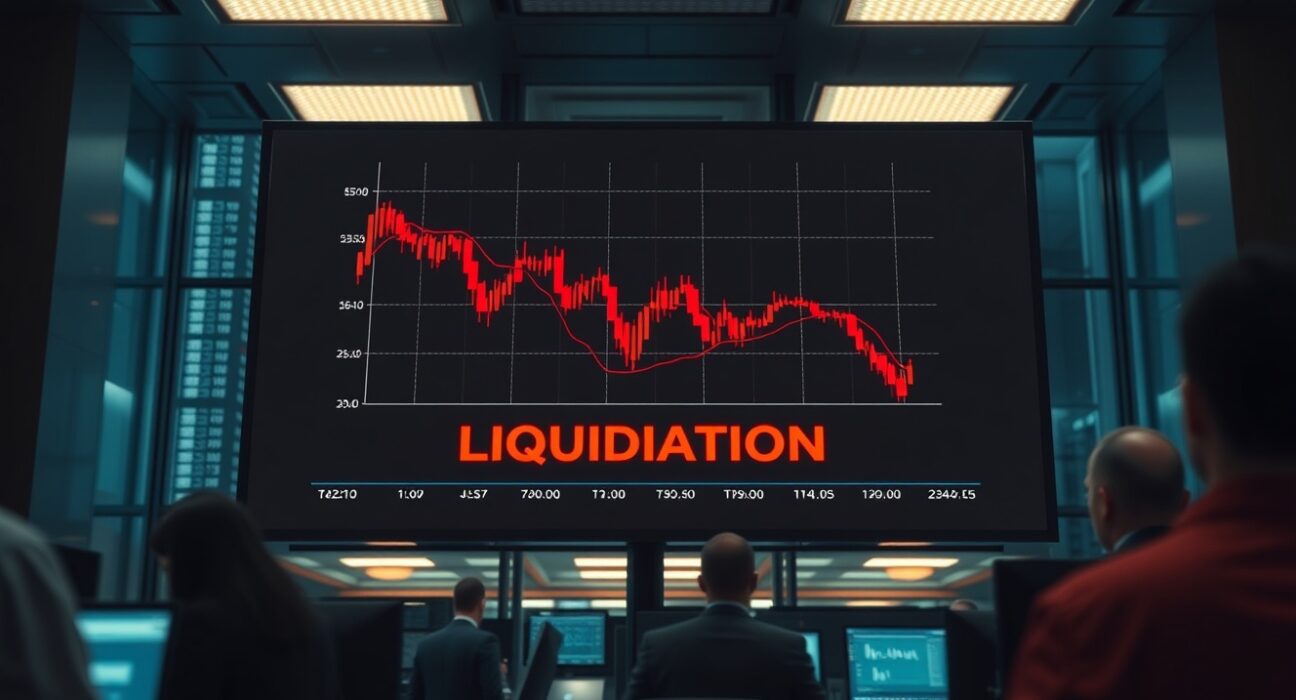
Major cryptocurrency exchanges recorded over $103 million in futures contract liquidations within the past hour, as a sudden wave of selling pressure swept through digital asset markets. The figure is part of a broader 24-hour liquidation tally that has now reached $670 million, according to data aggregated from leading trading platforms.
Leverage and Market Stress
The rapid liquidations underscore the persistent risks associated with leveraged trading in the crypto derivatives market. When the price of an asset moves sharply against a leveraged position, exchanges automatically close the trade to prevent further losses, adding to the selling pressure. The past hour’s events suggest a concentrated bout of forced selling, likely triggered by a swift price decline in major assets like Bitcoin and Ethereum.
Data from Coinglass and other tracking services indicates that long positions—bets on rising prices—accounted for the majority of the liquidations, a pattern that typically occurs during sudden market drops. The 24-hour total of $670 million is significant but not unprecedented, highlighting the volatile nature of the crypto market where double-digit percentage swings remain common.
Market Implications
Such liquidation events can create cascading effects. As positions are closed, the resulting sell orders can push prices lower, triggering further liquidations in a feedback loop. For traders, these moments serve as a stark reminder of the dangers of excessive leverage, which amplifies both gains and losses. For the broader market, they often signal periods of heightened uncertainty and potential trend reversals.
What This Means for Investors
For retail and institutional investors alike, the liquidation data is a useful barometer of market sentiment and risk appetite. High liquidation volumes typically indicate that the market is overextended in one direction, and a correction is underway. While short-term traders may see opportunities in the volatility, long-term holders are advised to monitor position sizes and risk management closely during such episodes.
Conclusion
The $103 million in hourly liquidations and the $670 million 24-hour total reflect the intense leverage and rapid price movements that continue to define the cryptocurrency market. As exchanges process these forced closures, the immediate focus shifts to whether the selling pressure will subside or intensify in the hours ahead.
FAQs
Q1: What is a futures liquidation?
A futures liquidation occurs when an exchange forcibly closes a trader’s leveraged position because the market has moved against it, and the trader’s margin balance falls below the required maintenance level.
Q2: Why do large liquidations happen suddenly?
Large liquidations often happen when a sharp price movement triggers a cascade of forced closures. As positions are liquidated, they add to the selling or buying pressure, which can cause further price moves and additional liquidations.
Q3: How can traders protect themselves from liquidation?
Traders can reduce liquidation risk by using lower leverage, setting stop-loss orders, maintaining adequate margin buffers, and avoiding overconcentration in a single position.
Disclaimer: The information provided is not trading advice, Bitcoinworld.co.in holds no liability for any investments made based on the information provided on this page. We strongly recommend independent research and/or consultation with a qualified professional before making any investment decisions.
