

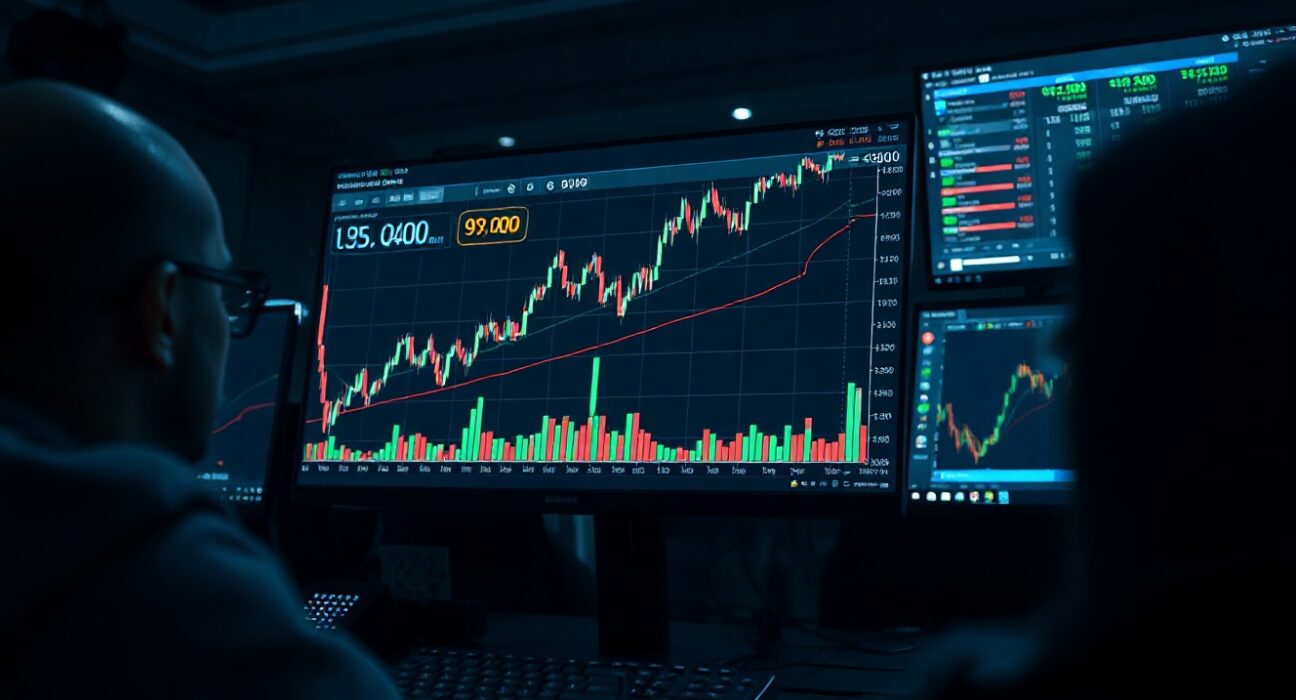
The US Dollar Index (DXY) is holding steady above the 99.00 mark during Tuesday’s trading session, with the 23.6% Fibonacci retracement level acting as near-term resistance. The index has stabilized after a volatile week, as traders assess shifting expectations for Federal Reserve policy and broader risk sentiment.
Technical Picture: Fibonacci Levels in Focus
The DXY’s bounce from the 98.80 area has brought the index back into a familiar range. The 23.6% Fibonacci retracement, calculated from the March low to the April high, sits just above 99.30 and is capping intraday gains. A clean break above this level could open the path toward the 99.80–100.00 zone, where the 50-day moving average also resides.
On the downside, support at 99.00 remains critical. A sustained move below this psychological level would likely expose the 98.50 region, followed by the 98.00 handle. The 14-day Relative Strength Index (RSI) is hovering near 45, suggesting neutral-to-slightly-bearish momentum without signaling an oversold condition.
Macro Backdrop: Fed Expectations and Risk Appetite
The dollar’s recent resilience comes despite a broadly dovish repricing of Fed rate expectations. Markets are now pricing in a higher probability of a rate cut in the second half of the year, which would typically weigh on the greenback. However, competing narratives—including geopolitical uncertainty and weaker-than-expected data from the Eurozone and China—have provided a floor for the dollar.
Traders are also watching the upcoming US consumer price index (CPI) release, due later this week, for fresh clues on inflation trends. A softer reading could reinforce rate-cut bets and pressure the DXY lower, while a hotter print might trigger a short-term squeeze higher.
What This Means for Traders
For short-term traders, the 99.00–99.30 zone is the key battleground. A breakout above 99.30 with volume would suggest near-term bullish momentum, while a rejection could lead to a retest of support. Position traders may wait for a clearer directional signal, either a close above the 23.6% Fibo or a breakdown below 99.00, before committing to larger positions.
The DXY’s correlation with risk assets remains fluid. A continued equity rally could undermine safe-haven demand for the dollar, while renewed geopolitical stress would likely support it. This dual dynamic suggests choppy trading conditions in the near term.
Conclusion
The US Dollar Index is at a technical crossroads, clinging to gains above 99.00 while the 23.6% Fibonacci retracement caps the upside. The coming sessions will likely be driven by a combination of technical triggers and macro data, particularly the US CPI release. Traders should monitor the 99.00 support and 99.30 resistance for the next directional cue.
FAQs
Q1: What is the 23.6% Fibonacci retracement level for DXY?
The 23.6% Fibonacci retracement is a technical level calculated from a significant price move. In the current context, it is derived from the March low to the April high of the DXY, and sits near 99.30. It acts as a potential resistance level where the index may face selling pressure.
Q2: Why is the 99.00 level important for the dollar index?
99.00 is a psychological round number that often attracts trader attention. It has historically acted as both support and resistance. A sustained break below 99.00 could signal a shift toward bearish momentum, while holding above it keeps the near-term outlook neutral to slightly bullish.
Q3: How does the Fed’s rate policy affect the DXY?
The Federal Reserve’s interest rate decisions directly influence the dollar’s attractiveness to investors. Higher rates tend to strengthen the dollar by attracting yield-seeking capital, while expectations of rate cuts typically weaken it. Current market pricing for a potential rate cut later this year is a key factor in the DXY’s recent price action.
Disclaimer: The information provided is not trading advice, Bitcoinworld.co.in holds no liability for any investments made based on the information provided on this page. We strongly recommend independent research and/or consultation with a qualified professional before making any investment decisions.
