

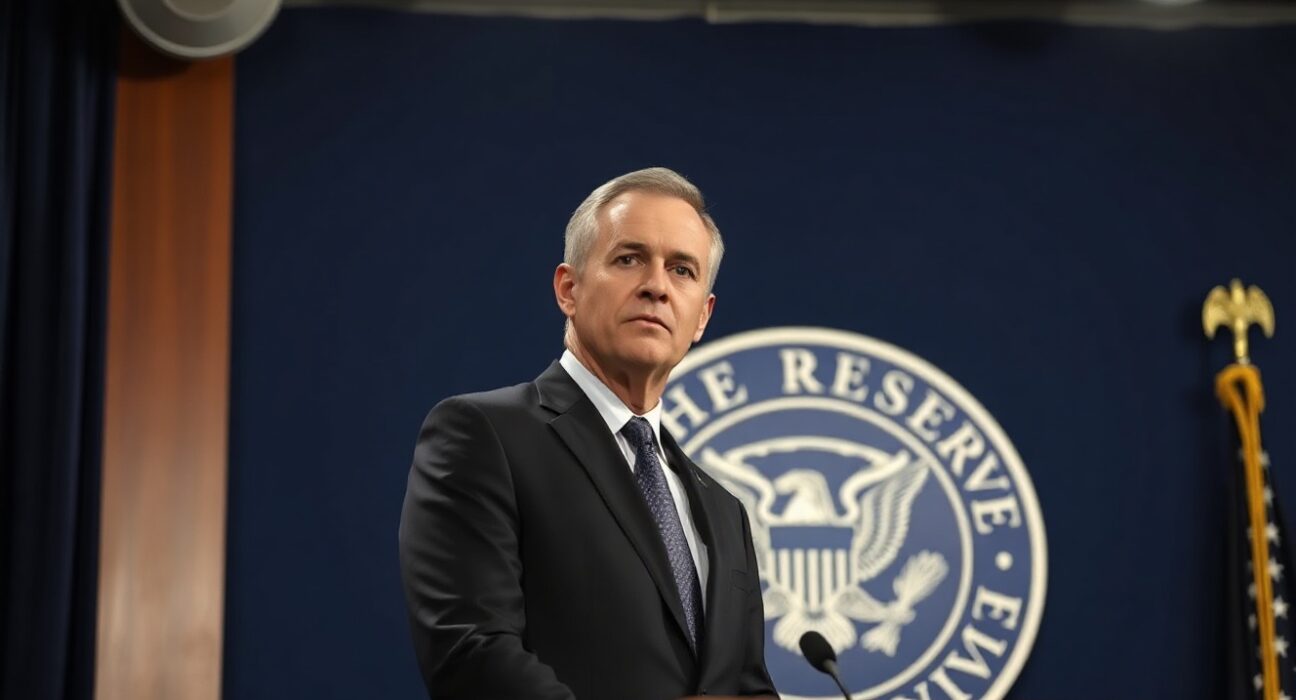
Federal Reserve Bank of Chicago President Austan Goolsbee issued a cautionary statement on Wednesday, warning that a potential oil supply shock could significantly worsen the inflationary pressures already stemming from rising productivity growth. His remarks, delivered during a moderated discussion at the Economic Club of New York, add a new layer of complexity to the central bank’s ongoing battle to bring inflation back to its 2% target.
Productivity Growth as a Double-Edged Sword
Goolsbee acknowledged that recent productivity gains, partly fueled by advances in artificial intelligence and automation, are generally a positive development for the U.S. economy. Higher productivity allows the economy to grow faster without generating excessive inflation, as more output is produced with the same or fewer inputs. However, he cautioned that the transition period can be disruptive. “When productivity accelerates rapidly, it can create demand-side pressures as firms compete for workers and capital to scale up,” Goolsbee explained. “This dynamic, while beneficial in the long run, can contribute to short-term inflation if not managed carefully.”
The Oil Shock Scenario
The core of Goolsbee’s concern lies in the interaction between this productivity-driven inflation and an external supply shock, particularly in the energy sector. An oil price spike—triggered by geopolitical instability, OPEC+ production cuts, or a major supply disruption—would act as a direct cost-push inflation driver. “An oil shock makes the problem of inflation from likely productivity growth more extreme,” Goolsbee stated. “It would simultaneously raise input costs for nearly every sector while the economy is already adjusting to structural changes from productivity gains. That combination is particularly challenging for monetary policy.”
Implications for Monetary Policy
The Chicago Fed president’s analysis suggests that the Federal Reserve may face a more difficult trade-off than previously anticipated. If productivity-driven demand keeps core inflation elevated, and an oil shock pushes headline inflation even higher, the Fed could be forced to maintain or even increase interest rates for longer. This scenario would risk slowing economic growth and potentially triggering a recession. Goolsbee emphasized that policymakers must remain data-dependent and avoid overreacting to transitory shocks, but he also stressed that persistent inflation expectations must be contained.
Market and Economic Context
Goolsbee’s remarks come at a time when the U.S. economy is showing mixed signals. The labor market remains tight, with unemployment near historic lows, while consumer spending has shown resilience. However, recent inflation data has been stubborn, with the Personal Consumption Expenditures (PCE) price index—the Fed’s preferred gauge—hovering above 3%. Meanwhile, global oil prices have been volatile, influenced by ongoing conflicts in the Middle East and production decisions by major exporters. A sustained increase in oil prices would not only raise gasoline costs for consumers but also increase transportation and manufacturing expenses across the economy.
Conclusion
Goolsbee’s warning highlights the precarious balance the Federal Reserve must maintain as it navigates an economy undergoing structural shifts from productivity gains while remaining vulnerable to external shocks. For investors and businesses, the message is clear: the path to stable inflation may be longer and more uncertain than previously thought, and energy markets will be a critical variable to watch in the months ahead. The Fed’s next policy meeting, scheduled for late July, will be closely scrutinized for any adjustments to its interest rate stance based on incoming data.
FAQs
Q1: What exactly did Austan Goolsbee say about inflation and oil shocks?
A1: Goolsbee stated that an oil supply shock would make the inflation problem arising from rapid productivity growth more severe, as it would add cost-push pressures to an economy already adjusting to demand-side inflation from productivity gains.
Q2: How does productivity growth cause inflation?
A2: While productivity growth is generally disinflationary in the long run, the transition period can create demand-side inflation as firms invest in new technologies, compete for skilled labor, and scale up operations, potentially driving up wages and input costs.
Q3: What does this mean for interest rates?
A3: If both productivity-driven inflation and an oil shock push prices higher, the Federal Reserve may need to keep interest rates elevated for longer to cool the economy, which could slow growth and increase recession risks.
Disclaimer: The information provided is not trading advice, Bitcoinworld.co.in holds no liability for any investments made based on the information provided on this page. We strongly recommend independent research and/or consultation with a qualified professional before making any investment decisions.
