

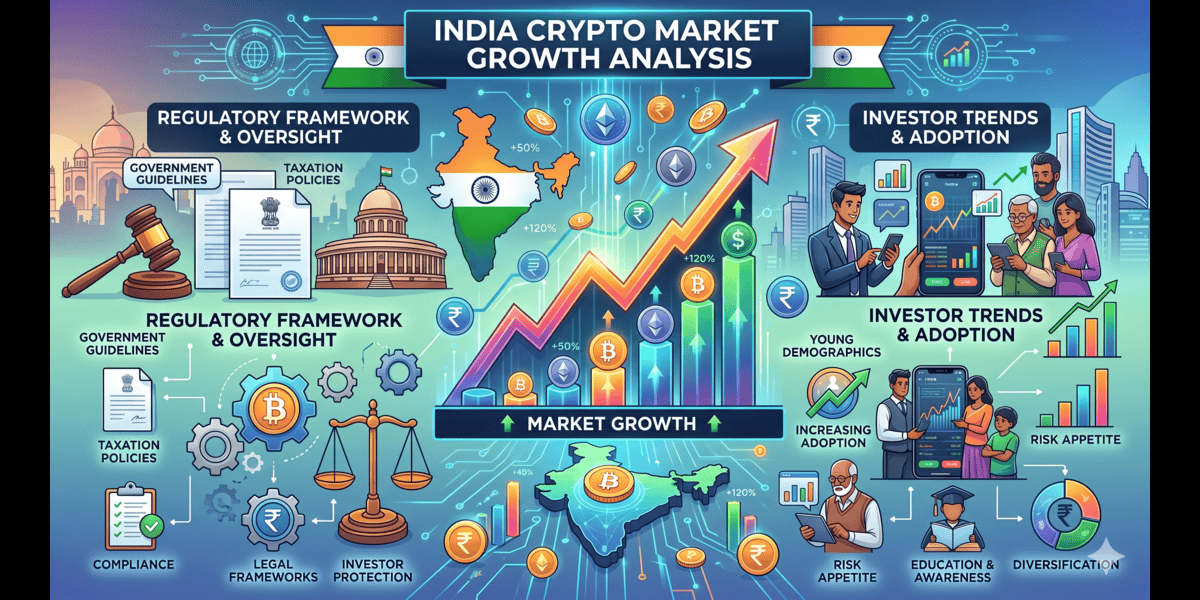
The expansion of the India crypto market highlights a powerful structural shift toward digital assets, driven by a young population and local exchange ecosystems. As of May 30, 2026, macroeconomic variables, high smartphone penetration, and evolving regulatory enforcement are reshaping how local market participants interact with Virtual Digital Assets (VDAs). This comprehensive analysis breaks down current user demographics, severe financial penalties, operational liquidity, and the structural metrics defining the subcontinental ecosystem.
What Is Driving the Growth of the India Crypto Market?
The domestic asset class is experiencing consistent momentum due to an intersection of macroeconomic conditions and infrastructure readiness. The primary growth catalysts sustaining market liquidity include:
- Tech-Savvy Youth Demographics: Over 60% of cryptocurrency users in India are under the age of 35, leveraging mobile-first trading applications to access global markets.
- Accessible Local Infrastructure: Regulated domestic entities like CoinDCX and WazirX have streamlined user acquisition by integrating local fiat (INR) deposits directly via compliant banking channels.
- Inflation Mitigation: Retail allocators increasingly treat key digital assets as long-term macro hedges against fiat purchasing power depreciation.
- Regional Footprint: Chainalysis metrics establish that grassroots adoption continues to accelerate within Tier-3 and Tier-4 cities, shifting capital away from speculative assets toward structured accumulation strategies.
How Do Indian Regulatory Hurdles Impact Crypto Trading Volumes?
India maintains some of the most stringent financial and compliance penalties globally. Despite these policy frictions, transactional activity remains highly resilient across the local ecosystem. The core regulatory pillars include:
- Flat Capital Gains Tax: A 30% flat tax rate applies to all income generated from Virtual Digital Asset transactions, with no provision to offset trading losses across different asset pairs.
- Tax Deducted at Source (TDS): A 1% TDS penalty is levied on every transaction, which directly tracks on-chain volume and has led high-frequency day traders to reduce localized scalp activity.
- No Expense Deductions: Market participants are legally prohibited from deducting business operational costs, infrastructure expenses, or proof-of-work mining overheads from taxable revenue.
- Strict Onboarding Norms: Compliance mandates introduced by the Financial Intelligence Unit (FIU) enforce multi-layered verification, including live geo-tagged tracking and biometric identity screening, before any account goes live.
What Does the India Crypto Market Revenue and Liquidity Breakdown Show?
Data from the first quarter of 2026 confirms that systemic liquidity and user participation remain structurally deep despite international platform restrictions and capital controls.
- Projected Valuation: The broader India cryptocurrency exchange market size reached USD 2.0 billion in baseline value, charting an upward trajectory toward a projected macro ecosystem valuation of USD 11.07 billion by 2031 at an estimated compound annual growth rate (CAGR) of 18.65%.
- Retail Capital Efficiency: While high-frequency traders have scaled down their strategies due to the tax framework, long-term allocators push a baseline average value of USD 81.4 per user.
- Shift in Execution Venues: The displacement of unregistered offshore entities has concentrated retail trading capital inside local FIU-compliant exchanges and structured peer-to-peer (P2P) clearing networks.
- Derivatives Migration: Market participants are increasingly utilizing INR-settled futures contracts and alternative systematic investment plans (SIPs) to adapt to the current domestic fiscal policy.
What Does the Transition to Compliant Frameworks Signify?
The structural adjustments seen across the digital asset ecosystem demonstrate that the asset class has crossed the inflection point from speculative enthusiasm to institutional architecture. The tightening of operational parameters by central authorities indicates that market access is becoming deeply integrated with formal oversight mechanisms. For long-term market participants, understanding execution quality, tax optimization paths, and capital preservation frameworks will be critical to navigating this highly regulated, high-growth region.
Frequently Asked Questions
Why is the India crypto market expanding despite high domestic taxes?
The persistent expansion of the India crypto market is driven by structural factors like macro inflation hedging and an expanding base of young tech-savvy investors. Even with a restrictive 30% capital gains tax and 1% TDS, grassroots adoption in smaller cities remains high because investors are pivoting toward long-term portfolio allocation strategies. Additionally, user-friendly infrastructure provided by compliant domestic cryptocurrency platforms continues to simplify onboarding.
How did FIU compliance changes affect foreign cryptocurrency exchanges operating in India?
The enforcement of strict FIU compliance mandates resulted in the formal restriction of over 50 unregistered offshore platforms that failed to establish local tax accountability. This regulatory shift caused a massive migration of retail liquidity and user activity back to regulated entities like CoinDCX and WazirX. Consequently, compliance has become a prerequisite for long-term operational viability within the Indian digital asset ecosystem.
What are the primary differences between spot trading and futures trading in the India crypto market?
Spot trading involves the direct purchase of underlying digital assets, which subjects every transaction directly to the 1% TDS penalty and complex tracking requirements. Conversely, INR-settled futures and derivatives volumes have increased because structured instruments offer different capital efficiency dynamics for high-frequency traders. This tactical shift allows active market participants to maintain liquidity while complying with the strict capital constraints of the local regulatory framework.
Disclaimer: The information provided is not trading advice, Bitcoinworld.co.in holds no liability for any investments made based on the information provided on this page. We strongly recommend independent research and/or consultation with a qualified professional before making any investment decisions.
