

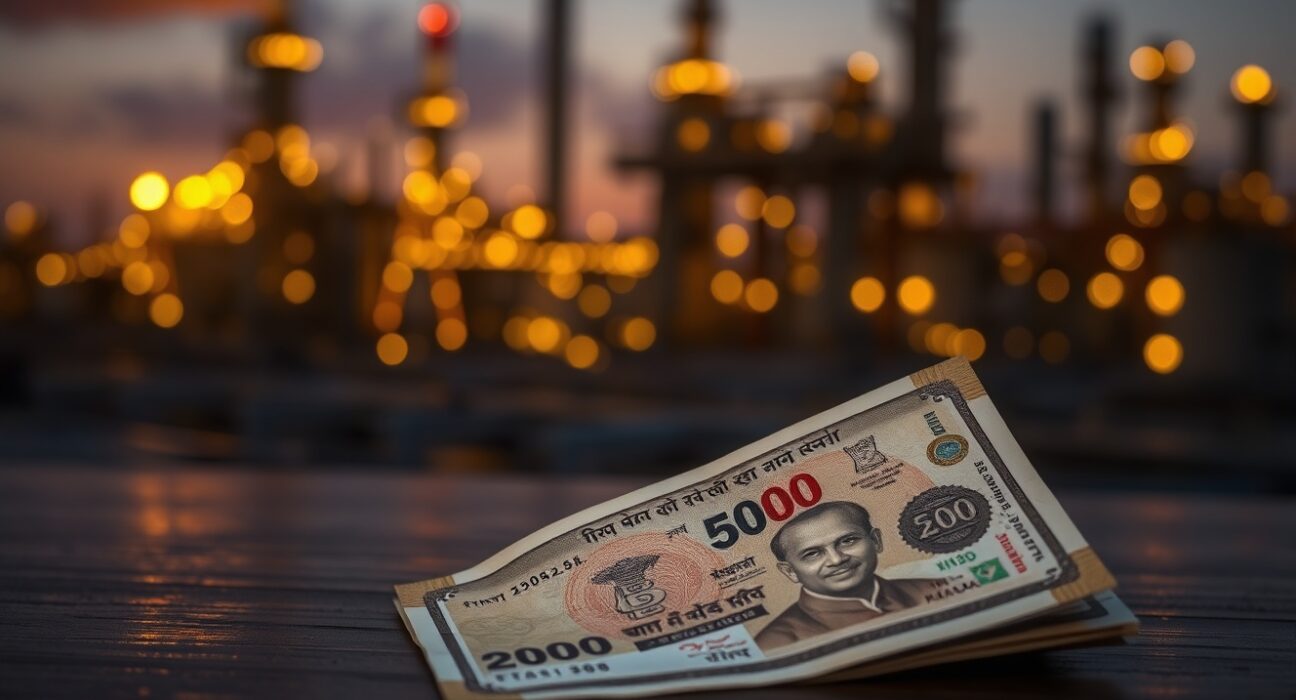
The Indian rupee is facing renewed headwinds as global crude oil prices climb, raising concerns about the currency’s trajectory in the coming months. India, the world’s third-largest oil importer, is particularly vulnerable to rising energy costs, which directly affect its trade deficit, inflation, and fiscal health.
The Direct Link Between Oil Prices and the Rupee
Crude oil is India’s single largest import item, accounting for roughly a quarter of the country’s total import bill. When oil prices rise, the cost of importing crude increases, widening the current account deficit (CAD). A larger CAD typically puts downward pressure on the rupee as demand for foreign currency (especially the US dollar) increases to pay for costlier imports.
Historically, every $10 per barrel increase in crude oil prices adds approximately $15–20 billion to India’s annual import bill. This additional dollar demand, coupled with portfolio outflows during periods of global risk aversion, can accelerate rupee depreciation.
Current Market Dynamics
As of early 2025, Brent crude has been trading in the $85–95 per barrel range, driven by supply constraints from OPEC+ production cuts, geopolitical tensions in the Middle East, and recovering global demand. This level is significantly above the Indian government’s budget assumption of $75–80 per barrel, creating potential fiscal slippage.
The Reserve Bank of India (RBI) has been actively intervening in the forex market to smooth excessive volatility, selling US dollars to support the rupee. However, sustained intervention depletes India’s foreign exchange reserves, which stood at approximately $620 billion as of late 2024. While comfortable, reserve drawdowns cannot continue indefinitely without impacting market confidence.
Impact on Inflation and Monetary Policy
Higher oil prices feed into domestic inflation through multiple channels: directly via transport fuel costs (petrol, diesel) and indirectly through increased production and logistics costs across industries. The RBI’s monetary policy committee (MPC) has maintained a cautious stance, keeping the repo rate at 6.50% to anchor inflation expectations.
If oil prices remain elevated, the RBI may be forced to keep rates higher for longer, potentially dampening economic growth. Conversely, premature rate cuts could fuel inflationary pressures and weaken the rupee further — a delicate balancing act for policymakers.
What This Means for Businesses and Consumers
For Indian businesses, a weaker rupee combined with higher input costs squeezes profit margins, particularly for import-dependent sectors such as electronics, chemicals, and edible oils. Exporters, on the other hand, may benefit from a weaker rupee as their goods become more competitively priced in global markets.
Consumers are likely to face higher prices for fuel, transportation, and a broad range of goods and services. The government’s ability to provide fiscal relief through tax cuts on fuel is constrained by its own revenue targets.
Outlook and Key Factors to Watch
The rupee’s trajectory in a high oil price environment depends on several variables:
- Global crude supply dynamics: OPEC+ decisions, Iran sanctions, and US shale production will influence price direction.
- US Federal Reserve policy: A stronger dollar, driven by higher US interest rates, adds to rupee depreciation pressure.
- Capital flows: Foreign portfolio investment into Indian equities and bonds can offset CAD pressures. Recent strong inflows have provided some support.
- RBI intervention strategy: The central bank’s willingness to use reserves and its communication approach will shape market expectations.
Most analysts expect the rupee to trade in a range of 83–85 against the US dollar over the next six months, with risks tilted toward depreciation if oil prices sustain above $90. A sharp escalation in geopolitical tensions could push the rupee toward 86 or beyond.
Conclusion
The Indian rupee faces a challenging period ahead as higher oil prices test the country’s external balances and policy credibility. While the RBI’s proactive management and comfortable reserve buffer provide some cushion, the currency’s fate will largely depend on global crude trends and the pace of capital flows. For investors, businesses, and consumers, staying informed about these interconnected factors is essential for navigating the months ahead.
FAQs
Q1: How does rising crude oil price affect the Indian rupee?
A1: Higher crude oil prices increase India’s import bill, widening the current account deficit. This raises demand for US dollars, putting downward pressure on the rupee’s exchange rate.
Q2: Can the RBI prevent the rupee from falling too much?
A2: The RBI can intervene by selling US dollars from its reserves to support the rupee. However, sustained intervention has limits and may not fully offset fundamental pressures from high oil prices.
Q3: What is the likely range for the rupee in the near term?
A3: Analysts expect the rupee to trade between 83 and 85 against the US dollar over the next six months, with risks tilted toward depreciation if oil prices remain above $90 per barrel.
Disclaimer: The information provided is not trading advice, Bitcoinworld.co.in holds no liability for any investments made based on the information provided on this page. We strongly recommend independent research and/or consultation with a qualified professional before making any investment decisions.
