

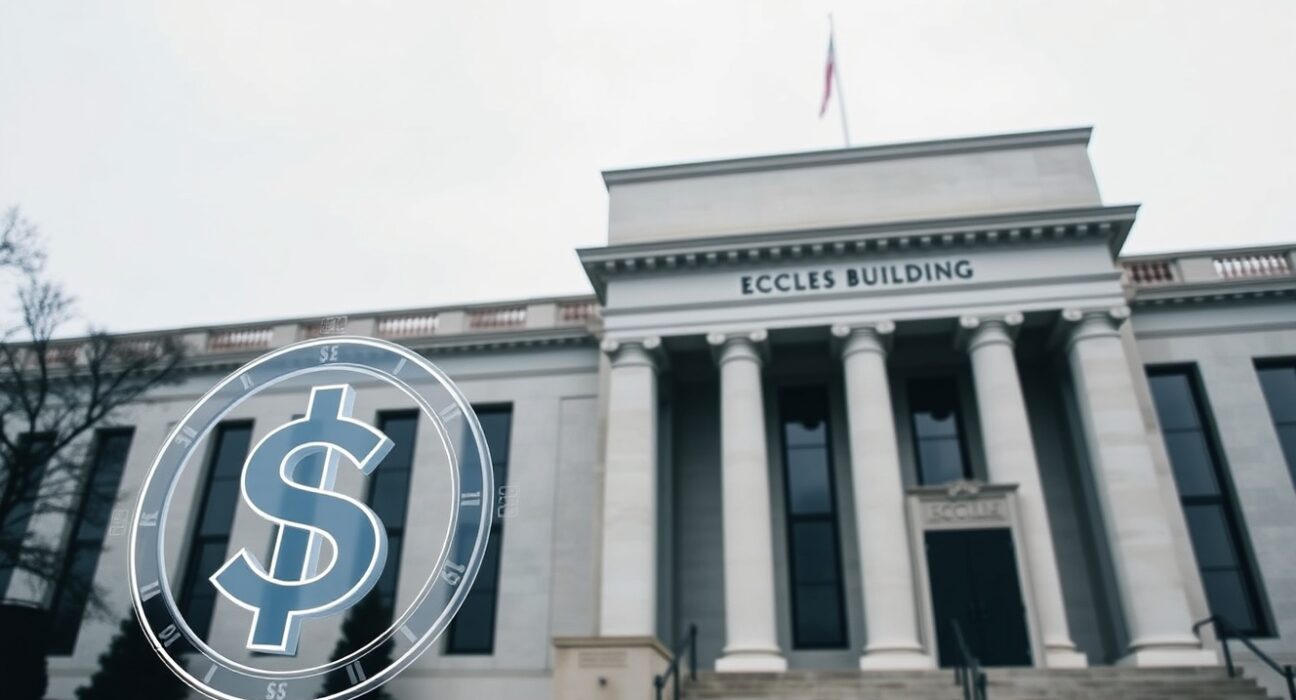
Christopher Waller, a member of the U.S. Federal Reserve’s Board of Governors, has stated that the global adoption of stablecoins will ultimately reinforce America’s financial leadership. Speaking at the 32nd Dubrovnik Economic Conference, Waller argued that countries integrating stablecoins into their financial systems would effectively adopt a fixed exchange rate with the United States, thereby importing U.S. monetary policy.
Stablecoins as a Vehicle for Dollar Dominance
Waller’s remarks provide a significant perspective on the intersection of digital assets and traditional central banking. He explained that stablecoins, which are typically pegged to the U.S. dollar, create a mechanism for other nations to indirectly adopt the dollar as their functional currency. This dynamic, he suggested, expands the Federal Reserve’s policy influence far beyond U.S. borders without requiring formal agreements or treaties.
The governor’s comments come at a time when global regulators are grappling with how to oversee the rapidly growing stablecoin market, which now exceeds $150 billion in total market capitalization. While some policymakers have raised concerns about financial stability and consumer protection, Waller framed the trend as a net positive for U.S. strategic interests.
Mechanics of Monetary Policy Transmission
Waller elaborated on the economic mechanics behind his view. When a country’s financial system relies heavily on dollar-pegged stablecoins, its monetary conditions become tightly linked to the Federal Reserve’s interest rate decisions. This means that when the Fed raises or lowers rates, the effects ripple into economies that use stablecoins, effectively synchronizing their monetary environment with that of the United States.
“Countries that adopt stablecoins are, in essence, choosing to tie their monetary fate to the United States,” Waller said during the conference. “This is not a coercive process. It is a market-driven outcome that reflects the global demand for dollar-denominated stable assets.”
Implications for Global Financial Architecture
The governor’s statements carry weight as the Fed continues to evaluate the implications of digital currencies and private-sector stablecoins. His perspective suggests that rather than viewing stablecoins as a threat to central bank sovereignty, U.S. policymakers may see them as a tool for extending the dollar’s reach in an increasingly digital global economy.
This view contrasts with positions taken by some other central banks, which have expressed concern that stablecoins could undermine their ability to control domestic monetary policy. The European Central Bank and the Bank of England, for example, have called for stricter regulation of stablecoin issuers to protect their monetary autonomy.
Conclusion
Christopher Waller’s remarks at the Dubrovnik Economic Conference offer a clear signal that the Federal Reserve views stablecoins not as a disruptive threat but as a reinforcing mechanism for U.S. financial hegemony. As stablecoin adoption continues to grow across emerging and developed economies alike, the Fed’s influence may expand in parallel, reshaping the global monetary landscape in ways that favor the dollar. Policymakers and market participants will be watching closely to see whether this dynamic accelerates or invites regulatory pushback from nations seeking to preserve their monetary independence.
FAQs
Q1: What exactly did Fed Governor Christopher Waller say about stablecoins?
Waller stated that the global spread of stablecoins will strengthen U.S. financial dominance because countries adopting them effectively import U.S. monetary policy by maintaining a fixed exchange rate with the dollar.
Q2: How do stablecoins extend U.S. monetary policy influence?
When a country’s economy relies on dollar-pegged stablecoins, its monetary conditions become tied to Federal Reserve interest rate decisions, effectively synchronizing its policy environment with that of the United States.
Q3: Does the Federal Reserve view stablecoins as a threat?
Based on Waller’s comments, the Fed appears to view stablecoins as a positive development for U.S. strategic interests, rather than a threat to central bank sovereignty or financial stability.
Disclaimer: The information provided is not trading advice, Bitcoinworld.co.in holds no liability for any investments made based on the information provided on this page. We strongly recommend independent research and/or consultation with a qualified professional before making any investment decisions.
