

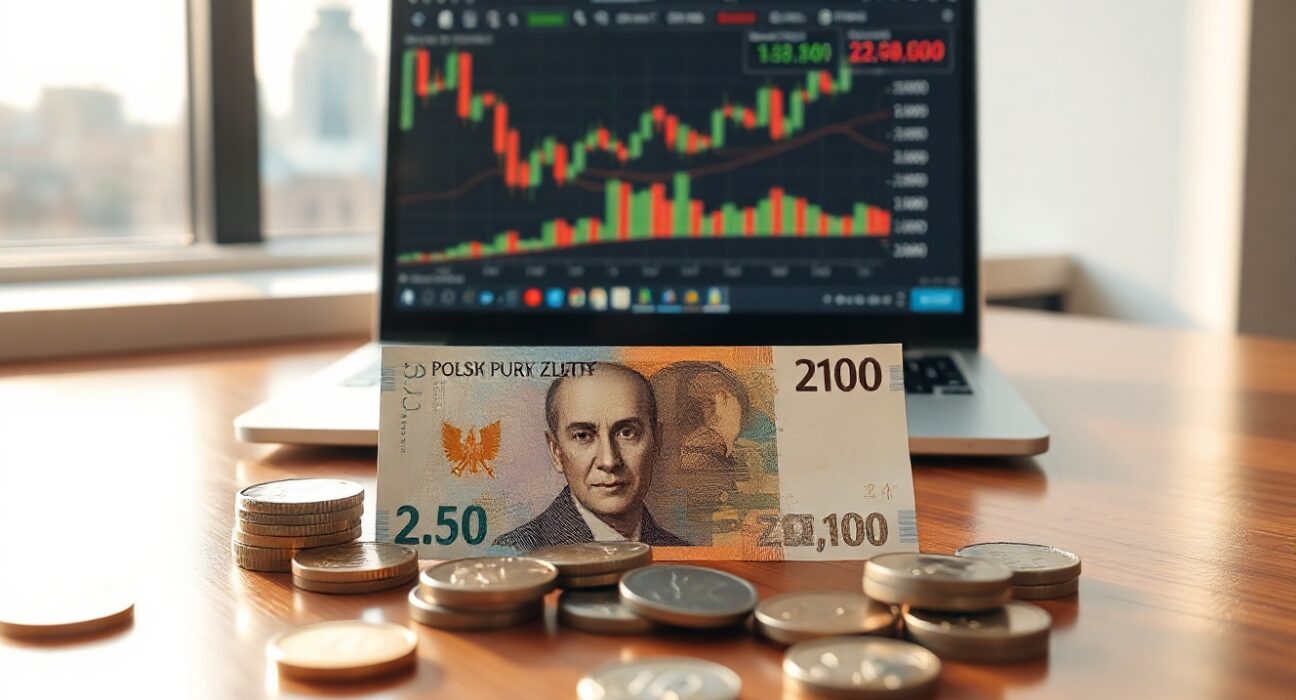
Poland’s central bank is likely to maintain its current interest rate stance as inflation continues to moderate, according to a new analysis from ING. The assessment suggests that the National Bank of Poland (NBP) will hold rates steady in the near term, providing stability for the Polish Zloty amid a broader European economic landscape marked by uncertainty.
Cooling Inflation Eases Pressure on NBP
Recent data from Poland’s statistical office shows a continued decline in consumer price inflation, which fell to 4.2% in the latest reading, down from 4.9% in the previous month. This cooling trend, driven largely by lower energy costs and easing supply chain pressures, gives the NBP room to keep its benchmark interest rate at 5.75% without immediate need for further tightening. ING economists note that while core inflation remains sticky, the overall trajectory supports a wait-and-see approach from policymakers.
The central bank’s cautious stance aligns with its broader strategy of balancing price stability with economic growth. Poland’s economy, while resilient, faces headwinds from a slowdown in the eurozone, its largest trading partner. By keeping rates steady, the NBP aims to avoid dampening domestic demand while still anchoring inflation expectations.
Zloty Stability in a Volatile Region
The Polish Zloty has remained relatively stable against the euro and the US dollar in recent weeks, trading in a narrow range. ING attributes this stability to the NBP’s predictable monetary policy and Poland’s strong macroeconomic fundamentals, including a robust labor market and manageable public debt levels. The currency’s resilience is notable given the volatility seen in other Central and Eastern European (CEE) currencies, such as the Hungarian Forint and Czech Koruna, which have been more sensitive to global risk sentiment.
Analysts point out that the Zloty’s performance also benefits from Poland’s diversified economy and its role as a key manufacturing hub in the region. Foreign direct investment inflows remain strong, supporting the currency’s outlook even as global trade dynamics shift.
Implications for Investors and Businesses
For investors holding Polish assets, the steady rate environment reduces near-term uncertainty. Bond yields have remained relatively stable, and the equity market has shown resilience. For businesses operating in Poland, the predictable policy backdrop supports planning and investment decisions. However, ING warns that external risks—such as a potential escalation in geopolitical tensions or a sharper-than-expected slowdown in the eurozone—could still disrupt the current equilibrium.
The bank’s analysis suggests that the NBP will likely hold rates through the first half of the year, with a potential pivot to easing only if inflation falls sustainably below the 2.5% target. For now, the message from Warsaw is one of patience and vigilance.
Conclusion
Poland’s cooling inflation provides the NBP with a comfortable position to maintain steady interest rates, supporting the Zloty’s stability in a volatile regional context. ING’s assessment reinforces the view that the Polish economy is well-placed to navigate current challenges, though external risks remain. For market participants, the key takeaway is that the NBP is in no hurry to change course, offering a degree of predictability that is increasingly rare in global monetary policy.
FAQs
Q1: What is the current interest rate in Poland?
The National Bank of Poland (NBP) benchmark interest rate is currently 5.75%, where it has remained since the last hike in 2023.
Q2: Why is cooling inflation important for the Zloty?
Lower inflation reduces pressure on the central bank to raise rates further, which supports currency stability by maintaining predictable policy and avoiding disruptive adjustments.
Q3: What are the main risks to the NBP’s rate outlook?
Key risks include a resurgence in inflation due to wage pressures or energy costs, a deeper eurozone recession affecting Polish exports, and geopolitical instability in the region.
Disclaimer: The information provided is not trading advice, Bitcoinworld.co.in holds no liability for any investments made based on the information provided on this page. We strongly recommend independent research and/or consultation with a qualified professional before making any investment decisions.
