

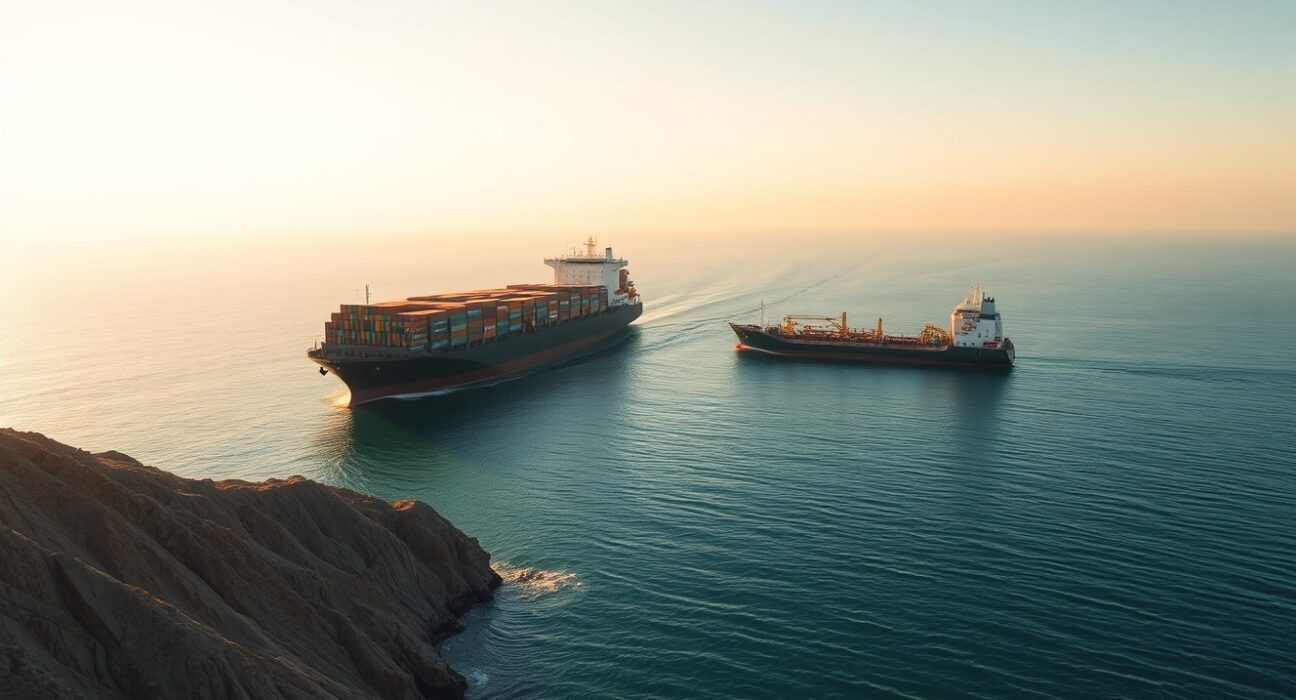
US President Donald Trump has stated that he expects to reach a deal with Iran next week that would reopen the Strait of Hormuz to international shipping and extend the current ceasefire in Gaza. The announcement, made during a press briefing at the White House, signals a potential diplomatic breakthrough in two of the most volatile geopolitical flashpoints affecting global energy markets and Middle East stability.
What the Proposed Deal Entails
According to Trump, the agreement would include the resumption of safe passage through the Strait of Hormuz, a narrow waterway that handles roughly one-fifth of the world’s oil consumption. In return, Iran would agree to extend the ceasefire in Gaza, which has been in effect since early January, for an additional 60 days. The president did not provide specific details on verification mechanisms or whether the deal includes any relief from existing US sanctions on Iran.
The Strait of Hormuz has been a recurring flashpoint in US-Iran tensions. In recent months, Iran has been accused of harassing commercial vessels and oil tankers transiting the strait, leading to increased insurance premiums and rerouting by some shipping companies. A reopening would restore confidence in one of the world’s most critical energy chokepoints.
Market and Geopolitical Implications
Global oil markets reacted cautiously to the news, with Brent crude futures dipping slightly in early trading before stabilizing. Analysts noted that a confirmed deal could lower oil prices by reducing the risk premium built into current prices. The potential extension of the Gaza ceasefire also raises hopes for broader regional de-escalation, including reduced hostilities along the Israel-Lebanon border and in the Red Sea, where Houthi attacks on commercial shipping have disrupted trade routes.
However, experts caution that previous negotiations between the US and Iran have collapsed over disagreements on nuclear enrichment, ballistic missile programs, and regional proxy forces. The current proposal appears narrowly focused on maritime security and the Gaza ceasefire, which may make it more achievable but also leaves deeper structural issues unresolved.
Why This Matters to Readers
For consumers, a stable Strait of Hormuz means lower and more predictable fuel prices at the pump. For businesses, it reduces supply chain uncertainty in sectors ranging from petrochemicals to container shipping. For investors, it removes a major geopolitical risk factor that has weighed on energy stocks and emerging market currencies. The humanitarian dimension is equally significant: an extended ceasefire in Gaza would allow for increased aid delivery and reconstruction efforts after months of conflict.
Background and Timeline
Tensions between the US and Iran escalated sharply after the US withdrawal from the Joint Comprehensive Plan of Action (JCPOA) in 2018. Since then, Iran has expanded its uranium enrichment program and increased its military posture in the Persian Gulf. The current round of indirect talks, mediated by Oman and Qatar, began in late February. Trump’s public statement suggests that progress has been made behind closed doors, though no formal agreement has been signed.
The Gaza ceasefire, brokered by Egypt and the United Nations in January, has largely held despite sporadic violations. An extension would provide breathing room for diplomatic efforts aimed at a more permanent resolution to the Israeli-Palestinian conflict.
Conclusion
While Trump’s announcement carries significant weight, the details of any final agreement remain unconfirmed. The coming week will test whether both sides can translate political will into a binding framework. For now, markets and regional actors are watching closely, aware that the stakes extend far beyond the waters of the Strait of Hormuz.
FAQs
Q1: Why is the Strait of Hormuz so important?
The Strait of Hormuz is a narrow waterway between Oman and Iran through which about 20% of the world’s oil and liquefied natural gas passes. Any disruption there can cause global energy price spikes.
Q2: What is the current status of the Gaza ceasefire?
The ceasefire, which began in early January 2025, has largely held but is set to expire soon. An extension would provide time for humanitarian aid and further negotiations.
Q3: What are the chances of a deal actually being reached?
While Trump’s statement suggests optimism, previous US-Iran talks have failed. The narrow scope of this deal—focusing on maritime security and the ceasefire—may improve its chances, but no final agreement has been confirmed.
Disclaimer: The information provided is not trading advice, Bitcoinworld.co.in holds no liability for any investments made based on the information provided on this page. We strongly recommend independent research and/or consultation with a qualified professional before making any investment decisions.
