

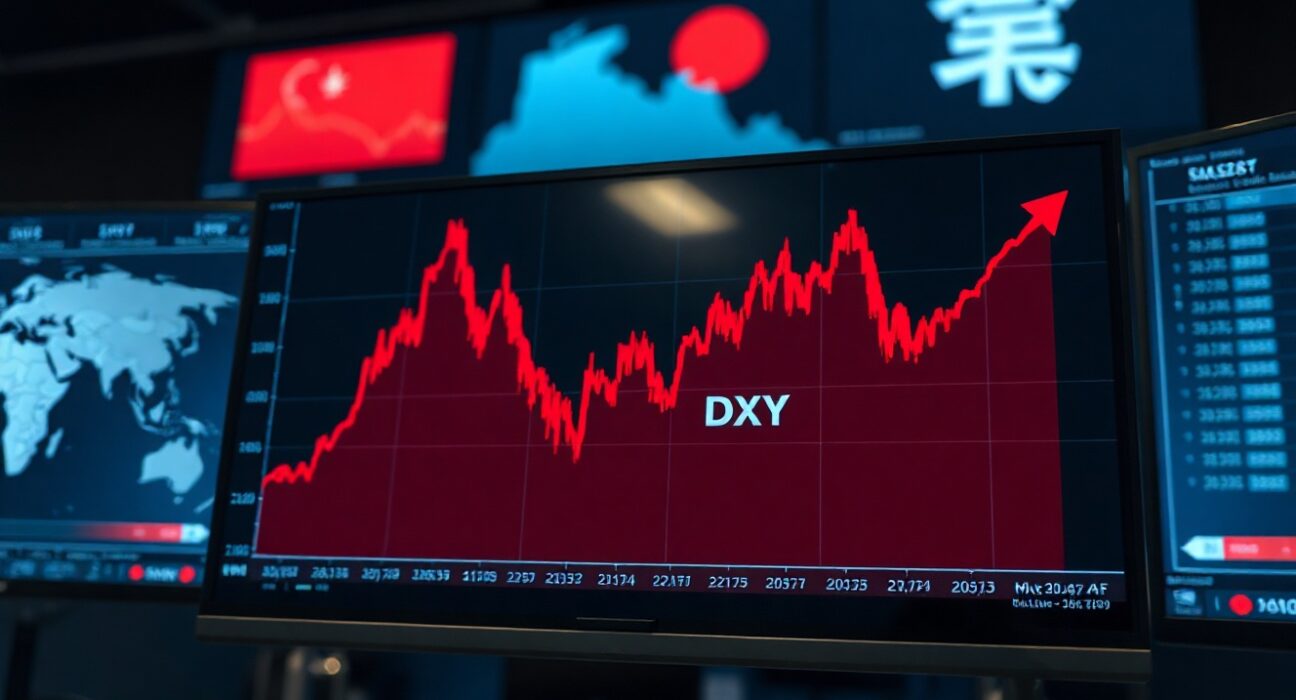
The U.S. dollar extended its rally on Tuesday, driven by escalating geopolitical tensions in the Gulf region and renewed tariff threats from Washington. The greenback strengthened against a basket of major currencies, while the Japanese yen remained under intense pressure, trading near the 160 mark against the dollar — a level that has historically triggered intervention from Japanese authorities.
Geopolitical and Trade Policy Pressures Converge
Fresh unrest in the Gulf, including heightened rhetoric and military posturing, has fueled demand for safe-haven assets, with the dollar and gold both seeing inflows. At the same time, U.S. trade officials signaled plans for additional tariffs on key trading partners, reviving concerns about a broader trade war that could disrupt global supply chains and inflationary trends. The combination has pushed the dollar index to its highest level in weeks, with traders pricing in continued strength as long as uncertainty persists.
Market participants are closely watching the yen, which has weakened past 158 per dollar and is approaching the 160 threshold. The Bank of Japan has historically stepped in to support the yen at such levels, and Finance Ministry officials have reiterated their readiness to act against speculative moves. However, analysts note that intervention alone may not reverse the trend unless accompanied by a shift in the Bank of Japan’s monetary policy stance.
Yen Intervention Risks: A Familiar Pattern
The yen’s decline has been driven largely by the interest rate differential between Japan and the United States. While the Federal Reserve has held rates steady, the Bank of Japan has only gradually moved away from its ultra-loose policy, leaving the yen vulnerable to dollar strength. Traders are now pricing in a higher probability of intervention, with options markets showing increased hedging activity around the 160 level.
Japanese officials have historically intervened at moments of sharp, disorderly moves rather than at specific levels. In 2022, Tokyo spent roughly $60 billion defending the yen, intervening multiple times as the currency fell past 145 and then 150. The current trajectory suggests similar action could be imminent if the yen breaks decisively above 160.
What This Means for Investors
For currency traders, the key risk is the timing and scale of any Japanese intervention. A sudden move by the Bank of Japan or Ministry of Finance could trigger sharp reversals, as seen in previous episodes. For importers and exporters, a weaker yen boosts Japanese export competitiveness but raises costs for energy and raw material imports, adding pressure on corporate margins and consumer prices.
Broader market implications include potential volatility in emerging market currencies, as a stronger dollar typically tightens financial conditions globally. The combination of tariff uncertainty and geopolitical risk also complicates central bank policy decisions, particularly in Asia and Europe.
Conclusion
The dollar’s rally reflects a confluence of geopolitical and trade policy risks that show no signs of abating in the near term. The yen’s slide toward 160 is testing the patience of Japanese authorities, and intervention remains a distinct possibility. Investors should brace for potential sharp moves in currency markets as the week progresses, with the Gulf situation and tariff announcements remaining the primary catalysts.
FAQs
Q1: What is causing the dollar to rise?
The dollar is strengthening due to safe-haven demand from escalating tensions in the Gulf region and new U.S. tariff plans that are fueling uncertainty about global trade and inflation.
Q2: Why is the yen under pressure near 160?
The yen is weakening because of the wide interest rate gap between the U.S. and Japan. The Federal Reserve has kept rates high, while the Bank of Japan has only slowly tightened policy, making the yen less attractive to yield-seeking investors.
Q3: Will Japan intervene to support the yen?
Japanese authorities have signaled readiness to act against speculative and disorderly moves. Historically, they have intervened at levels around 145-150, so a break above 160 could trigger intervention, though the timing and size remain uncertain.
Disclaimer: The information provided is not trading advice, Bitcoinworld.co.in holds no liability for any investments made based on the information provided on this page. We strongly recommend independent research and/or consultation with a qualified professional before making any investment decisions.
