

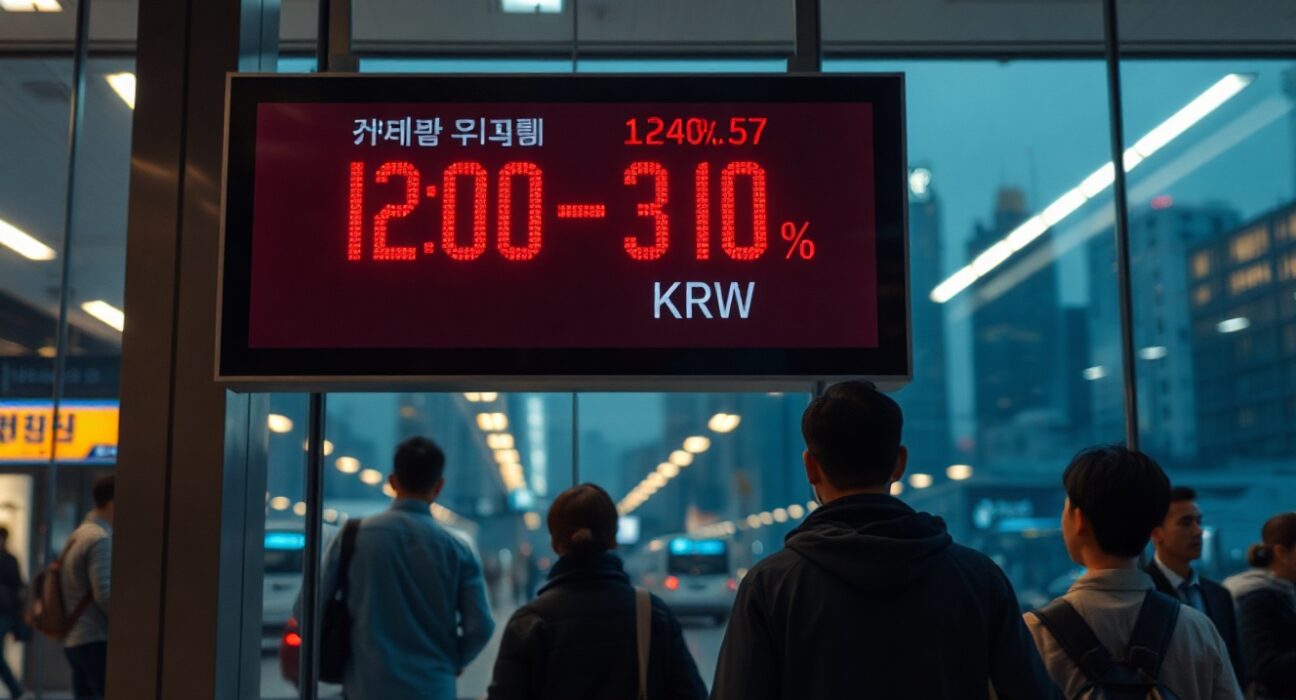
The South Korean won has experienced a sharp depreciation, driven by a severe energy price shock that is compounding existing pressures on the country’s trade balance and broader economy, according to a new analysis from Brown Brothers Harriman (BBH). The currency’s slide highlights the vulnerability of Asia’s fourth-largest economy to global commodity price volatility.
Energy Shock Hits Korea’s Export-Dependent Model
South Korea, a major importer of crude oil, liquefied natural gas, and coal, has seen its import bill surge as global energy prices remain elevated. BBH analysts note that the deteriorating terms of trade are directly weighing on the won, as the country’s current account surplus narrows. The won has fallen past the psychologically important 1,300 per dollar level, a threshold that historically triggers increased volatility and potential intervention by the Bank of Korea.
The energy shock comes at a delicate time. South Korea’s export sector, while still competitive in semiconductors and automobiles, is facing softening global demand. The combination of higher input costs and weaker external demand is squeezing corporate margins and reducing the inflow of foreign currency needed to support the won.
Policy Dilemma for the Bank of Korea
The depreciation creates a difficult policy environment for the Bank of Korea (BOK). On one hand, a weaker won raises the cost of imported energy and raw materials, fueling domestic inflation. On the other hand, raising interest rates aggressively to defend the currency could further slow an already cooling economy.
BBH’s assessment suggests that the BOK is likely to tolerate some further weakness in the won to support export competitiveness, but may step in with verbal intervention or direct market action if the decline becomes disorderly. The central bank has a history of smoothing volatility rather than defending a specific exchange rate level.
What This Means for Investors and Consumers
For South Korean consumers, the weaker won means higher prices for imported goods, from food to fuel. For global investors, it signals a reassessment of risk in Asian currencies, particularly those with high exposure to energy imports. The won’s trajectory will be closely watched as a bellwether for other commodity-dependent Asian economies.
The broader implication is that the energy transition, while necessary, creates short-term economic dislocations for countries like South Korea that lack domestic energy resources. Until alternative energy sources become more dominant, the won will remain sensitive to global energy price swings.
Conclusion
The South Korean won’s sharp depreciation, as analyzed by BBH, is a textbook case of an energy price shock transmitting through trade channels to a currency market. The outcome depends on how long energy prices stay elevated and whether the BOK can manage the trade-off between inflation and growth. For now, the won is under sustained pressure, and the risk of further losses remains elevated.
FAQs
Q1: Why is the South Korean won falling so sharply?
The won is depreciating primarily due to a surge in energy import costs, which widens the trade deficit and reduces the supply of foreign currency. BBH highlights this energy shock as the main driver.
Q2: What is the Bank of Korea doing to support the won?
The BOK has historically intervened to smooth excessive volatility, but it faces a policy dilemma. Aggressive rate hikes could hurt economic growth, while inaction allows inflation to rise. BBH expects the BOK to tolerate some weakness but act if the decline becomes disorderly.
Q3: How does a weaker won affect the average South Korean?
A weaker won makes imported goods more expensive, raising costs for food, fuel, and other essentials. It can also lead to higher inflation, reducing household purchasing power.
Disclaimer: The information provided is not trading advice, Bitcoinworld.co.in holds no liability for any investments made based on the information provided on this page. We strongly recommend independent research and/or consultation with a qualified professional before making any investment decisions.
