

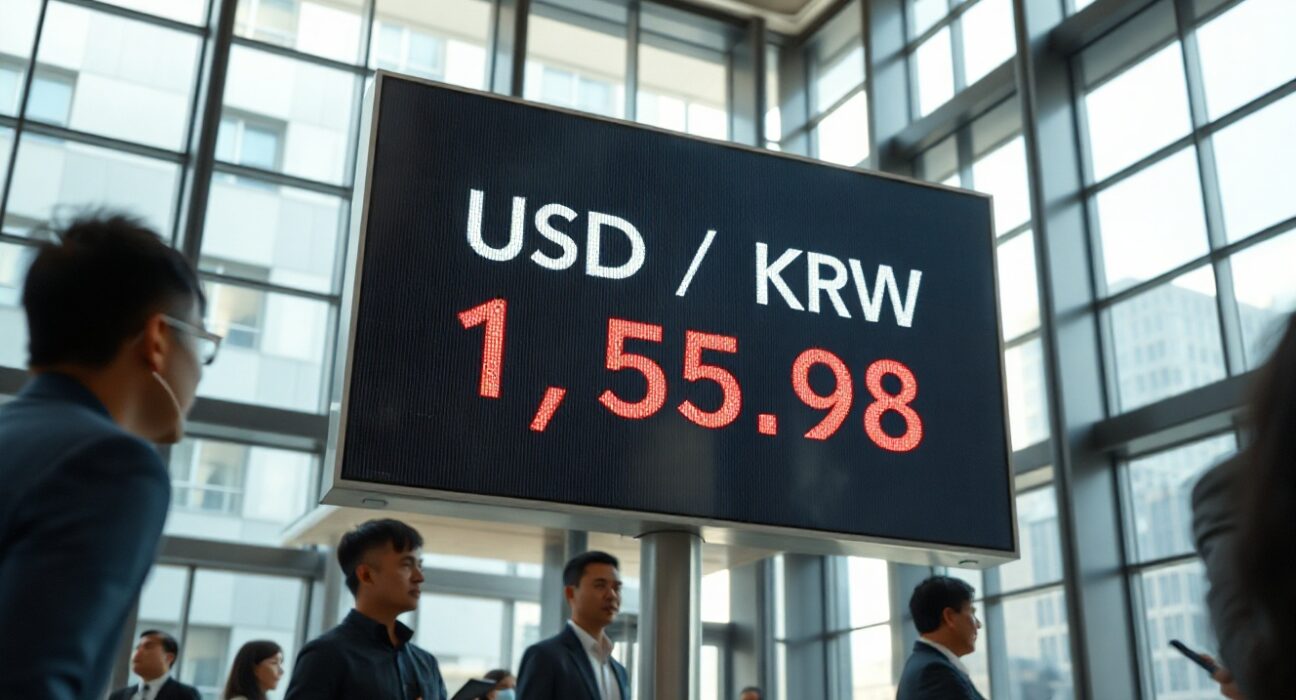
The U.S. dollar to South Korean won exchange rate has surged past the 1,545 won mark, setting a new all-time high. On Wednesday, the pair was trading at 1,546.98 won, representing a 0.91% increase from the previous session. This latest move extends a period of sustained weakness for the won, which has been under pressure from a combination of global and domestic factors.
Context Behind the Won’s Decline
The won’s depreciation is not an isolated event but part of a broader trend affecting many Asian currencies. The primary driver has been the aggressive monetary tightening cycle by the U.S. Federal Reserve, which has strengthened the dollar globally. A stronger dollar makes it more expensive for countries like South Korea to import goods, particularly energy and raw materials, further fueling inflationary pressures.
Domestically, South Korea’s economy faces headwinds including a slowdown in export growth, particularly in the semiconductor sector, and geopolitical uncertainties stemming from tensions on the Korean peninsula. These factors have eroded investor confidence and led to capital outflows, adding to the downward pressure on the won.
Implications for the South Korean Economy
A weaker won has a dual-edged impact on the South Korean economy. On one hand, it benefits exporters like Samsung and Hyundai by making their goods cheaper in international markets. On the other hand, it increases the cost of imports, leading to higher consumer prices for goods such as food, fuel, and raw materials. This can squeeze household budgets and complicate the Bank of Korea’s efforts to manage inflation.
Market Reaction and Policy Response
The financial markets have reacted with caution. The Korea Composite Stock Price Index (KOSPI) saw mixed trading as investors weighed the benefits of a weaker won for exporters against the broader macroeconomic risks. The Bank of Korea and the Ministry of Economy and Finance have issued statements signaling their readiness to intervene in the foreign exchange market if volatility becomes excessive. However, their ability to stem the won’s decline is limited given the strength of the global dollar.
Conclusion
The breach of the 1,545 won level marks a significant psychological barrier for the South Korean currency. While the won may find some support from potential government intervention or a shift in Fed policy, the near-term outlook remains heavily dependent on global dollar dynamics. For South Korean consumers and businesses, the immediate reality is one of higher import costs and continued uncertainty in the currency markets.
FAQs
Q1: What does a higher USD/KRW exchange rate mean?
A higher USD/KRW rate means the South Korean won has weakened, and it now takes more won to buy one U.S. dollar. This makes imports more expensive for South Korea but can boost exports.
Q2: Why is the won falling to new lows?
The won is under pressure primarily due to the strong U.S. dollar, driven by the Federal Reserve’s interest rate hikes. Other factors include South Korea’s slowing export growth and geopolitical risks.
Q3: Can the South Korean government stop the won from falling?
The government and central bank can intervene by selling dollar reserves or implementing measures to stabilize the market, but their ability to reverse a global trend like a strong dollar is limited. Such interventions are typically aimed at reducing excessive volatility rather than setting a specific exchange rate level.
Disclaimer: The information provided is not trading advice, Bitcoinworld.co.in holds no liability for any investments made based on the information provided on this page. We strongly recommend independent research and/or consultation with a qualified professional before making any investment decisions.
