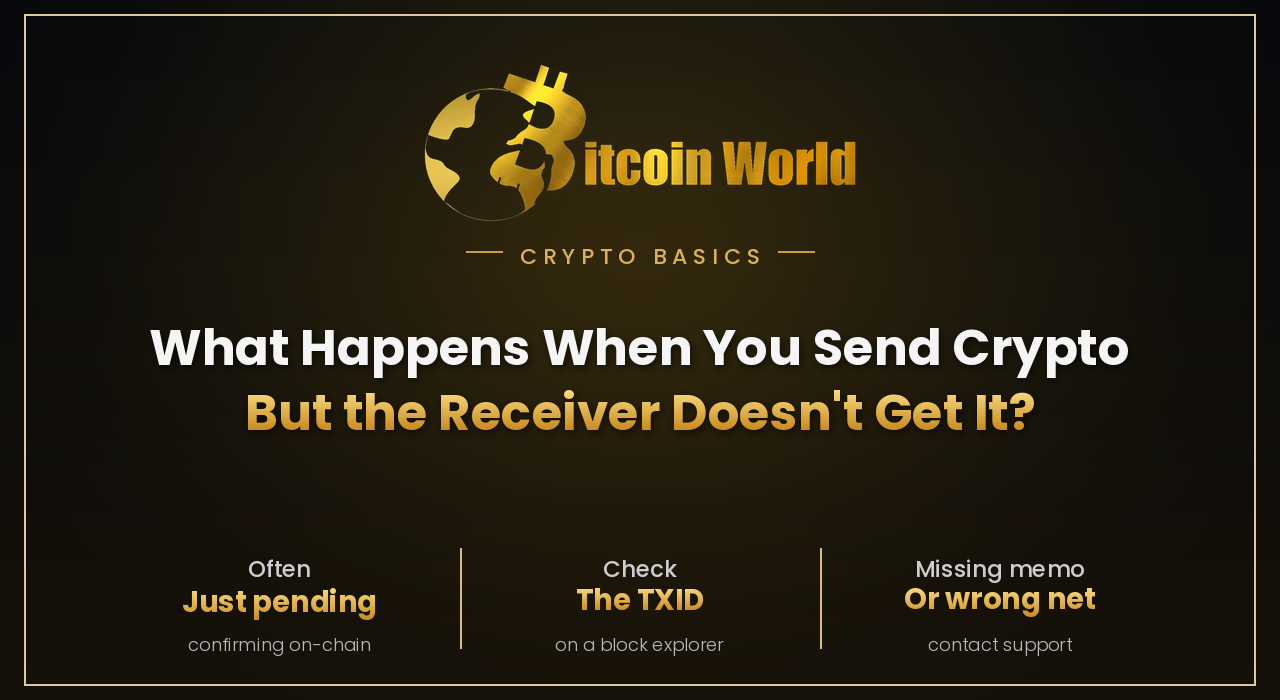
What Happens When You Send Crypto but the Receiver Doesn’t Get It?
Sending crypto but the receiver doesn’t get it is a heart-stopping moment for beginners, who instantly assume the money is gone forever. In most cases it isn’t – the funds are usually pending, on the wrong network, or waiting on a missing detail rather than lost. This article explains the common reasons a transfer doesn’t show up, how to trace it using a transaction ID, the situations that are genuinely risky, and what Indian users should do step by step.
What Happens When You Send Crypto but the Receiver Doesn’t Get It?
When you send crypto but the receiver doesn’t get it, the transfer is usually delayed or misrouted rather than lost. The first step is always to check the transaction’s real status on the blockchain.
- Often just pending: The transfer may still be unconfirmed, waiting in the network’s queue.
- Check the TXID: Your transaction ID (TXID) reveals whether it’s confirmed, pending, or never broadcast.
- Confirmed on-chain, not shown: If it’s confirmed but missing, the cause is usually a wrong network, wrong address, or missing memo.
- Funds rarely vanish: Most “missing” transfers are traceable and recoverable with the right details.
What Are the Common Reasons a Transfer Doesn’t Arrive?
Several routine issues explain the vast majority of “missing” crypto.
- Pending confirmation: A low network fee or congestion can delay the transfer for minutes or hours.
- Wrong network: Sending on a chain the receiver’s wallet doesn’t support (e.g. BEP-20 vs ERC-20) can leave funds stuck.
- Missing memo/tag: Coins like XRP or XLM and some exchanges require a destination tag or memo – without it, the deposit isn’t credited automatically.
- Exchange processing: Many exchanges wait for several confirmations before the balance appears.
When Is the Crypto Actually at Risk?
A few scenarios go beyond a simple delay and need quick action.
- Wrong address entirely: Funds sent to a valid address no one you know controls are likely unrecoverable.
- Unsupported network on an exchange: A wrong-network deposit may need exchange support and isn’t always recoverable.
- Missing memo on an exchange: The deposit may be held until you open a support ticket with proof.
- Act fast: The sooner you contact the relevant platform with your TXID, the better your odds.
What Should Indian Users Do If a Transfer Doesn’t Show Up?
For users in India, a calm, documented process resolves most cases.
- Find the TXID: Locate the transaction hash in your wallet or exchange history.
- Use a block explorer: Paste the TXID to confirm whether it’s pending or confirmed and where it went.
- Match details: Verify the network, address, and any required memo/tag with the receiver.
- Contact support: For exchange deposits, raise a ticket with the TXID; for scams, report on India’s cybercrime portal.
Frequently Asked Questions
Why hasn’t my crypto arrived in the receiver’s wallet yet?
In most cases the transfer is simply pending – waiting on network confirmations due to a low fee or congestion. If you send crypto but the receiver doesn’t get it, checking the transaction ID on a block explorer will show whether it’s still confirming or has already landed. A confirmed-but-missing transfer usually points to a wrong network, wrong address, or a missing memo.
What is a memo or destination tag, and why does it matter?
A memo or destination tag is an extra identifier some coins and exchanges require to credit a deposit to the right account. If you send crypto without the required memo, the funds may sit uncredited until you contact support with your transaction details. Always check whether a memo is needed before sending to an exchange.
Can the receiver get the crypto if it went to the wrong network?
Sometimes – if the receiver controls the private keys and the funds landed on a supported EVM chain, they can often import their keys into a compatible wallet to access them. If it was deposited to an exchange that doesn’t credit that network, recovery depends on the exchange and isn’t guaranteed. This is why matching the network before sending is essential.
Conclusion: Why a “Missing” Transfer Is Usually Just a Delay
Understanding what happens when you send crypto but the receiver doesn’t get it replaces panic with a clear process: most transfers are pending, misrouted, or missing a memo – not lost. For Indian users, the routine is simple – grab the TXID, check a block explorer, match the network and memo, and contact support when needed. Learn to trace a transaction, and you’ll resolve nearly every “missing crypto” scare yourself, often within minutes.
Disclaimer: The information provided is not trading advice, Bitcoinworld.co.in holds no liability for any investments made based on the information provided on this page. We strongly recommend independent research and/or consultation with a qualified professional before making any investment decisions.