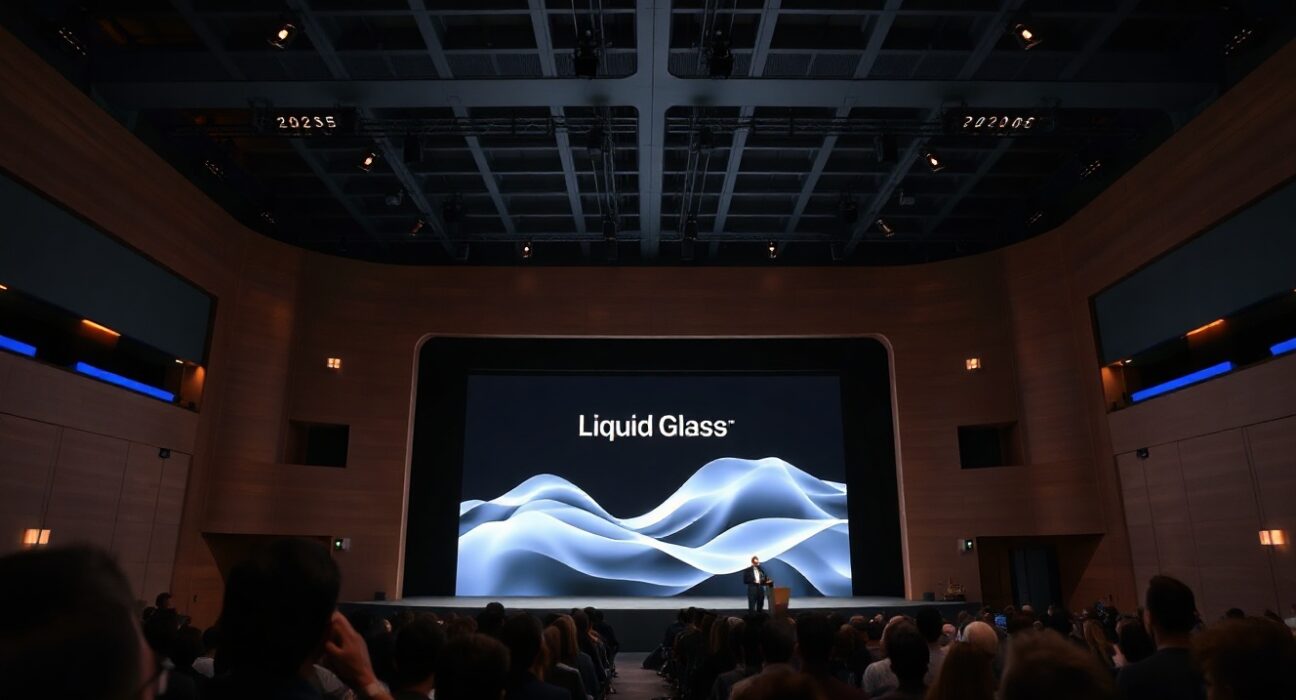
Apple’s Worldwide Developers Conference (WWDC) on Monday took an unusual turn. Instead of leading with its much-anticipated AI-powered Siri, the company opened with an extended list of repairs and refinements to its core software. The message was clear: Apple believes it needs to fix the foundation before asking users to trust its AI ambitions.
A Shift in Tone: From Breakthroughs to Bug Fixes
Craig Federighi, Apple’s senior vice president of Software Engineering, spent the first segment of the keynote addressing what he called “sweating the details.” The phrasing was notable coming from a company that has historically emphasized innovation over iteration. For the past two years, Apple has faced mounting criticism over software quality — from a controversial design overhaul to a search function that users described as unreliable.
Federighi acknowledged user feedback directly, particularly regarding the Liquid Glass design language introduced in iOS 26. The glass-like aesthetic, while visually striking, had caused readability issues. Apple responded by adding a new slider that lets users adjust transparency all the way to a fully tinted mode. “We really appreciate the feedback we’ve received,” said Shubham Kedia, Apple’s director of human interface design, during the keynote.
Performance Improvements Across the Board
Beyond design tweaks, Apple announced measurable performance gains. iPhone and iPad apps now launch 30% faster. New photos appear up to 70% faster in the library. AirDrop file transfers are up to 80% faster — a meaningful improvement for a feature that had become notoriously unreliable. Apple also extended these performance improvements to devices as old as the iPhone 11, a model released in 2019, acknowledging that users are holding onto their phones longer.
Other long-standing friction points received attention: smoother transitions between Wi-Fi and cellular, a new indicator for slow message delivery, and a rebuilt search experience that Apple says is “more stable, more efficient, and more comprehensive.” The company also added a new ranking system in Mail to surface the most relevant results first.
Health and Inclusion Updates
Apple’s Health app finally added support for perimenopause and menopause tracking — a feature advocates had requested for years. The move aligns with a rapidly growing menopause care market, which has seen significant investment, including telehealth startup Midi Health crossing a $1 billion valuation earlier this year. iCloud shared photo albums also became more inclusive, accepting contributions from Android and Windows users for the first time.
The AI Announcement: Siri’s Cautious Debut
After the long list of fixes, Apple turned to the main event: an AI-enhanced Siri. The assistant will launch in beta later this year, but notably not in the EU or China, where regulatory hurdles remain. The company framed Siri’s AI capabilities as one part of a broader effort, rather than a make-or-break moment. Apple Intelligence will also power new features like contextual reply suggestions in Messages, natural language event creation in Calendar, and AI-driven photo editing tools including Spatial Reframing, which adjusts photo composition after the fact.
Apple also announced Image Playground, its AI image generation app, will open to developers via an API, turning a consumer feature into a potential platform. The updated model can now generate practical content like business flyers and cleanly edited photos.
Why This Matters
Apple’s WWDC 2026 keynote signals a strategic shift. By prioritizing reliability over novelty, the company is acknowledging that its software foundation needed shoring up. For users, this means a more stable experience across devices. For investors and industry watchers, it suggests Apple is taking a measured approach to AI — one that prioritizes trust over speed. The question now is whether that cautious strategy will pay off as competitors like Google and Amazon continue to push more aggressively into AI-powered features.
Conclusion
Apple’s WWDC 2026 was less about revolutionary breakthroughs and more about getting the basics right. By addressing user complaints about design, performance, and missing features before unveiling its AI plans, Apple is betting that a solid foundation will make its AI offerings more credible. Whether that bet succeeds will depend on execution — and on whether users feel the company has truly listened.
FAQs
Q1: What is Liquid Glass and why was it controversial?
Liquid Glass is a design language introduced in iOS 26 that uses glass-like transparency effects. Users reported readability issues, particularly on the Mac, and requested options to reduce transparency.
Q2: When will the new AI-enhanced Siri be available?
Apple announced Siri’s AI features will launch in beta later this year, but not in the EU or China due to regulatory hurdles.
Q3: Which devices will benefit from the performance improvements?
Apple extended performance improvements to all models back to the iPhone 11, released in 2019, acknowledging that users are keeping their devices longer.
Disclaimer: The information provided is not trading advice, Bitcoinworld.co.in holds no liability for any investments made based on the information provided on this page. We strongly recommend independent research and/or consultation with a qualified professional before making any investment decisions.