

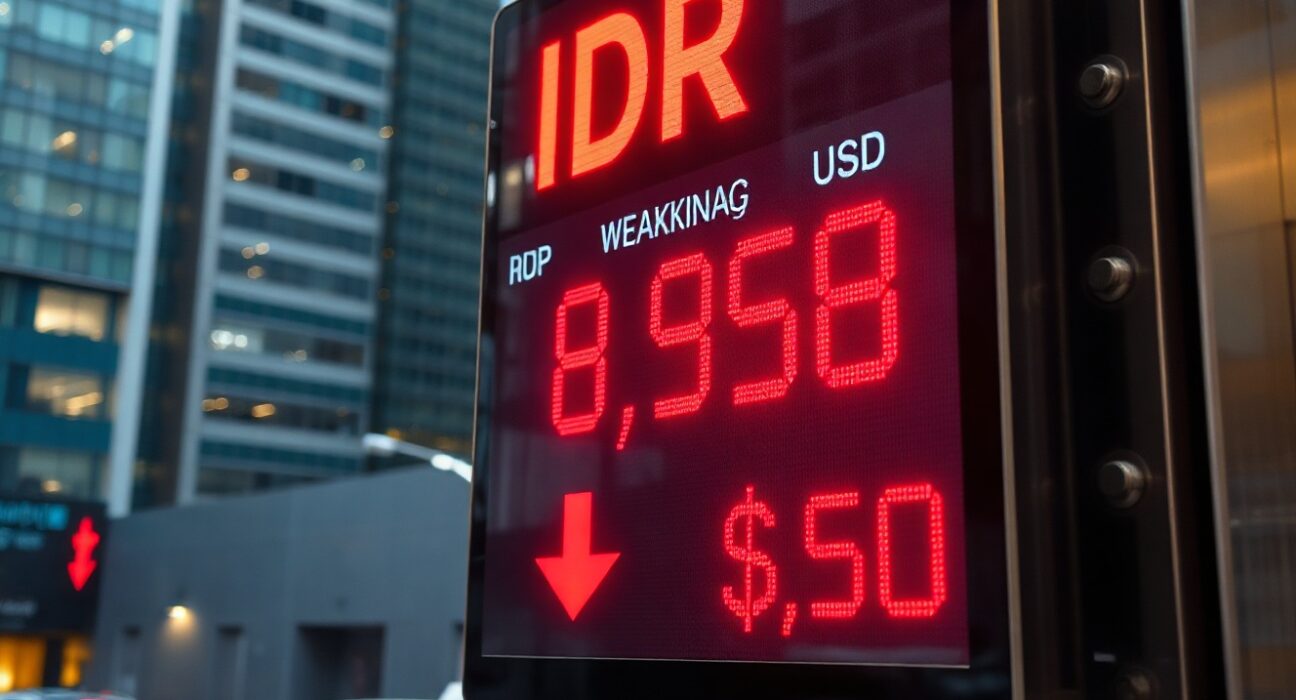
The Indonesian rupiah continues to face significant headwinds, and analysts at Commerzbank suggest that Bank Indonesia (BI) may need to tighten monetary policy further to defend the embattled currency. In a note released this week, the German bank’s foreign exchange strategists highlighted persistent external pressures, including a strong US dollar and elevated global interest rates, as key drivers of IDR weakness.
Why BI May Need to Act Again
Commerzbank’s analysis points to a widening interest rate differential between Indonesia and the United States as a primary factor pressuring the rupiah. Despite BI’s cumulative rate hikes over the past year, the yield advantage for holding rupiah-denominated assets has narrowed, reducing the currency’s appeal to foreign investors. The bank notes that without further tightening, capital outflows could accelerate, exacerbating depreciation.
Indonesia’s trade surplus, while still positive, has also been shrinking, offering less support to the rupiah. Commodity price normalization, particularly for coal and palm oil, has reduced export revenues, while import demand remains resilient. This shift in the current account dynamic adds another layer of vulnerability for the currency.
Market Implications and Investor Sentiment
The prospect of additional BI tightening has implications for Indonesian bond markets and equities. Higher domestic rates could support the rupiah in the near term but may also weigh on economic growth by increasing borrowing costs for businesses and consumers. Foreign portfolio investors are closely watching BI’s next move, with many adopting a wait-and-see approach.
Commerzbank’s view aligns with a growing consensus among regional analysts that BI will remain hawkish in the coming months. However, the bank cautions that the effectiveness of rate hikes in stabilizing the IDR may be limited if global dollar strength persists. Structural reforms to boost export competitiveness and attract foreign direct investment are seen as longer-term solutions.
What This Means for Indonesian Businesses and Consumers
For Indonesian companies with foreign currency debt, a weaker rupiah increases repayment costs, potentially squeezing profit margins. Importers, particularly those reliant on raw materials and machinery, face higher input costs that could be passed on to consumers. On the positive side, exporters benefit from a more competitive exchange rate, though the net effect on the broader economy remains uncertain.
Consumers may experience higher prices for imported goods, including electronics, vehicles, and certain food products. BI’s tightening cycle, if sustained, could also lead to higher mortgage and lending rates, dampening domestic demand.
Conclusion
Commerzbank’s warning underscores the delicate balancing act facing Bank Indonesia as it navigates external pressures and domestic growth objectives. While further rate hikes may provide temporary relief for the rupiah, sustainable stability will depend on a combination of prudent monetary policy, improved current account fundamentals, and a more favorable global environment. Investors and businesses should remain vigilant to policy signals from both BI and the Federal Reserve in the weeks ahead.
FAQs
Q1: Why is the Indonesian rupiah weakening?
The rupiah is under pressure due to a strong US dollar, narrowing interest rate differentials, and a shrinking trade surplus. Global factors, including US Federal Reserve policy, also play a significant role.
Q2: How could Bank Indonesia respond?
Commerzbank expects BI may raise interest rates further to defend the rupiah and attract foreign capital. Other measures could include intervention in the foreign exchange market and tighter liquidity management.
Q3: What does a weaker rupiah mean for the Indonesian economy?
It increases the cost of imports, potentially fueling inflation and hurting consumers and businesses with foreign debt. However, exporters may benefit from improved competitiveness. Overall, it creates headwinds for economic growth if sustained.
Disclaimer: The information provided is not trading advice, Bitcoinworld.co.in holds no liability for any investments made based on the information provided on this page. We strongly recommend independent research and/or consultation with a qualified professional before making any investment decisions.
