

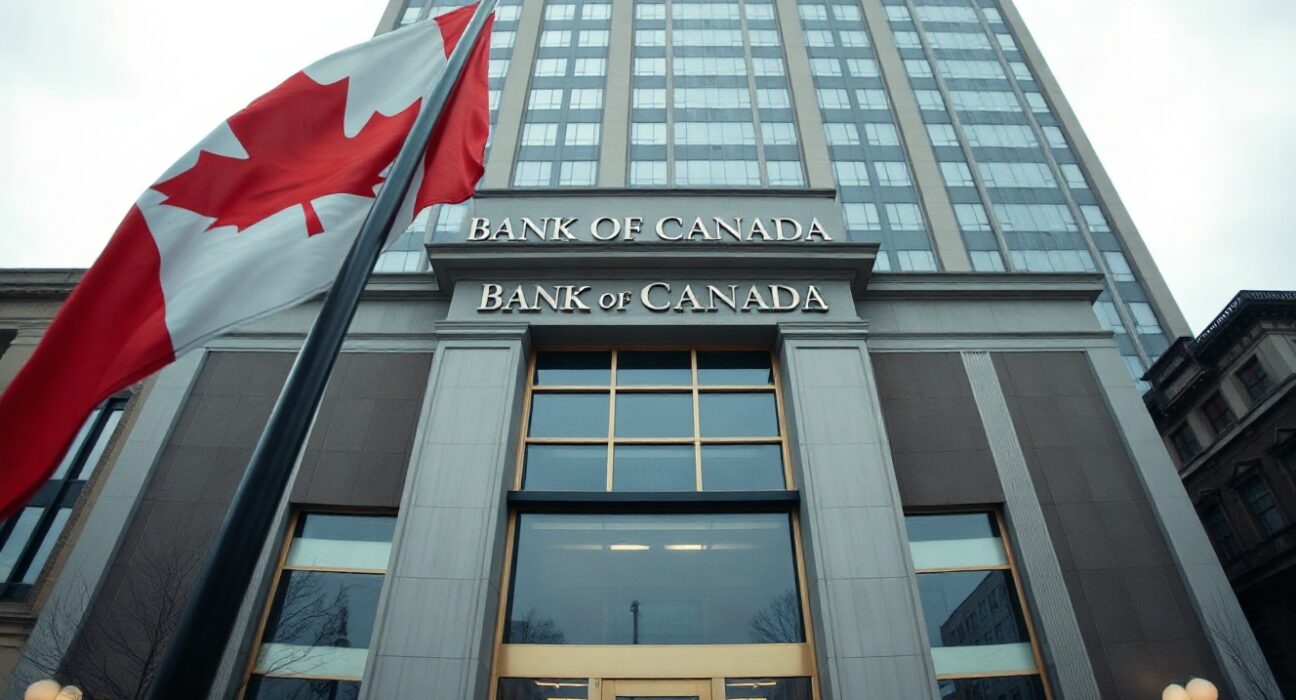
The Bank of Canada is widely expected to hold its benchmark interest rate steady at its next policy announcement, as the central bank navigates a challenging environment where inflation remains above target while the domestic economy shows increasing signs of softening.
Economists and market analysts surveyed in recent weeks point to a near-unanimous consensus that the BoC will maintain the overnight rate at its current level, pausing after a series of hikes that brought borrowing costs to multi-year highs. The decision reflects a delicate balancing act: price pressures have proven stickier than anticipated, yet growth is faltering under the weight of elevated rates and global headwinds.
Inflation Persists Above Target
Canada’s annual inflation rate has hovered in the 3% to 4% range for several months, well above the central bank’s 2% target. Core measures, which strip out volatile items like food and energy, have also remained elevated, suggesting that underlying price pressures are not dissipating as quickly as policymakers had hoped.
Key contributors include shelter costs, which continue to rise due to high rent and mortgage interest costs, as well as persistent price increases in services such as insurance and dining out. The BoC has repeatedly emphasized that returning inflation to target will take time and that premature rate cuts could undo progress.
Economic Momentum Falters
At the same time, the Canadian economy is losing steam. GDP growth slowed sharply in the second half of the year, and early data for the current quarter points to further weakness. Consumer spending has softened as households grapple with higher debt-servicing costs, while business investment remains cautious amid uncertain demand.
The labour market, though still relatively tight by historical standards, has shown signs of cooling. Job creation has moderated, and the unemployment rate has edged up from cycle lows. Wage growth, while still elevated, is beginning to moderate in some sectors.
Global Context Adds Pressure
Internationally, the economic picture is mixed. The U.S. Federal Reserve has signaled it is in no rush to cut rates, while the European Central Bank faces its own inflation challenges. Slower growth in China and ongoing geopolitical tensions add to the uncertainty. For Canada, a trade-dependent economy, these external factors weigh heavily on the outlook.
What a Hold Means for Borrowers and Savers
For Canadian households and businesses, a rate hold offers a period of stability, but not relief. Variable-rate mortgage holders will continue to face elevated payments, while those with fixed-rate renewals coming due will still confront significantly higher rates than they locked in years ago. Savers, on the other hand, will continue to benefit from higher interest on deposits and savings accounts.
The central bank’s forward guidance will be closely watched. Markets are looking for any signal about the timing of future rate cuts, though most economists expect the BoC to remain cautious and data-dependent, likely maintaining its stance until there is clearer evidence that inflation is on a sustainable path downward.
Conclusion
The Bank of Canada’s decision to hold rates reflects a central bank caught between two opposing forces: inflation that has not yet been tamed and an economy that is losing momentum. While the hold provides a pause, the broader challenge remains unresolved. The path forward will depend on incoming data on inflation, employment, and growth, both at home and abroad. For now, Canadians should expect interest rates to stay higher for longer, with any pivot likely months away.
FAQs
Q1: Why is the Bank of Canada holding interest rates if inflation is still high?
The BoC is balancing the need to control inflation against the risk of further damaging an already slowing economy. Holding rates allows time to assess the cumulative impact of previous hikes while maintaining pressure on inflation.
Q2: When might the Bank of Canada start cutting rates?
Most economists expect rate cuts to begin no earlier than mid-2025, and only if inflation shows a sustained decline toward the 2% target and economic conditions weaken further. The BoC has emphasized it will be data-dependent.
Q3: How does a rate hold affect my mortgage?
For variable-rate mortgage holders, payments will remain unchanged. For those renewing a fixed-rate mortgage, rates will still be significantly higher than previous terms. It is advisable to review renewal options early and consider locking in if concerned about future rate increases.
Disclaimer: The information provided is not trading advice, Bitcoinworld.co.in holds no liability for any investments made based on the information provided on this page. We strongly recommend independent research and/or consultation with a qualified professional before making any investment decisions.
