

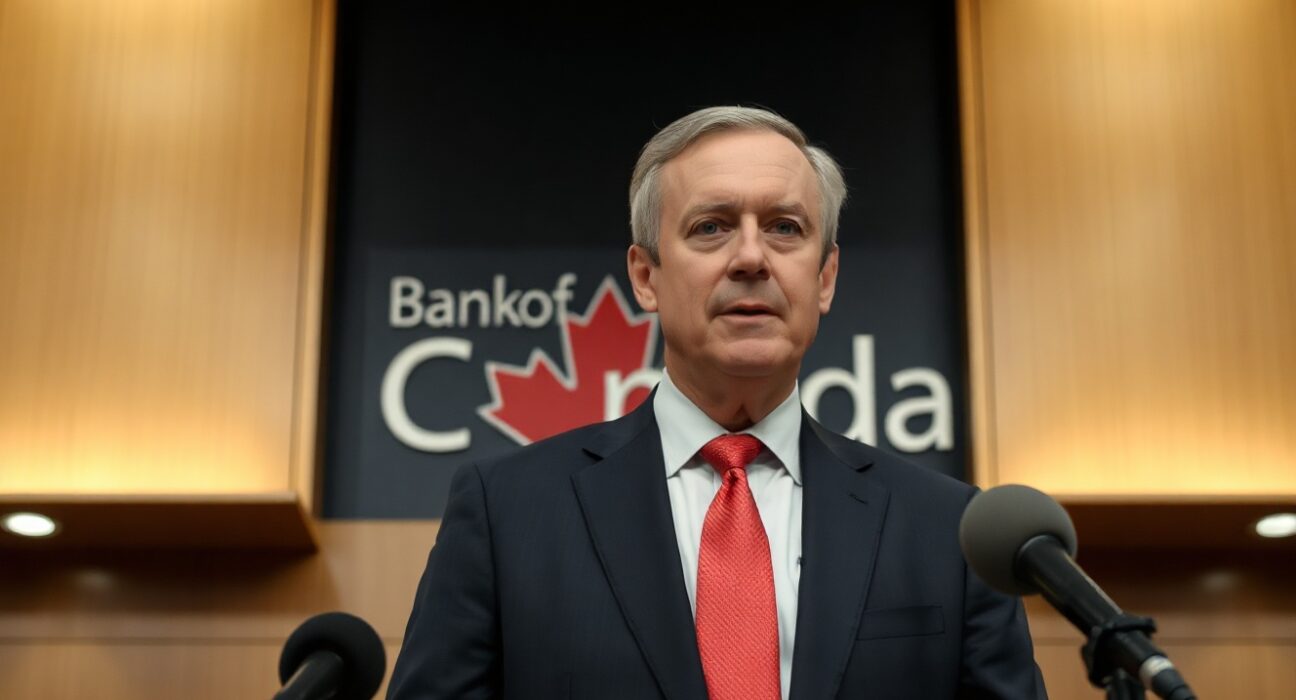
The Bank of Canada held its benchmark interest rate steady at 5% this week, a widely expected decision that nevertheless drew attention to Governor Tiff Macklem’s subsequent remarks on the economic outlook. Speaking in Ottawa, Macklem struck a cautious tone, signaling that while inflation has moderated, the central bank is not yet ready to begin cutting rates.
Rate Hold and Economic Context
The decision to maintain the overnight rate at 5% marks the fifth consecutive hold since July 2023. The central bank has kept borrowing costs at their highest level in over two decades as it works to bring inflation back to its 2% target. In his prepared statement and during the Q&A session, Macklem emphasized that the economy is still adjusting to the cumulative effect of previous rate hikes.
Canada’s inflation rate has eased to 2.7% in April, down from a peak of 8.1% in mid-2022, but progress has slowed in recent months. Core inflation measures remain sticky, particularly in shelter costs and services. Macklem noted that the Bank needs to see sustained evidence that price pressures are easing before considering any policy loosening.
What Macklem Said About the Outlook
Governor Macklem highlighted several key factors shaping the Bank’s thinking. The labor market remains relatively tight, with wage growth still elevated. Consumer spending has weakened, but business investment has been more resilient than expected. He also pointed to global uncertainties, including geopolitical tensions and trade disruptions, as risks to the inflation outlook.
“We are encouraged by the progress on inflation, but we are not yet convinced that it is on a sustainable path back to 2%,” Macklem said. “The decision to hold the policy rate reflects our assessment that monetary policy is working, and we need to remain patient.”
The Governor avoided giving a clear timeline for rate cuts, pushing back against market expectations that the first reduction could come as early as July. He stressed that the Bank will be data-dependent and that each meeting will be assessed on its own merits.
Implications for Borrowers and the Housing Market
For Canadian households, the rate hold means continued pressure on variable-rate mortgage holders and those renewing fixed-rate loans. The housing market has shown signs of cooling, but prices remain elevated in major cities like Toronto and Vancouver. Analysts suggest that any signal of a rate cut could reignite demand, something the Bank is keen to avoid.
Economists broadly interpreted Macklem’s remarks as a deliberate effort to manage expectations. “The Bank is trying to avoid a repeat of early 2023, when markets prematurely priced in rate cuts and financial conditions eased prematurely,” said Sarah Miller, a senior economist at a Canadian bank.
Conclusion
The Bank of Canada’s decision to hold rates, combined with Governor Macklem’s cautious commentary, underscores the central bank’s commitment to ensuring inflation is fully under control before pivoting. For now, the message is clear: patience remains the watchword. Markets will now focus on the next inflation and employment data releases for clues on when the first rate cut might actually arrive.
FAQs
Q1: When will the Bank of Canada start cutting interest rates?
Governor Macklem did not provide a specific timeline. He emphasized that the Bank will be data-dependent and needs sustained evidence that inflation is returning to 2% before considering rate cuts. Most economists expect the first cut in late 2024 or early 2025.
Q2: How does the rate hold affect mortgage holders?
Homeowners with variable-rate mortgages will see no immediate change in their payments. Those renewing fixed-rate loans may still face higher rates than they had previously, as bond yields remain elevated. The prolonged high-rate environment continues to strain household budgets.
Q3: What inflation data is the Bank watching most closely?
The Bank is focused on core inflation measures that exclude volatile items like food and energy. It is also closely monitoring shelter costs, wage growth, and services inflation, which have been slower to moderate. Macklem indicated that progress in these areas is essential for a policy shift.
Disclaimer: The information provided is not trading advice, Bitcoinworld.co.in holds no liability for any investments made based on the information provided on this page. We strongly recommend independent research and/or consultation with a qualified professional before making any investment decisions.
