

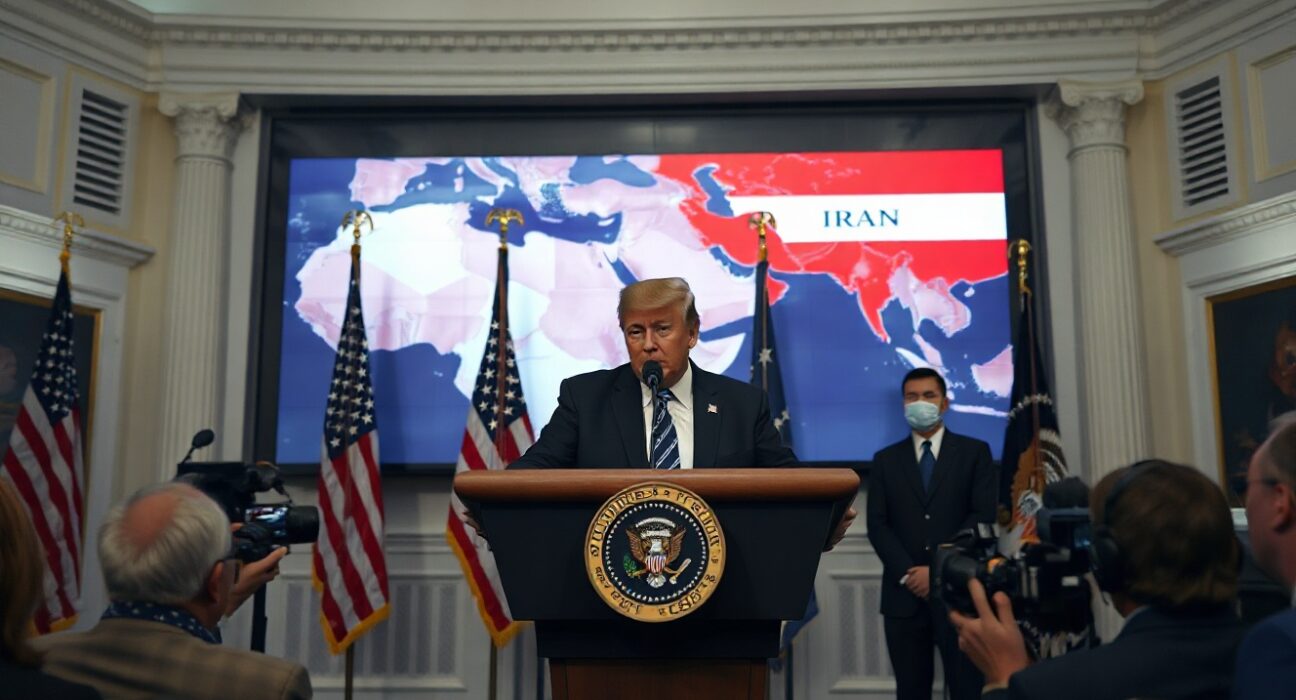
President Donald Trump has issued a stark warning to Iran, threatening heavy military strikes if Tehran continues its defiance of international demands over its nuclear program. The statement, delivered during a press briefing at the White House, marks an escalation in rhetoric between the two nations and raises the stakes in an already volatile region.
Context of the Threat
The president’s comments come after Iran rejected repeated calls from the United Nations and Western powers to halt uranium enrichment activities. According to recent reports from the International Atomic Energy Agency (IAEA), Iran has enriched uranium to levels approaching 60%, well beyond the 3.67% limit set by the 2015 nuclear deal, from which the US withdrew in 2018.
Trump’s warning is the latest in a series of confrontational statements. He stated, ‘We will not allow Iran to obtain a nuclear weapon. If they continue down this path, the response will be swift and heavy.’ No specific targets or timelines were disclosed, but defense analysts suggest potential strikes could involve missile facilities, nuclear sites, or naval assets.
Iran’s Response and Regional Dynamics
Iranian officials have dismissed the threats as ‘psychological warfare.’ Foreign Ministry spokesman Nasser Kanaani reiterated Tehran’s position that its nuclear activities are peaceful and that it will not negotiate under pressure. Meanwhile, regional allies such as Israel have expressed support for a firm stance, while European powers have urged restraint and renewed diplomacy.
The situation has already impacted global oil markets. Brent crude prices rose by 3% following the president’s remarks, reflecting concerns over potential supply disruptions in the Strait of Hormuz, a critical chokepoint for oil shipments.
Why This Matters
For readers, this development signals a potential shift toward military confrontation in the Middle East, with direct implications for global energy prices, international security, and the stability of the region. The US and Iran have been locked in a cycle of escalation for years, but a direct military strike would represent a significant departure from recent diplomatic efforts.
Experts caution that any military action could trigger a broader conflict, drawing in proxies in Iraq, Syria, Yemen, and Lebanon. The economic fallout could also affect consumers worldwide, as oil prices may spike further.
Conclusion
President Trump’s threat of heavy strikes on Iran underscores the fragile state of US-Iran relations. As Tehran continues its nuclear defiance, the world watches closely. The coming weeks will be critical in determining whether diplomacy or conflict prevails. For now, the rhetoric is escalating, and the consequences for global stability are profound.
FAQs
Q1: What prompted President Trump’s threat of heavy strikes on Iran?
The threat follows Iran’s continued uranium enrichment activities beyond internationally agreed limits, as reported by the IAEA, and Tehran’s refusal to engage in new nuclear negotiations.
Q2: Could the situation lead to a full-scale war?
While direct military conflict is possible, analysts believe both sides are still signaling room for de-escalation. However, any miscalculation could quickly escalate into a broader regional conflict.
Q3: How would this affect oil prices and the global economy?
Oil prices have already risen in response to the tensions. A military strike or disruption in the Strait of Hormuz could cause significant price spikes, impacting consumers and economies worldwide.
Disclaimer: The information provided is not trading advice, Bitcoinworld.co.in holds no liability for any investments made based on the information provided on this page. We strongly recommend independent research and/or consultation with a qualified professional before making any investment decisions.
