

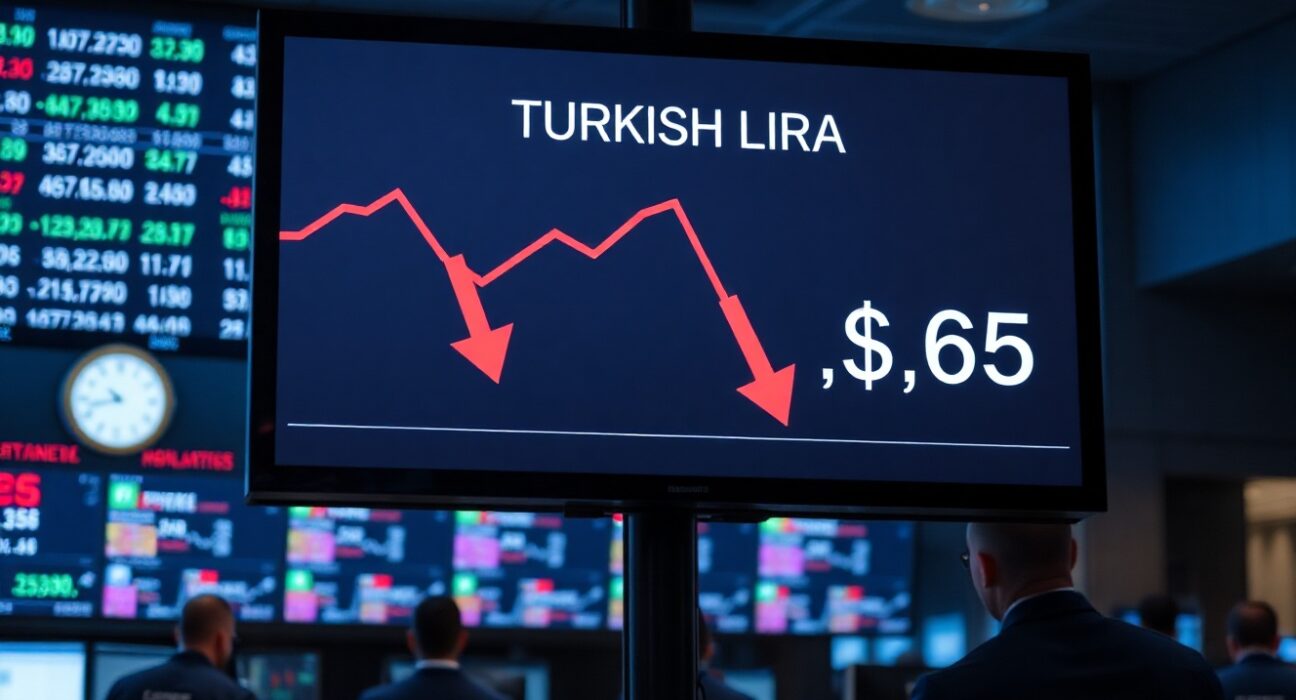
The Turkish lira continues to face headwinds as market participants increasingly question the Central Bank of the Republic of Turkey’s (CBRT) commitment to its current tightening cycle, according to a note from Commerzbank analysts. The assessment underscores persistent doubts about the effectiveness and durability of Turkey’s monetary policy shift, even after the central bank raised interest rates sharply in recent months.
Market Skepticism Persists
Commerzbank’s analysis highlights a disconnect between the CBRT’s stated policy stance and market perceptions. Despite multiple rate hikes since June 2023, including a cumulative increase of over 3,000 basis points, the lira has continued to weaken, trading near record lows against the dollar. The analysts argue that the market remains unconvinced that the tightening will be sustained, particularly given political pressures and the central bank’s historical pattern of easing prematurely.
The report notes that real interest rates, adjusted for inflation, remain deeply negative, undermining the credibility of the tightening cycle. Inflation in Turkey stands above 60%, while the policy rate is at 45%. This gap fuels expectations that the CBRT may soon pivot to rate cuts, especially ahead of local elections in March 2024.
Implications for the Lira and Investors
For investors holding Turkish assets, the Commerzbank note serves as a cautionary signal. The lira’s persistent depreciation erodes returns for foreign investors and raises the cost of imports, further fueling inflation. The bank warns that unless the CBRT demonstrates a stronger commitment to maintaining tight policy, the lira could face additional downward pressure.
The Turkish economy is also grappling with a widening current account deficit and dwindling foreign exchange reserves, which have been depleted by intervention efforts. Analysts point out that sustained tightening is necessary to rebuild credibility and attract capital inflows, but political considerations may complicate this path.
Broader Emerging Market Context
The situation in Turkey is being watched closely by emerging market investors, as it highlights the challenges of maintaining monetary discipline in politically charged environments. Other central banks in the region, such as those in Argentina and Nigeria, face similar credibility issues. Turkey’s experience underscores the importance of policy consistency for currency stability.
Conclusion
Commerzbank’s assessment reflects a broader market sentiment that the CBRT’s tightening resolve is not yet fully trusted. Without a clear signal of sustained policy commitment, the Turkish lira is likely to remain under pressure. The coming months, particularly the post-election period, will be critical in determining whether the central bank can restore confidence or whether further depreciation lies ahead.
FAQs
Q1: Why is the Turkish lira weakening despite interest rate hikes?
Market participants doubt the CBRT’s commitment to sustained tightening, partly due to political pressures and a history of premature easing. Negative real interest rates also reduce the appeal of holding lira-denominated assets.
Q2: What is Commerzbank’s main concern about the CBRT?
Commerzbank analysts argue that the market is not convinced the CBRT will maintain its tight policy stance, which undermines the effectiveness of rate hikes and keeps the lira under pressure.
Q3: How does this affect investors in Turkish assets?
Persistent lira depreciation erodes returns for foreign investors and increases import costs, worsening inflation. Investors may demand higher risk premiums or reduce exposure until policy credibility improves.
Disclaimer: The information provided is not trading advice, Bitcoinworld.co.in holds no liability for any investments made based on the information provided on this page. We strongly recommend independent research and/or consultation with a qualified professional before making any investment decisions.
