

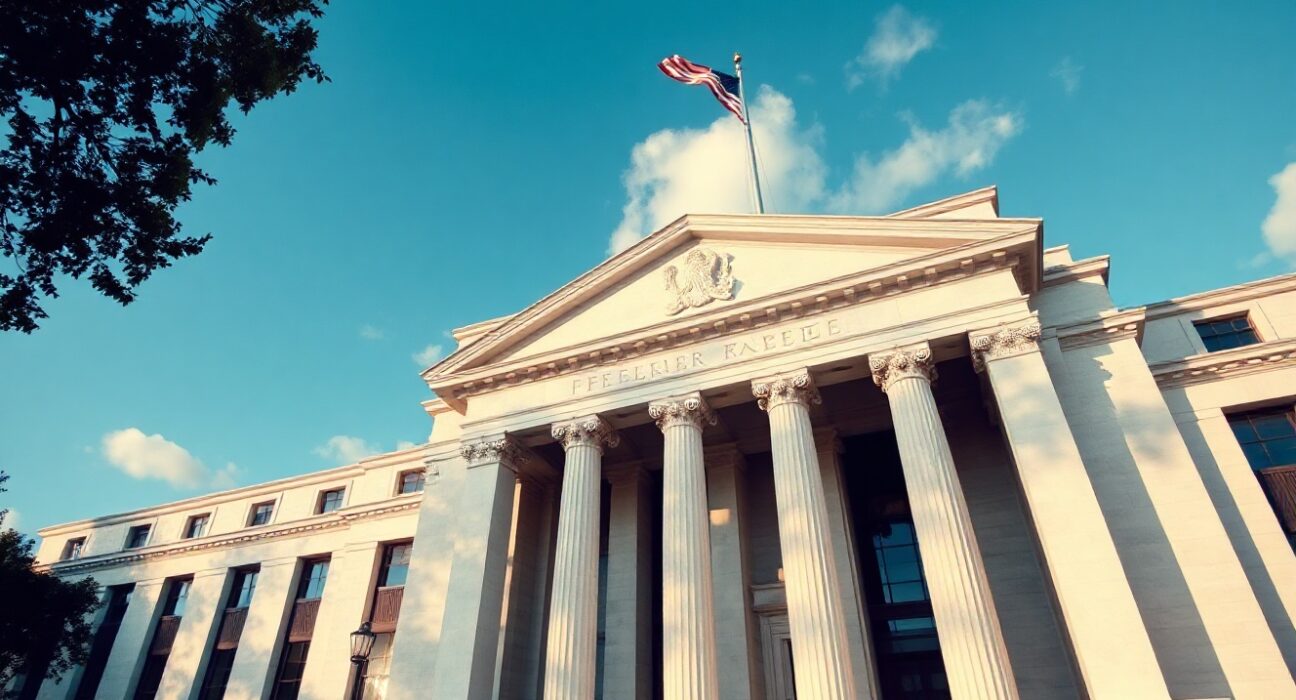
Santander has reaffirmed its expectation that the Federal Reserve will raise interest rates at its September policy meeting, and it also anticipates another hike in December, according to a report from Walter Bloomberg. The bank’s outlook remains unchanged despite recent inflation data, suggesting that the July Consumer Price Index (CPI) report is unlikely to influence the central bank’s decision next month.
Context: Why the Fed’s Next Moves Matter
The Federal Reserve has been navigating a challenging economic environment, balancing the need to curb inflation against the risk of slowing economic growth. Since early 2022, the Fed has raised its benchmark federal funds rate from near zero to a range of 5.25%–5.50%, the highest level in over two decades. These increases have been aimed at bringing inflation down to the Fed’s 2% target, but the pace of easing has been uneven, with core inflation remaining sticky.
Santander’s forecast aligns with a segment of market participants who believe the Fed will need to maintain a restrictive stance for longer. However, it contrasts with futures market pricing, which currently suggests a higher probability of a pause in September. This divergence underscores the uncertainty surrounding the Fed’s policy path, as officials weigh recent signs of cooling price pressures against robust labor market data.
Santander’s View: CPI Won’t Sway the Fed
According to the Walter Bloomberg report, Santander argues that the July CPI data, which showed a slight uptick in headline inflation to 3.2% year-over-year, is not enough to alter the Fed’s September decision. The bank maintains that the central bank will likely prioritize its commitment to quelling inflation, even if some economic indicators point to a slowdown.
Santander also expects a second hike in December, a scenario that would bring the federal funds rate to a range of 5.75%–6.00%. This projection suggests that the bank sees the Fed as more hawkish than many market observers, who anticipate a longer pause or even rate cuts by early 2024.
Implications for Investors and Borrowers
For investors, the prospect of additional rate hikes means higher yields on short-term government bonds and potentially increased volatility in equity markets, particularly in growth sectors that are sensitive to borrowing costs. For consumers and businesses, further rate increases would translate into more expensive loans, including mortgages, auto financing, and corporate credit. This could dampen consumer spending and business investment, potentially slowing economic activity in the coming quarters.
However, the Fed’s decisions are data-dependent, and upcoming economic reports—such as the August jobs report and the next CPI release—could shift the outlook. If inflation continues to moderate, the case for a pause may strengthen, but if price pressures persist, the Fed could be compelled to act.
Conclusion
Santander’s steadfast forecast for rate hikes in September and December highlights the ongoing debate about the Fed’s next steps. While the bank’s view is more aggressive than market expectations, it reflects a plausible scenario if inflation proves stubborn. As always, the actual path will depend on incoming data, and the central bank has emphasized that it will make decisions meeting by meeting. For now, the possibility of further tightening remains a key risk for markets and the broader economy.
FAQs
Q1: What is the current federal funds rate?
The Federal Reserve raised the target range to 5.25%–5.50% in July 2023, the highest level since 2001.
Q2: How does a rate hike affect consumers?
A rate hike leads to higher borrowing costs for mortgages, auto loans, credit cards, and business loans, which can reduce consumer spending and business investment.
Q3: When is the next Fed meeting?
The Federal Open Market Committee (FOMC) is scheduled to meet on September 19–20, 2023, with another meeting in October and a final one in December.
Disclaimer: The information provided is not trading advice, Bitcoinworld.co.in holds no liability for any investments made based on the information provided on this page. We strongly recommend independent research and/or consultation with a qualified professional before making any investment decisions.
