

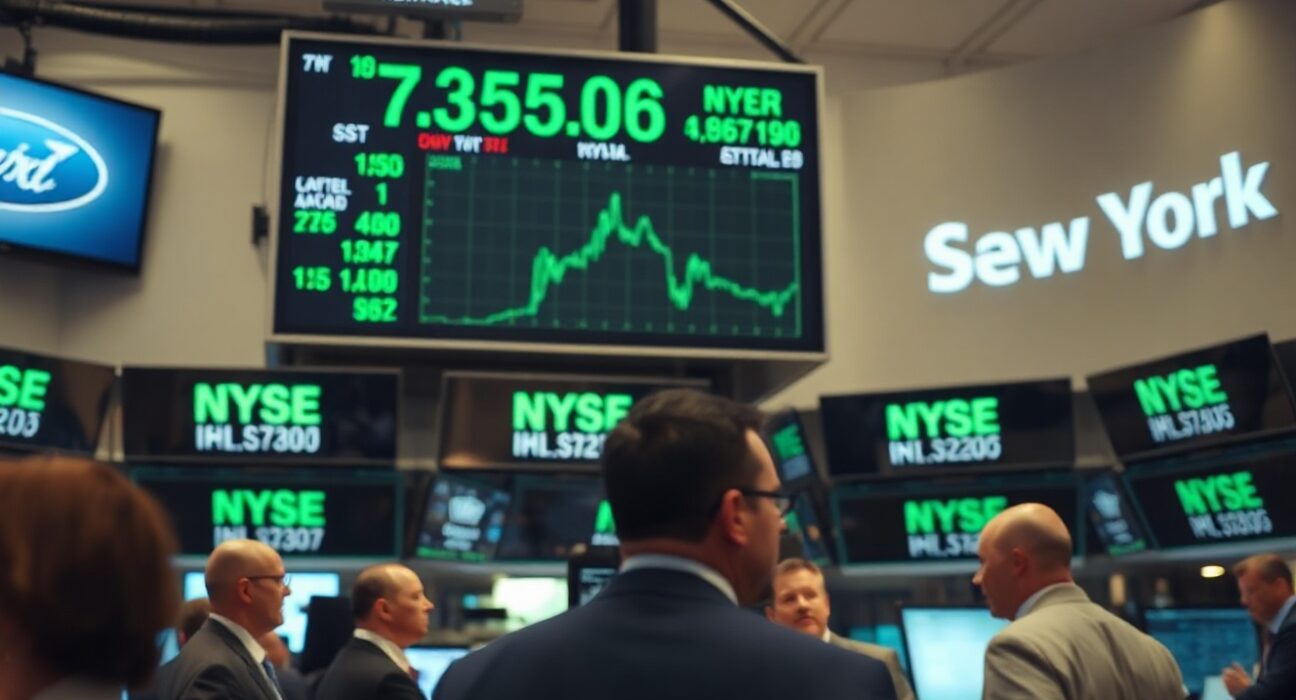
The Dow Jones Industrial Average demonstrated notable resilience on Tuesday, shrugging off a hotter-than-expected producer price index (PPI) report and renewed uncertainty surrounding trade policy. The blue-chip index closed near its session highs, signaling that investors are currently prioritizing a ‘wait and see’ approach over panic selling.
Hot PPI Data Raises Inflation Concerns
The Bureau of Labor Statistics reported that the Producer Price Index for final demand rose 0.4% in January, exceeding the 0.3% consensus estimate. On a year-over-year basis, headline PPI accelerated to 3.5%, up from December’s revised 3.3% reading. The core PPI, which excludes volatile food and energy components, also came in above expectations at 0.3% month-over-month.
The data complicates the Federal Reserve’s path forward. While the central bank has signaled a potential rate cut later this year, persistent producer-level inflation could delay that timeline. Market participants are now pricing in a roughly 60% chance of a rate cut at the June meeting, down from 70% before the report.
Trade Policy Jitters Resurface
Adding to the macro uncertainty, headlines emerged suggesting that the administration is preparing a new round of tariffs targeting a broad range of imported goods, including semiconductors, pharmaceuticals, and critical minerals. The so-called ‘island shopping list’ reportedly outlines priority sectors for domestic production incentives and import restrictions.
Despite the potential for renewed trade friction, the Dow’s muted reaction suggests that investors have grown somewhat desensitized to tariff-related headlines. Many market participants view the latest proposals as opening negotiating positions rather than final policy.
Why the Market Is Holding Up
Several factors are supporting the market’s current resilience. Corporate earnings have generally been solid, with S&P 500 companies reporting their highest profit margins in two years. Additionally, the labor market remains robust, with unemployment at historically low levels. This dual strength is providing a buffer against inflation and policy headwinds.
Furthermore, technical factors are playing a role. The Dow has found support near its 50-day moving average, and options market positioning suggests that large institutional investors are using any dips as buying opportunities.
Conclusion
Tuesday’s price action underscores a market that is cautiously optimistic but not complacent. The Dow’s ability to absorb hot inflation data and trade policy noise without a significant selloff is a positive signal for short-term momentum. However, the path forward remains data-dependent. Investors should watch upcoming consumer price index (CPI) data and Federal Reserve commentary for clearer direction. For now, the market appears to be in a ‘show me’ phase, waiting for concrete economic signals before making its next major move.
FAQs
Q1: What is the Producer Price Index (PPI) and why does it matter for the stock market?
PPI measures the average change in selling prices received by domestic producers for their output. It is a leading indicator of consumer inflation because higher producer costs often get passed on to consumers. When PPI rises faster than expected, it can signal that the Federal Reserve may keep interest rates higher for longer, which can pressure stock valuations.
Q2: How does trade policy uncertainty affect the Dow Jones?
Trade policy uncertainty, such as the threat of new tariffs, can disrupt supply chains, increase input costs for manufacturers, and reduce corporate profit margins. For the Dow, which includes many industrial and multinational companies, these factors can directly impact earnings expectations and stock prices. However, the market’s muted reaction to recent headlines suggests that investors are factoring in a wide range of possible outcomes.
Q3: Should investors be worried about the combination of hot PPI and trade policy jitters?
Not necessarily. While the combination of inflation and trade uncertainty creates a challenging environment, the current market resilience is supported by strong corporate earnings, a healthy labor market, and expectations that the Fed will eventually cut rates. Investors should focus on diversified portfolios and avoid making emotional decisions based on single data points or headline-driven volatility.
Disclaimer: The information provided is not trading advice, Bitcoinworld.co.in holds no liability for any investments made based on the information provided on this page. We strongly recommend independent research and/or consultation with a qualified professional before making any investment decisions.
