

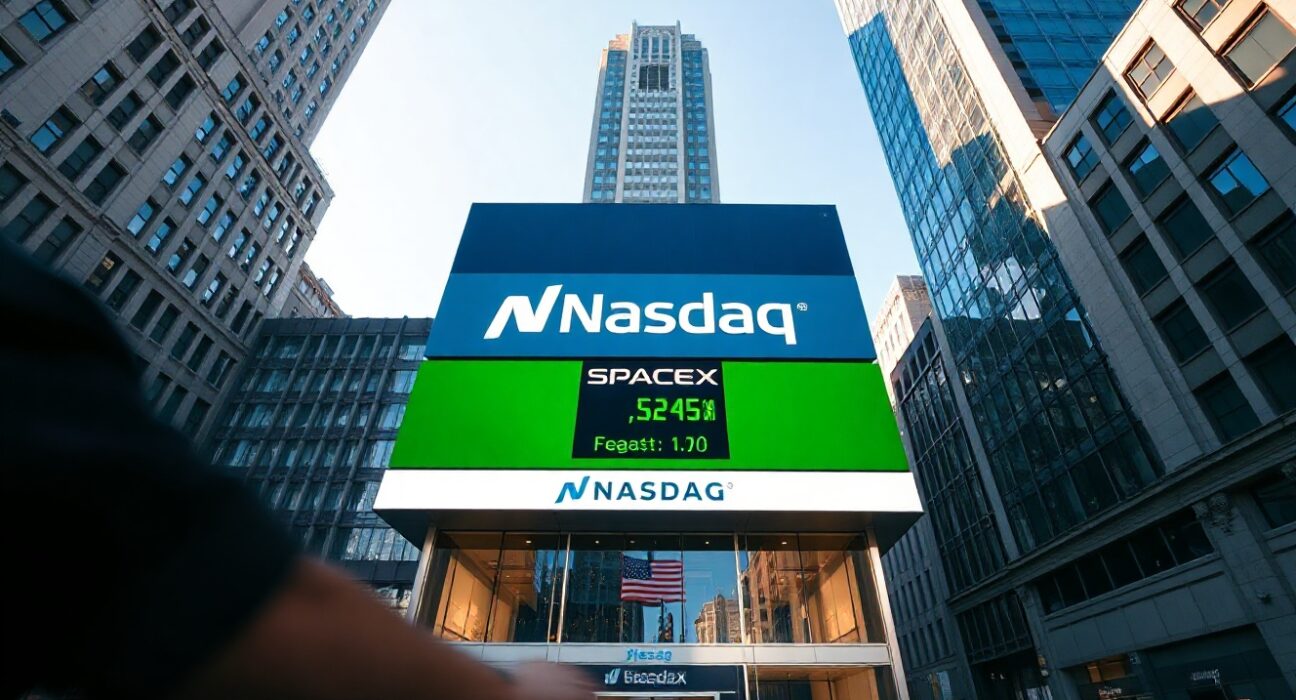
SpaceX completed its initial public offering on June 12, 2026, in what stands as the largest IPO in history. The company priced 555.6 million shares at $135 each, raising $75 billion and instantly making founder Elon Musk the world’s first trillionaire on paper. Shares opened at $150 on the Nasdaq and climbed more than 15% in the first full trading day, closing at $160.95. For investors, employees, and industry observers, the debut marks a new chapter for a company that has dominated headlines for its reusable rockets, Starlink satellite network, and ambitious Starship program.
How the IPO unfolded
SpaceX shares began trading June 12 at $150, an 11% pop above the offering price. By midday, the stock had surged 30% before settling to a 19% gain at the close. Trading volume was exceptionally heavy, with Robinhood reporting record-breaking traffic on its platform in the hours following the debut. The strong demand triggered a ‘green shoe’ over-allotment option, allowing underwriters to sell up to 15% more shares than originally planned. Goldman Sachs and Morgan Stanley led the underwriting, collectively earning an estimated $500 million in fees, according to the Wall Street Journal.
Key figures from the S-1 filing
The IPO registration document revealed unprecedented financial details about the once-private company. SpaceX reported $18 billion in revenue for 2025 but posted a net loss of $4.9 billion, contributing to cumulative losses exceeding $37 billion since inception. The company’s Starlink satellite internet business now generates the majority of revenue, though Starship development costs remain substantial. CEO Elon Musk holds approximately 85.1% of voting power, giving him monarchical control over the publicly traded entity — a concentration of authority that exceeds typical tech founder structures.
Who benefits from the SpaceX IPO
The IPO created an estimated 4,400 new millionaires among SpaceX employees, according to the New York Times. Musk’s personal stake pushed his net worth past $1 trillion, though much of that wealth remains tied to stock. Early investors and insiders with pre-IPO shares also stand to gain significantly, though lower-tier SPV investors face uncertainty until lock-up periods expire. The concentrated voting power means Musk retains decisive control over major decisions, including potential mergers or strategic pivots.
What the S-1 revealed about SpaceX’s strategy
The filing detailed SpaceX’s heavy reliance on Starlink for revenue, its continued investment in Starship reusability, and growing ties to artificial intelligence through its xAI division. Notably, the company secured major compute deals ahead of the IPO: Anthropic agreed to pay $1.25 billion per month for xAI compute capacity, and Google committed $920 million per month for similar services. The S-1 also included language warning investors about potential future dilution, fueling speculation about a possible merger with Tesla — a topic SpaceX COO Gwynne Shotwell addressed in a CNBC interview, saying such a combination ‘might make Elon’s life a little easier.’
Implications for the space industry and investors
SpaceX’s public listing represents a milestone for the commercial space sector, providing a benchmark for valuing private space companies. The IPO’s scale — larger than any previous offering — signals strong investor appetite for space-related assets, though the company’s persistent losses and heavy capital requirements raise questions about long-term profitability. For retail investors, the debut offers direct exposure to a company that has transformed launch costs and satellite internet, but the concentrated voting structure means public shareholders have limited influence over corporate governance.
Conclusion
SpaceX’s IPO is a historic financial event that cements the company’s transition from a private pioneer to a publicly traded powerhouse. The strong market reception reflects investor confidence in its Starlink revenue stream and Starship ambitions, but the company’s substantial losses, Musk’s outsized control, and the risks of dilution warrant careful attention. As trading continues and lock-up periods expire, the coming months will reveal how the market values SpaceX over the long term.
FAQs
Q1: When did SpaceX go public?
SpaceX began trading on the Nasdaq on June 12, 2026, with shares opening at $150.
Q2: How much did SpaceX raise in its IPO?
The company raised $75 billion by selling 555.6 million shares at $135 each, making it the largest IPO in history.
Q3: Who controls SpaceX after the IPO?
Elon Musk retains approximately 85.1% of voting power, giving him near-monarchical control over the publicly traded company.
Disclaimer: The information provided is not trading advice, Bitcoinworld.co.in holds no liability for any investments made based on the information provided on this page. We strongly recommend independent research and/or consultation with a qualified professional before making any investment decisions.
