

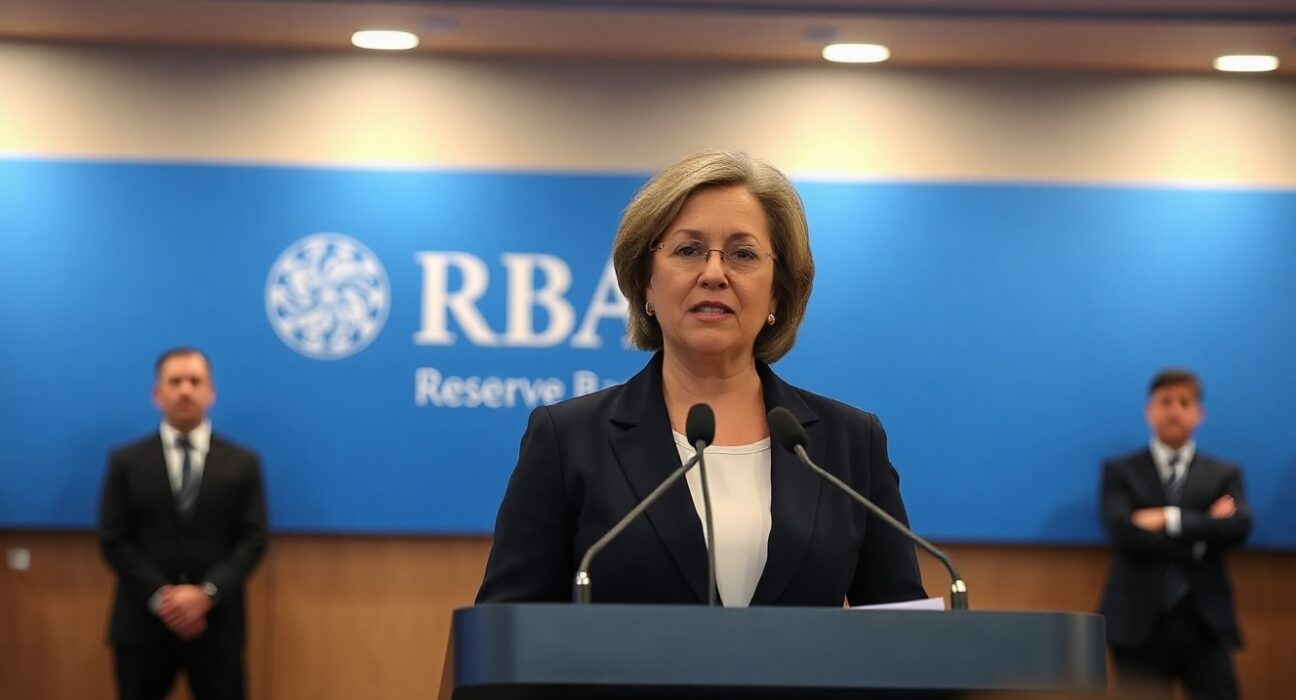
Reserve Bank of Australia Governor Michele Bullock addressed financial markets and the public on Tuesday, offering a measured assessment of the interest rate outlook following the central bank’s decision to hold the cash rate steady at 4.35%. In her speech, Bullock emphasized that while inflation is moderating, the board remains vigilant and data-dependent, with no immediate plans to ease policy.
RBA Holds Firm Amid Mixed Economic Signals
The RBA’s decision to pause its tightening cycle comes as Australia’s inflation rate has eased from its peak of 7.8% in late 2022 to 4.1% in the December quarter. However, Bullock noted that services inflation remains sticky and the labor market is still tight, with unemployment at 3.9%. She reiterated that the board is not ruling out further rate increases if inflation proves persistent, but also acknowledged that the full impact of past hikes is still flowing through the economy.
Financial markets had widely expected the hold, but attention quickly shifted to the governor’s forward guidance. Bullock avoided giving a clear timeline for potential rate cuts, instead stressing that the board needs to see sustained evidence that inflation is returning to the 2-3% target band before considering any easing.
What the Pause Means for Borrowers and Businesses
For Australian mortgage holders, the hold offers a temporary reprieve after 13 rate increases since May 2022. The average variable mortgage rate has risen by over 400 basis points, adding hundreds of dollars to monthly repayments. Bullock acknowledged the strain on household budgets but warned against expecting rapid relief.
Businesses, particularly in retail and construction, have been calling for rate stability to support investment. The RBA’s pause may provide some confidence, but Bullock’s cautious tone suggests that borrowing costs will remain elevated for the foreseeable future. The Australian dollar edged higher following the speech, reflecting market expectations that rates will stay higher for longer.
Key Takeaways from Bullock’s Remarks
Several points stood out in the governor’s speech. First, the RBA is increasingly focused on the pace of services inflation, which has been slower to decline than goods inflation. Second, the board is watching global developments closely, particularly the trajectory of US interest rates and China’s economic recovery. Third, Bullock emphasized that the RBA is not following a pre-set path and will adjust based on incoming data.
Economists from major Australian banks described the speech as ‘balanced’ but ‘cautious.’ Westpac’s chief economist noted that Bullock’s language left the door open for another hike if needed, while ANZ analysts said the tone was consistent with a prolonged pause.
Conclusion
Governor Bullock’s speech reaffirms the RBA’s commitment to bringing inflation under control, even if it means keeping rates higher for longer. For Australian households and businesses, the immediate outlook is one of stability rather than relief. The next key data point will be the April CPI release, which will help shape the board’s decision at its June meeting. The RBA’s cautious stance underscores the delicate balance between curbing inflation and supporting economic growth.
FAQs
Q1: Why did the RBA hold interest rates steady?
The RBA held rates at 4.35% because inflation is moderating but remains above the target band. The board wants to assess the full impact of past rate hikes before making further moves.
Q2: When might the RBA start cutting rates?
Governor Bullock indicated that rate cuts are not imminent. The board needs sustained evidence that inflation is returning to the 2-3% target before considering easing, likely not until late 2024 or 2025.
Q3: How does the RBA’s pause affect mortgage borrowers?
Borrowers get a temporary reprieve from further rate increases, but variable mortgage rates remain high. The pause does not signal immediate relief, and borrowers should budget for elevated repayments for the near term.
Disclaimer: The information provided is not trading advice, Bitcoinworld.co.in holds no liability for any investments made based on the information provided on this page. We strongly recommend independent research and/or consultation with a qualified professional before making any investment decisions.
