

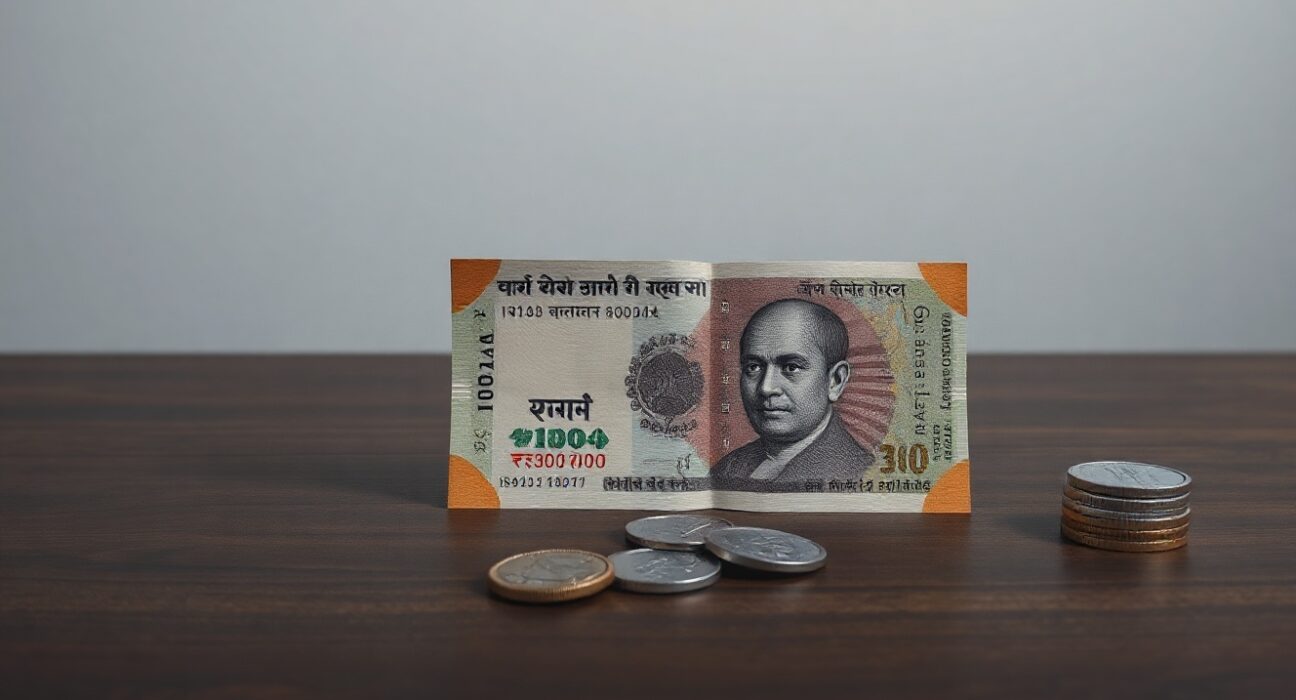
The Indian rupee traded in a narrow range on Tuesday, holding steady against the US dollar as a broad improvement in global risk appetite supported emerging market currencies. The currency remained largely unchanged from its previous close, reflecting a cautious but optimistic tone among traders.
What’s Driving the Rupee’s Stability?
The steadiness in the rupee comes amid a pickup in risk-on sentiment across global financial markets. Positive cues from Asian equity markets and a slight pullback in the US dollar index have provided a supportive backdrop for the Indian currency. Traders noted that foreign portfolio inflows into Indian equities have also contributed to the rupee’s resilience.
Key Factors at Play
Several factors are underpinning the rupee’s current stability. First, the Reserve Bank of India’s (RBI) active intervention in the forex market has historically acted as a buffer against sharp volatility. Second, easing concerns over a potential escalation in global trade tensions have encouraged investors to move back into riskier assets. Third, India’s relatively strong macroeconomic fundamentals, including a robust services sector and manageable current account deficit, continue to attract capital flows.
Market Implications for Traders and Importers
For importers, particularly those in the oil and electronics sectors, a steady rupee provides relief from unpredictable costs. A stable currency also aids in corporate planning and reduces hedging expenses. For exporters, the lack of sharp depreciation means margins remain under pressure, but the overall predictability is seen as a net positive for business confidence. The broader implication is that the rupee’s steadiness signals market confidence in India’s economic trajectory, at least in the near term.
Conclusion
The Indian rupee’s current steadiness is a reflection of a confluence of favorable global and domestic factors. While the currency remains vulnerable to sudden shifts in risk sentiment or unexpected policy moves by major central banks, the present environment suggests a period of relative calm. Traders and businesses will be watching upcoming US economic data and RBI policy cues for further direction.
FAQs
Q1: What does ‘risk-on mood’ mean for the rupee?
A risk-on mood refers to investor preference for higher-yielding, riskier assets like emerging market currencies. This typically benefits the rupee as capital flows into Indian markets increase, supporting its value against the US dollar.
Q2: How does the RBI influence the rupee’s steadiness?
The Reserve Bank of India actively intervenes in the forex market by buying or selling US dollars to prevent excessive volatility. This intervention helps keep the rupee within a desired range, providing stability for trade and investment.
Q3: Is a steady rupee always good for the Indian economy?
Generally, a stable rupee reduces uncertainty for businesses and investors. However, for exporters, a very strong or stable rupee can make their goods more expensive abroad. The ideal scenario is a currency that moves gradually in line with economic fundamentals.
Disclaimer: The information provided is not trading advice, Bitcoinworld.co.in holds no liability for any investments made based on the information provided on this page. We strongly recommend independent research and/or consultation with a qualified professional before making any investment decisions.
