

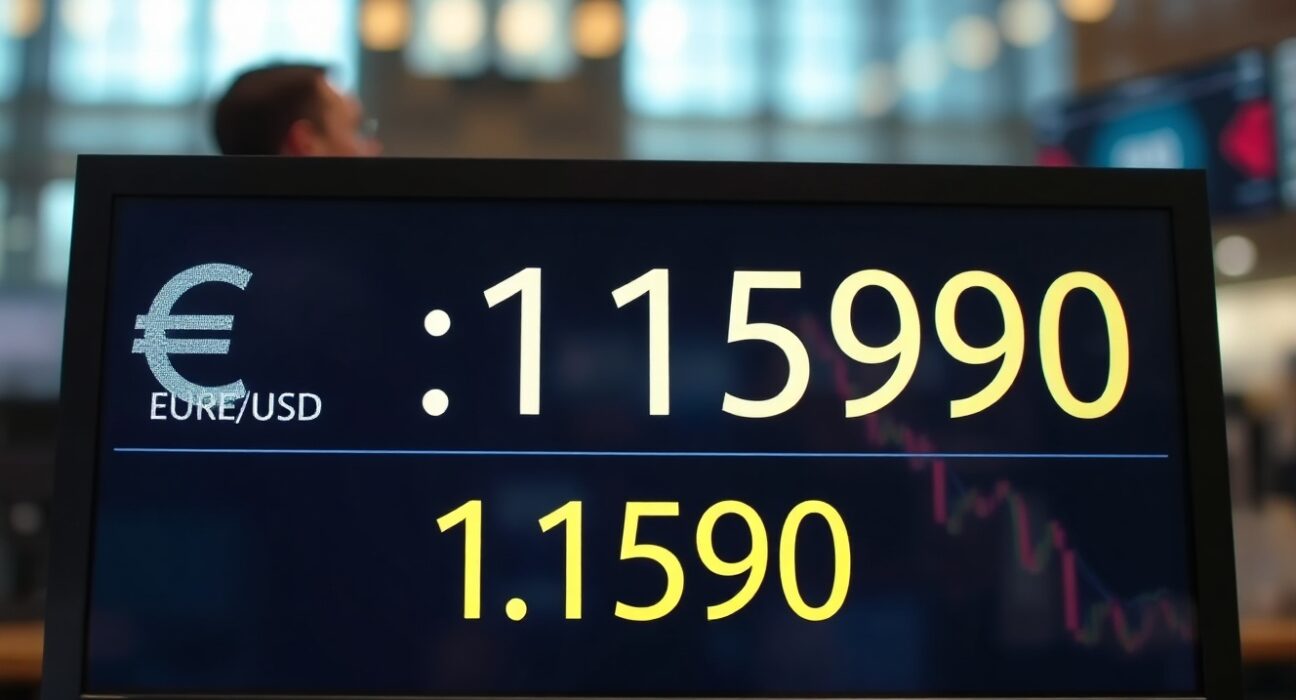
The euro fell below the 1.1600 mark against the US dollar on [current date], as the greenback’s recent selling pressure eased, pulling the pair back from its highest levels in over a month.
What’s driving the euro’s pullback?
The dollar index, which measures the currency against a basket of six major peers, edged higher as investors trimmed bearish bets ahead of key US economic data. This reversal in dollar sentiment comes after a period of sustained weakness, driven by expectations that the Federal Reserve may be nearing the end of its rate-hiking cycle.
Meanwhile, the euro’s decline reflects a mix of profit-taking and lingering concerns over the eurozone’s economic outlook. Recent data have shown a slowdown in manufacturing activity, while inflation remains above the European Central Bank’s target, complicating the policy path.
Market context and what to watch
The EUR/USD pair has been trading in a range roughly between 1.1500 and 1.1700 over the past few weeks, as investors weigh diverging monetary policy expectations. The Fed has signaled a possible pause in its tightening campaign, but strong US labor data have kept the door open for another hike. In contrast, the ECB has reiterated its commitment to combat inflation, but weak growth prospects could limit its ability to raise rates aggressively.
Key upcoming events include the US consumer price index report and the ECB’s monetary policy meeting minutes, both of which could provide fresh direction. Traders will also monitor speeches by Fed and ECB officials for any shifts in tone.
Why this matters for traders and investors
For forex traders, the level around 1.1600 serves as a psychological support/resistance zone. A sustained break below could open the door to further downside, while a rebound would signal continued rangebound trading. For investors with international exposure, the exchange rate affects the value of overseas earnings and import/export competitiveness.
Conclusion
The euro’s dip below 1.1600 highlights the ongoing tug-of-war between dollar strength and eurozone economic concerns. With both central banks navigating a delicate balance, volatility is likely to persist. Staying informed on upcoming data releases and policy signals will be crucial for market participants.
FAQs
Q1: What does EUR/USD below 1.1600 mean for consumers?
A weaker euro relative to the dollar makes imported goods priced in dollars more expensive for eurozone consumers, potentially fueling inflation. For US consumers, it makes European products and travel cheaper.
Q2: How does the Federal Reserve’s policy affect EUR/USD?
The Fed’s interest rate decisions influence the dollar’s attractiveness to investors. Higher US rates tend to strengthen the dollar, putting downward pressure on EUR/USD, while expectations of rate cuts can weaken it.
Q3: Is the euro likely to fall further?
It depends on upcoming economic data and central bank actions. If US data remains strong and the Fed stays hawkish, the dollar could gain further, pushing EUR/USD lower. Conversely, any signs of US economic weakness or a more dovish Fed could support the euro.
Disclaimer: The information provided is not trading advice, Bitcoinworld.co.in holds no liability for any investments made based on the information provided on this page. We strongly recommend independent research and/or consultation with a qualified professional before making any investment decisions.
