

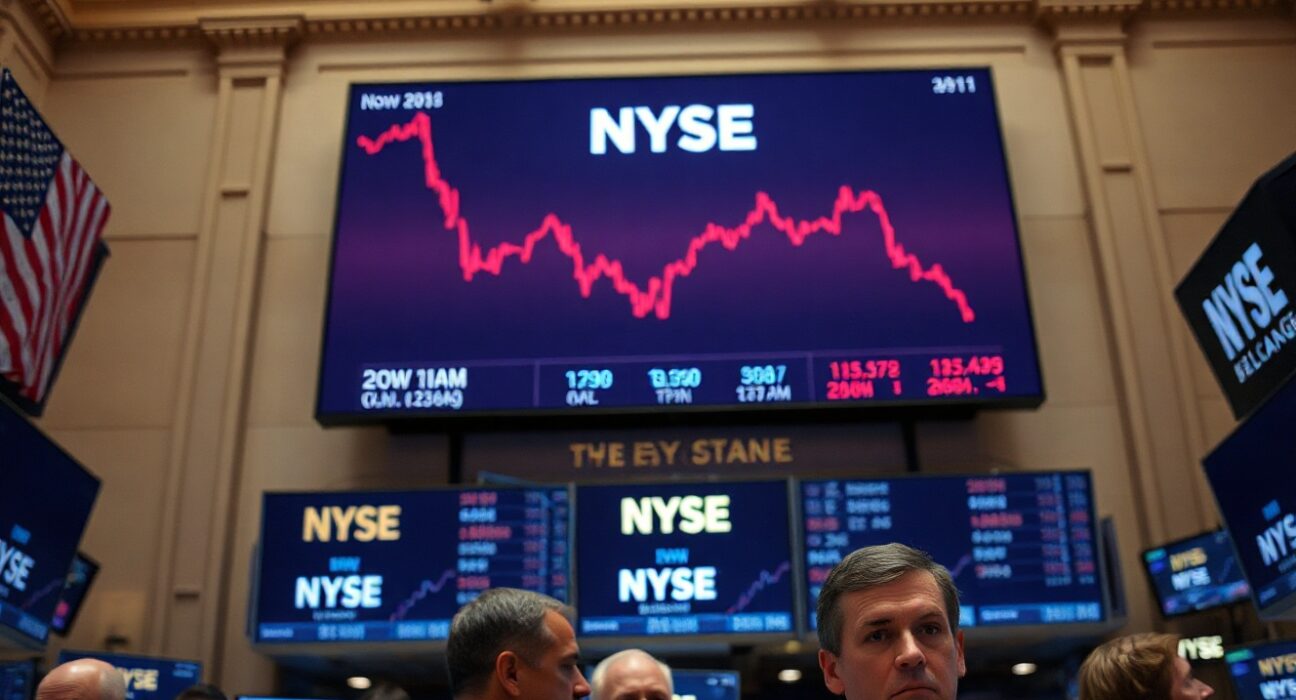
The Dow Jones Industrial Average surrendered its recent record high on Wednesday, closing lower after the Federal Reserve signaled a more hawkish stance on monetary policy than markets had anticipated. The shift in tone surprised investors who had been pricing in a more accommodative path for interest rates, triggering a broad sell-off across major equity indexes.
What Changed at the Fed?
The Federal Reserve’s latest policy statement and accompanying economic projections revealed a more cautious outlook on inflation and a slower pace of rate cuts than previously expected. While the central bank held its benchmark interest rate steady, the dot plot—which tracks individual members’ rate expectations—showed fewer cuts projected for 2025 and 2026. Fed Chair Jerome Powell emphasized during the press conference that the committee remains data-dependent and that progress on inflation has been uneven.
This hawkish pivot comes after several months of market optimism that the Fed would begin easing policy sooner rather than later. The Dow, which had been on a winning streak, pulled back sharply as traders recalibrated their expectations.
Market Reaction and Sector Impact
The Dow Jones Industrial Average fell approximately 350 points, or 0.9%, on the day, with losses concentrated in rate-sensitive sectors such as financials, industrials, and consumer discretionary. The S&P 500 and Nasdaq Composite also declined, though the tech-heavy Nasdaq fared slightly better as some growth stocks were seen as less directly impacted by near-term rate changes.
Treasury yields rose across the curve, with the 2-year yield climbing above 4.7% and the 10-year yield pushing toward 4.5%. The U.S. dollar strengthened against major currencies, reflecting the market’s view that U.S. interest rates will remain higher for longer.
Why This Matters for Investors
For everyday investors and retirement savers, the Fed’s hawkish stance means borrowing costs—including mortgage rates, credit card rates, and auto loan rates—are likely to stay elevated for a longer period. This could dampen consumer spending and slow economic growth, which in turn may weigh on corporate earnings and stock valuations.
The shift also underscores the difficulty the Fed faces in balancing its dual mandate of maximum employment and price stability. With the labor market still tight and inflation running above the 2% target, policymakers are reluctant to declare victory too soon.
Conclusion
The Dow’s retreat from record territory serves as a reminder that the path for interest rates remains uncertain. While the economy has shown resilience, the Fed’s hawkish signals suggest that monetary policy will remain restrictive for the foreseeable future. Investors should prepare for continued volatility as markets digest the implications of a higher-for-longer rate environment.
FAQs
Q1: What does ‘hawkish’ mean in the context of the Federal Reserve?
A: ‘Hawkish’ refers to a policy stance that prioritizes controlling inflation over supporting economic growth. A hawkish Fed is more likely to keep interest rates high or raise them further to cool the economy and bring down prices.
Q2: Why did the Dow fall if the Fed didn’t raise rates?
A: The Dow fell because the Fed signaled that interest rates would remain higher for longer than markets had expected. Investors had been hoping for rate cuts sooner, and the hawkish outlook disappointed those expectations, leading to a sell-off.
Q3: How might this affect my personal finances?
A: Higher interest rates for longer mean borrowing costs—such as mortgage rates, credit card interest, and car loans—are likely to stay elevated. Savings accounts and CDs may offer better yields, but stock market volatility could increase, affecting retirement portfolios.
Disclaimer: The information provided is not trading advice, Bitcoinworld.co.in holds no liability for any investments made based on the information provided on this page. We strongly recommend independent research and/or consultation with a qualified professional before making any investment decisions.
