

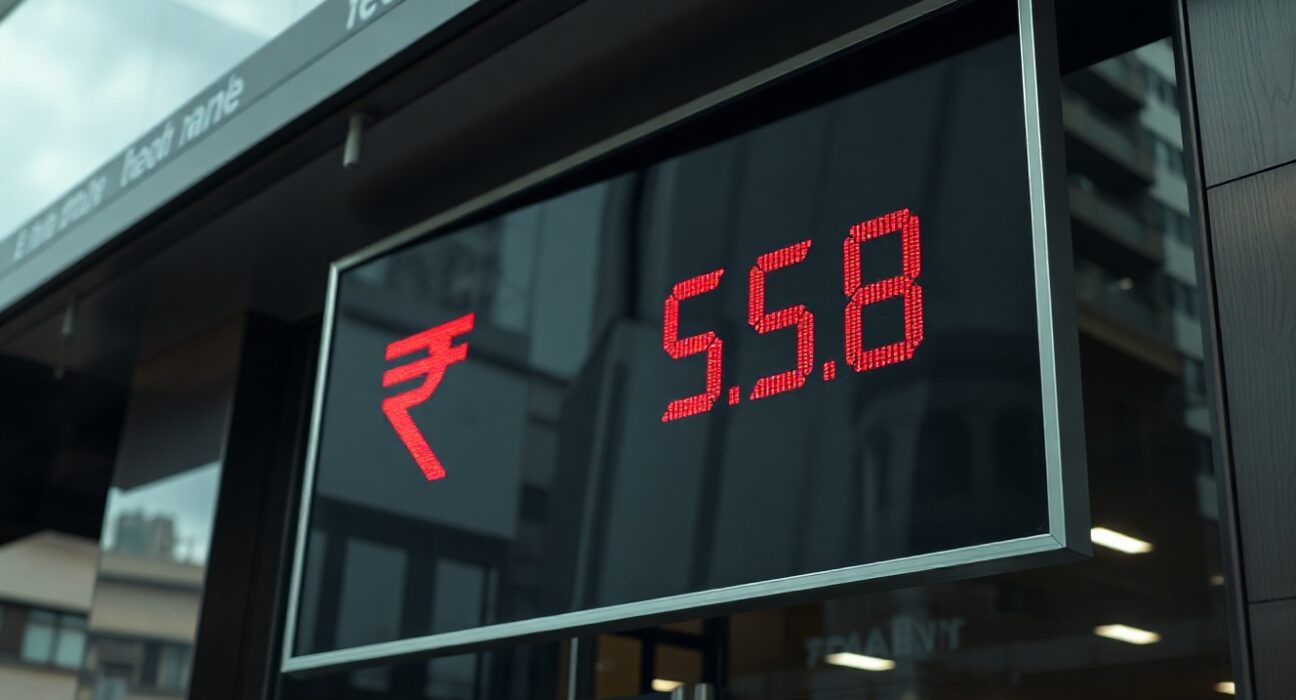
The Indian rupee remained under pressure on Tuesday, holding its recent losses against the US dollar after diplomatic talks between the United States and Iran collapsed over the weekend. The breakdown in negotiations has reignited geopolitical uncertainty in the Middle East, prompting a flight to safe-haven assets and weighing on emerging market currencies.
Rupee Under Pressure Amid Rising Geopolitical Risks
The rupee traded near the 83.50 mark against the dollar, according to interbank data, after sliding 0.3% in the previous session. The collapse of the US-Iran nuclear talks, which had been seen as a potential step toward easing sanctions and stabilizing oil markets, has raised fears of renewed tensions in the region. For India, a major importer of crude oil, any disruption in supply or spike in prices directly impacts the trade deficit and currency valuation.
Forex traders reported that the Reserve Bank of India (RBI) was likely intervening through state-run banks to prevent excessive volatility, a routine measure to curb sharp depreciation. However, the underlying pressure remains, with the dollar index climbing to a two-week high as investors sought the greenback’s safety.
Why the Collapse Matters for the Indian Economy
The US-Iran talks were widely watched by Asian markets because of their potential to ease oil supply constraints. A successful agreement could have led to the lifting of sanctions on Iranian oil exports, adding more supply to the global market and potentially lowering crude prices. India, which meets over 80% of its oil needs through imports, is particularly sensitive to oil price movements.
With the talks now stalled, analysts expect crude prices to remain elevated, adding to India’s import bill and widening the current account deficit. This dynamic typically puts downward pressure on the rupee, as more dollars are needed to pay for the same volume of oil. Additionally, foreign portfolio investors may reduce exposure to Indian assets amid heightened uncertainty, further weakening the currency.
Market Impact and Investor Sentiment
Indian equity markets also felt the ripple effect, with the benchmark BSE Sensex closing lower as energy stocks declined. Bond yields edged up as investors priced in a higher risk premium. The broader Asian currency complex was mixed, but the rupee was among the worst performers, reflecting its direct exposure to oil price shocks.
Analysts at a Mumbai-based brokerage noted that the rupee’s trajectory will now depend on the duration of the diplomatic stalemate. If tensions escalate further, the currency could test the 84 mark in the coming weeks. However, they added that the RBI’s active management of the exchange rate and India’s comfortable foreign exchange reserves provide a buffer against sharp declines.
Conclusion
The Indian rupee’s weakness following the US-Iran talks collapse underscores the currency’s vulnerability to geopolitical shocks, particularly those affecting oil markets. While the RBI’s interventions have prevented a disorderly slide, the outlook remains clouded by the lack of a clear diplomatic path forward. Investors and importers alike are bracing for continued volatility, with the next catalyst likely to be any further developments in US-Iran relations or shifts in global risk appetite.
FAQs
Q1: Why did the US-Iran talks collapse?
The talks collapsed over disagreements on the scope of sanctions relief and Iran’s nuclear enrichment activities. No official statement has been released, but both sides cited a lack of progress on core issues.
Q2: How does the US-Iran situation affect the Indian rupee?
India imports most of its crude oil, and any geopolitical disruption in the Middle East raises oil prices. A higher import bill means more dollar demand, which weakens the rupee. Additionally, global risk aversion pushes investors toward safe-haven assets like the US dollar, further pressuring emerging market currencies.
Q3: What can the RBI do to support the rupee?
The RBI can intervene in the forex market by selling dollars to reduce volatility. It also uses tools like adjusting interest rates or liquidity measures, but direct intervention through state-run banks is the most common short-term response.
Frequently Asked Questions
Why did the Indian rupee fall after the US-Iran nuclear talks collapsed?
The collapse increased geopolitical uncertainty in the Middle East, driving investors to safe-haven assets like the US dollar and putting pressure on emerging market currencies like the rupee.
How does the breakdown of US-Iran talks affect India’s oil imports?
A successful deal could have lifted sanctions on Iranian oil, boosting global supply and lowering prices; without it, crude prices are expected to stay elevated, raising India’s import bill.
What is the Reserve Bank of India doing to support the rupee?
The RBI is likely intervening through state-run banks to prevent excessive volatility and curb sharp depreciation, a routine measure in such situations.
Why is India particularly sensitive to oil price changes?
India meets over 80% of its oil needs through imports, so higher crude prices widen its trade deficit and current account deficit, weakening the rupee.
What impact might this have on foreign investors in India?
Foreign portfolio investors may reduce exposure to Indian assets due to rising geopolitical risks and a weaker rupee, potentially adding further pressure on the currency.
Disclaimer: The information provided is not trading advice, Bitcoinworld.co.in holds no liability for any investments made based on the information provided on this page. We strongly recommend independent research and/or consultation with a qualified professional before making any investment decisions.
