

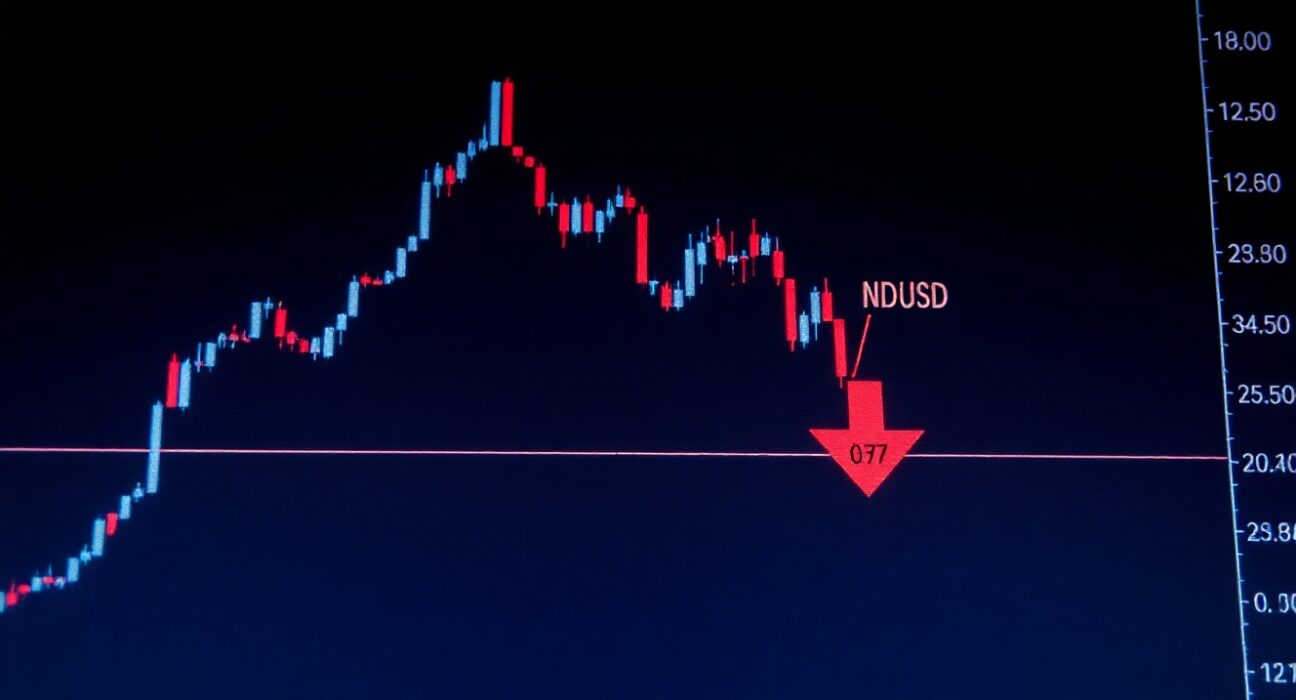
The New Zealand dollar continued its downward trajectory against the US dollar during Tuesday’s trading session, sliding further below the 200-day Simple Moving Average (SMA) and putting the psychologically significant 0.57 level firmly in focus. The pair has now lost ground for three consecutive sessions, reflecting persistent bearish momentum that has built since mid-February.
Technical Breakdown Below Key Moving Average
The breach of the 200-day SMA, a widely watched indicator of long-term trend direction, marks a notable shift in sentiment. The NZD/USD pair had been trading above this level for several weeks before sellers regained control. The failure to hold above the moving average suggests that underlying supply pressure is intensifying, with each intraday rally now attracting fresh selling interest.
From a technical perspective, the next major support zone lies near the 0.5700 handle, a level that has historically acted as both support and resistance. A decisive break below this threshold could open the door for a move toward the 2023 low near 0.5570. Conversely, any recovery attempt would first need to reclaim the 200-day SMA, currently situated around 0.5830, to signal a potential reversal.
Fundamental Pressures Weigh on Kiwi
The New Zealand dollar’s weakness is not occurring in isolation. Divergent monetary policy expectations between the Reserve Bank of New Zealand (RBNZ) and the Federal Reserve continue to weigh on the pair. Market pricing suggests the RBNZ may be forced to cut interest rates sooner than previously anticipated, given signs of slowing domestic economic activity and subdued inflation pressures.
Meanwhile, the US dollar has found support from resilient US economic data and hawkish commentary from Federal Reserve officials, who have pushed back against expectations of imminent rate cuts. This policy divergence has widened the yield differential in favor of the greenback, reducing the carry appeal of the kiwi.
What This Means for Traders and Investors
For forex traders, the current setup suggests that short positions may continue to be rewarded as long as price action remains below the 200-day SMA. However, the proximity to the 0.57 support level warrants caution, as oversold conditions could trigger a short-term bounce. Investors with exposure to New Zealand assets should monitor the pair closely, as a sustained decline could reflect broader concerns about the country’s economic outlook.
The upcoming release of New Zealand trade data and US durable goods orders later this week could provide fresh catalysts. Any significant deviation from expectations has the potential to accelerate the current trend or prompt a corrective move.
Conclusion
The NZD/USD pair remains firmly under bearish control after breaking below the 200-day SMA. The 0.57 level now represents the next critical support zone, and a break below it would confirm a continuation of the downtrend. Traders should remain vigilant for potential volatility around upcoming economic releases that could influence the pair’s near-term direction.
FAQs
Q1: Why is the 200-day SMA important for NZD/USD?
The 200-day Simple Moving Average is a widely followed technical indicator that reflects the long-term trend direction. A break below it often signals a shift from bullish to bearish sentiment, and many traders use it as a key level for placing stop-losses or entering new positions.
Q2: What happens if NZD/USD breaks below 0.57?
A decisive break below 0.57 would likely accelerate selling pressure, with the next major support target around the 2023 low near 0.5570. It could also trigger stop-loss orders from long positions, amplifying the move lower.
Q3: How do interest rate expectations affect NZD/USD?
Interest rate differentials are a primary driver of currency pairs. When the Federal Reserve is expected to keep rates higher for longer compared to the Reserve Bank of New Zealand, the US dollar tends to strengthen against the kiwi as investors seek higher yields in USD-denominated assets.
Disclaimer: The information provided is not trading advice, Bitcoinworld.co.in holds no liability for any investments made based on the information provided on this page. We strongly recommend independent research and/or consultation with a qualified professional before making any investment decisions.
