

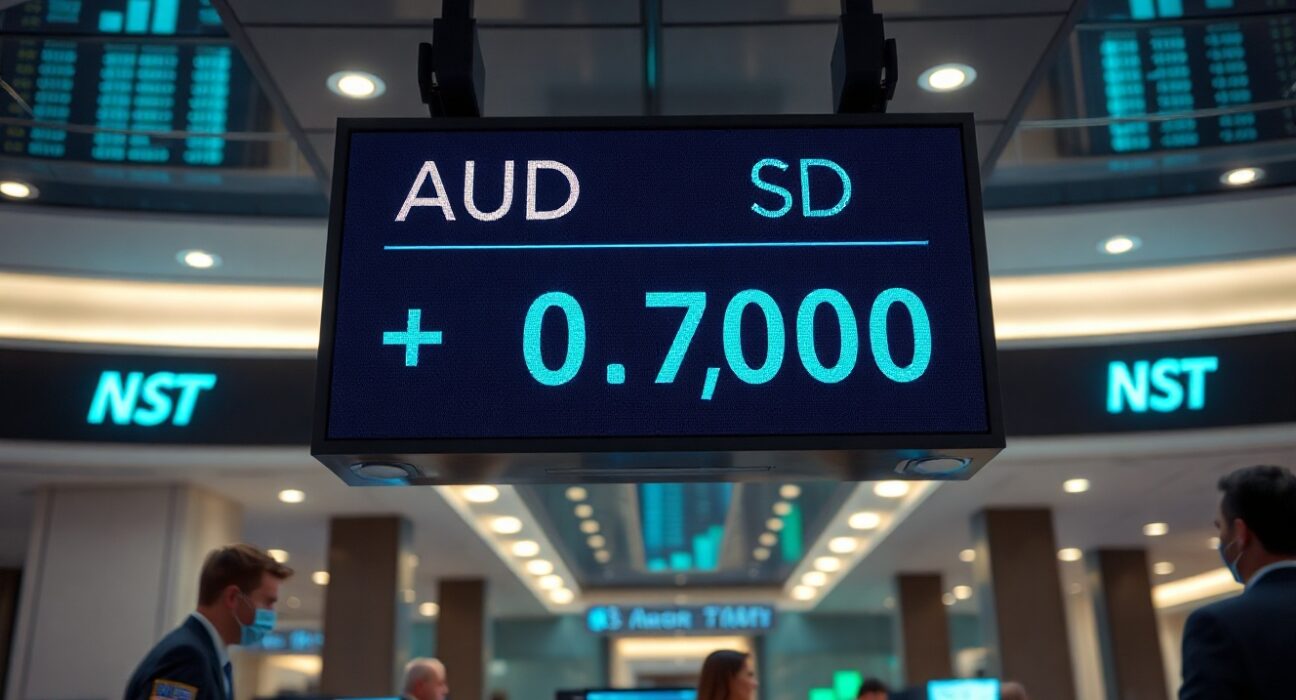
The Australian Dollar weakened against the US Dollar on Thursday, edging closer to the psychologically significant 0.7000 level as currency markets turned cautious ahead of the release of the US Personal Consumption Expenditures (PCE) price index. The PCE data, due on Friday, is the Federal Reserve’s preferred inflation gauge and is expected to provide fresh clues on the trajectory of US interest rates.
Market Context and Key Drivers
The AUD/USD pair has been under pressure this week, retreating from recent highs near 0.7100. The decline reflects a broader strengthening of the US Dollar as investors reassess the pace of potential Fed rate cuts. Markets are currently pricing in a higher probability of the Fed maintaining a cautious stance if inflation remains sticky. The Australian Dollar, meanwhile, is also being weighed down by risk-off sentiment linked to global growth concerns and ongoing geopolitical uncertainties.
The 0.7000 level is a key psychological support for the pair. A decisive break below this threshold could open the door to further losses, with the next major support zone around 0.6950. Conversely, a stronger-than-expected PCE reading could amplify USD gains, while a softer print might trigger a short-term recovery in the Aussie.
What to Watch in the PCE Data
The core PCE price index, which excludes volatile food and energy prices, is forecast to rise 0.3% month-over-month in January, with the annual rate expected to hold steady at 2.8%. Any upside surprise would reinforce the narrative that inflation is proving stubborn, potentially delaying rate cuts and providing further support for the US Dollar. A downside miss could reignite expectations of a Fed pivot, which would likely weaken the greenback and offer relief to the Australian Dollar.
Implications for Traders and Investors
For forex traders, the AUD/USD reaction to the PCE data will be critical in determining near-term direction. A break and sustained move below 0.7000 would signal bearish momentum, while a bounce from this level could indicate that the market is already pricing in a cautious Fed. Beyond the immediate data release, the broader trend for the pair will depend on the relative strength of the Australian and US economies, commodity prices, and shifts in risk appetite.
Conclusion
The Australian Dollar’s slide toward 0.7000 underscores the market’s focus on US inflation data and its implications for Federal Reserve policy. Friday’s PCE release is a major event risk that could set the tone for the AUD/USD pair in the coming weeks. Traders should prepare for potential volatility and watch for a clear break or rejection at the 0.7000 handle.
FAQs
Q1: Why is the Australian Dollar falling against the US Dollar?
The Australian Dollar is weakening primarily due to a stronger US Dollar as markets anticipate a potentially hawkish stance from the Federal Reserve if US inflation remains elevated. Risk-off sentiment and global growth concerns are also adding pressure.
Q2: What is the PCE inflation data and why does it matter?
The Personal Consumption Expenditures (PCE) price index is the Federal Reserve’s preferred measure of inflation. It influences the Fed’s interest rate decisions, which in turn affect currency values. A higher-than-expected reading could support the USD, while a lower reading could weaken it.
Q3: What is the key level to watch in AUD/USD?
The 0.7000 level is a major psychological support. A sustained break below this level could lead to further declines toward 0.6950, while a bounce from here might signal short-term buying interest.
Disclaimer: The information provided is not trading advice, Bitcoinworld.co.in holds no liability for any investments made based on the information provided on this page. We strongly recommend independent research and/or consultation with a qualified professional before making any investment decisions.
