

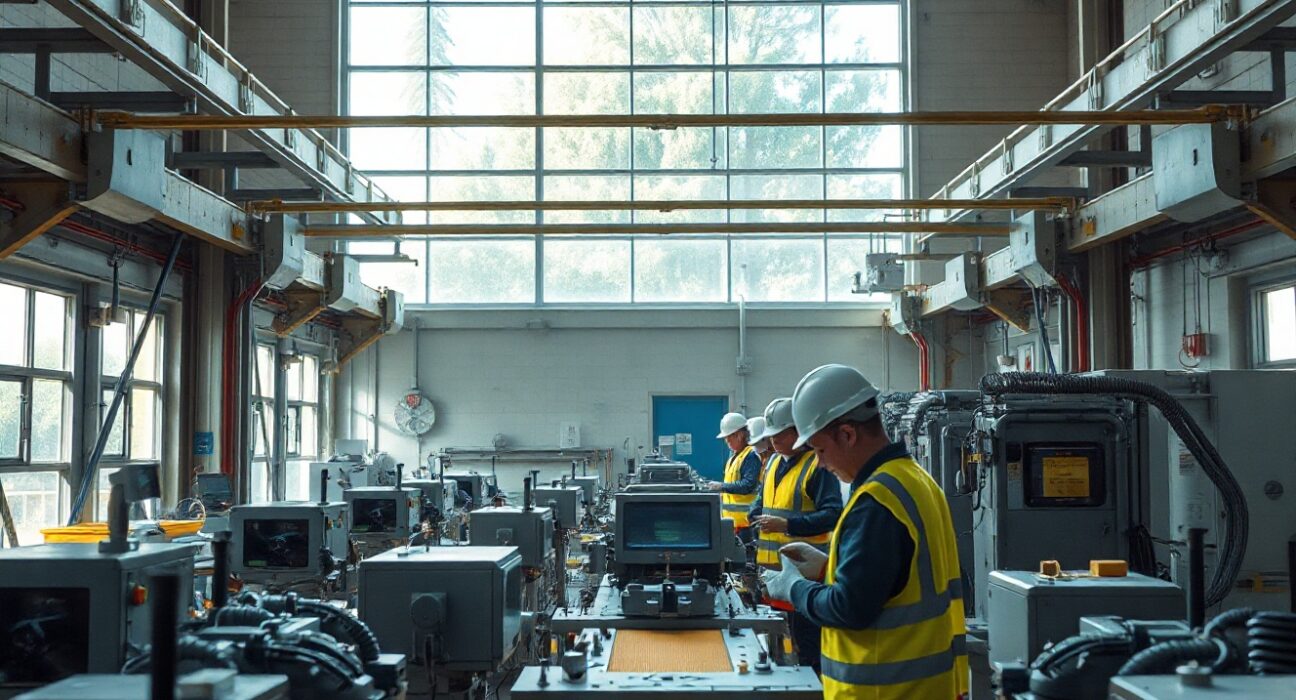
Australia’s manufacturing sector edged back into expansion territory in June, with the S&P Global Manufacturing Purchasing Managers’ Index (PMI) rising to 51.2, up from 49.7 in May. The reading, which marks the first expansion in the sector in three months, has drawn the attention of currency markets, where the Australian dollar (AUD) is showing renewed sensitivity to domestic economic data.
What the PMI Reading Signals
A PMI reading above 50 indicates expansion in the manufacturing sector, while a figure below 50 signals contraction. The June figure of 51.2 suggests a modest but meaningful improvement in business conditions. According to the survey data, the uptick was driven by a rebound in new orders and a stabilization of production levels, following a period of softer demand earlier in the year.
Analysts note that the improvement may reflect a temporary easing of global supply chain pressures and a slight recovery in export demand, particularly from key trading partners in Asia. However, the data also shows that input cost inflation remains elevated, which could weigh on margins for manufacturers in the months ahead.
Implications for the AUD/USD Pair
The Australian dollar, which has been under pressure against the US dollar in recent weeks, saw a modest uptick following the PMI release. The AUD/USD pair briefly touched the 0.6670 level before settling around 0.6655. The currency’s reaction underscores the market’s current focus on domestic economic resilience as a counterweight to global headwinds.
Traders are now watching for further cues from the Reserve Bank of Australia (RBA), which has maintained a cautious stance on monetary policy. A sustained improvement in manufacturing activity could reduce the likelihood of an early rate cut, providing some support for the Australian dollar. Conversely, if the PMI gains prove to be a one-off event, the AUD may resume its downward trend against the greenback.
Broader Economic Context
The manufacturing sector represents a relatively small portion of Australia’s overall economy, which is dominated by services and mining. However, the PMI is closely watched as an early indicator of broader economic momentum. The June reading aligns with other recent data points suggesting that the Australian economy is navigating a soft patch without tipping into a full-blown recession.
Key risks remain, including persistent inflation, high interest rates, and a slowdown in China’s economy. The sustainability of the manufacturing recovery will depend on how these external factors evolve in the second half of the year.
Conclusion
The rise in Australia’s S&P Global Manufacturing PMI to 51.2 in June provides a cautiously optimistic signal for the economy and offers a temporary boost to the Australian dollar. While the data is encouraging, it represents a single month’s reading and should be viewed within the context of ongoing global uncertainties. For currency traders, the key question is whether this improvement can be sustained, which will likely determine the AUD/USD trajectory in the coming weeks.
FAQs
Q1: What is the S&P Global Manufacturing PMI?
The S&P Global Manufacturing PMI is a monthly survey-based index that measures the health of the manufacturing sector. A reading above 50 indicates expansion, while below 50 indicates contraction.
Q2: Why does the PMI matter for the AUD/USD exchange rate?
The PMI provides a timely snapshot of economic activity. A strong reading can boost confidence in the Australian economy, potentially attracting foreign investment and supporting the Australian dollar against the US dollar.
Q3: Is a PMI of 51.2 considered strong?
A reading of 51.2 is modestly above the expansion threshold. It signals growth, but the pace is relatively slow compared to readings above 55, which would indicate a more robust expansion.
Frequently Asked Questions
What does a PMI reading of 51.2 mean for Australia’s manufacturing sector?
It means the sector returned to expansion in June after three months of contraction, since any reading above 50 signals growth.
Why did the Australian dollar rise after the PMI report?
The AUD rose because the positive data suggests economic resilience, which may reduce the likelihood of an early RBA rate cut, supporting the currency.
What drove the improvement in the manufacturing PMI?
The uptick was driven by a rebound in new orders and a stabilization of production levels, partly due to easing global supply chain pressures and stronger export demand from Asia.
Could the manufacturing recovery be temporary?
Yes, analysts caution that the gains might be a one-off event, and if so, the Australian dollar could resume its downward trend against the US dollar.
What risks still face Australia’s manufacturing sector?
Input cost inflation remains elevated, which could squeeze profit margins for manufacturers in the coming months.
Disclaimer: The information provided is not trading advice, Bitcoinworld.co.in holds no liability for any investments made based on the information provided on this page. We strongly recommend independent research and/or consultation with a qualified professional before making any investment decisions.
