

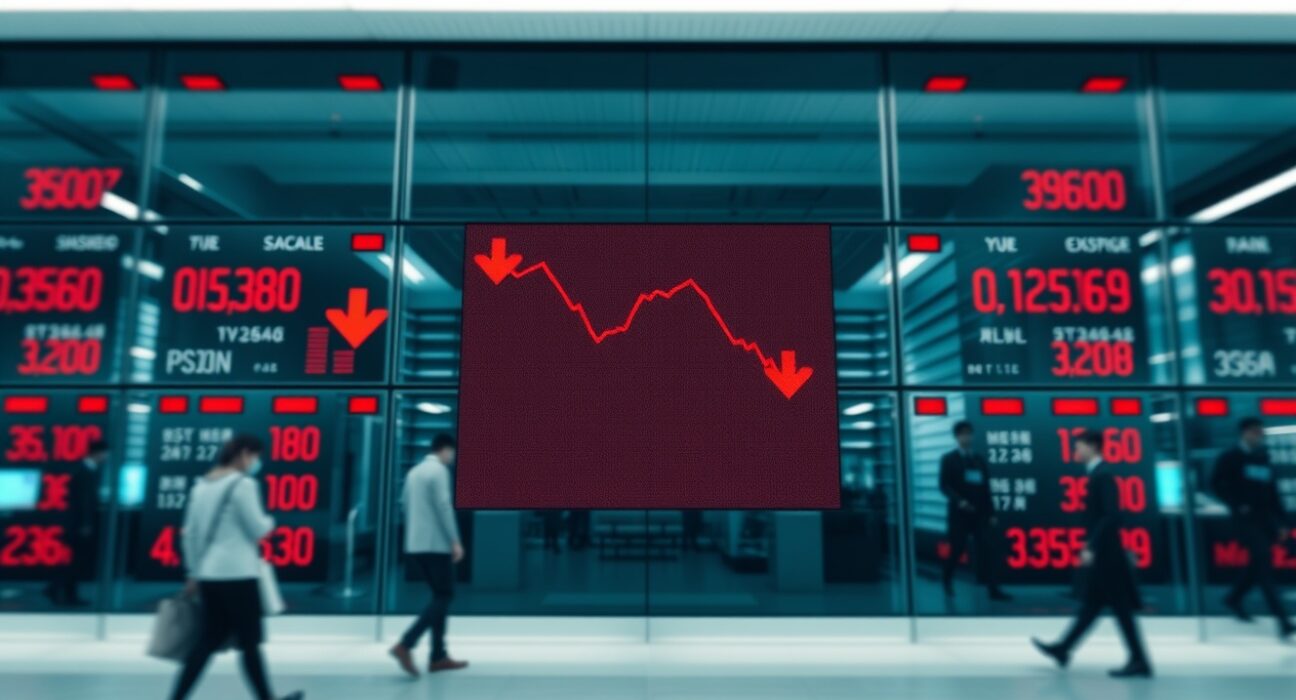
Asian equity markets experienced a broad sell-off on Monday, driven by escalating geopolitical tensions linked to Iran, with South Korea’s KOSPI index suffering its steepest single-day decline in months, plunging 6% in early trading.
Market-Wide Decline Amid Heightened Geopolitical Risks
Investors across the Asia-Pacific region moved sharply toward safe-haven assets as fears of a broader conflict involving Iran rattled global risk appetite. The KOSPI’s 6% drop led regional losses, with Japan’s Nikkei 225 falling over 3% and Hong Kong’s Hang Seng Index declining by approximately 2.5%. Australia’s ASX 200 also shed more than 1.5% in afternoon trade.
The sell-off was broad-based, with technology, energy, and financial sectors all under pressure. South Korean chipmakers and automakers were among the hardest hit, reflecting concerns over supply chain disruptions and regional instability.
Context: Rising Iran-Israel Tensions and Global Reaction
The market reaction follows a series of escalating statements and military posturing between Iran and Israel over the past week, raising the prospect of a direct confrontation that could disrupt oil supplies and destabilize the broader Middle East. Oil prices surged more than 4% on Friday, adding to inflationary pressures that central banks are already struggling to contain.
South Korea, as a major importer of crude oil and a key global manufacturing hub, is particularly vulnerable to energy price spikes and trade route disruptions. The KOSPI’s sharp decline reflects these heightened risks, compounded by investor uncertainty over the trajectory of U.S. monetary policy and the strength of the global economy.
Implications for Investors and Regional Economies
For individual investors and institutional funds alike, the current environment underscores the importance of portfolio diversification and hedging against geopolitical risk. Safe-haven assets such as gold, the U.S. dollar, and Japanese government bonds saw increased demand. The Japanese yen strengthened against the U.S. dollar, while gold prices edged higher.
Central banks in the region are now facing a delicate balancing act: containing inflation without triggering further market instability. Analysts warn that a prolonged conflict could lead to sustained volatility, particularly for export-dependent economies like South Korea and Japan.
Conclusion
The sharp decline in Asian equities, led by the KOSPI’s 6% rout, reflects deep investor anxiety over the potential for a broader Iran-related conflict. While diplomatic efforts continue, markets are pricing in a higher risk premium. Investors should remain cautious, monitor geopolitical developments closely, and prepare for continued volatility in the near term.
FAQs
Q1: Why did South Korea’s KOSPI fall 6%?
The KOSPI dropped sharply due to escalating geopolitical tensions involving Iran, which raised fears of supply chain disruptions, higher oil prices, and broader regional instability. South Korea is heavily reliant on energy imports and global trade, making it especially sensitive to such risks.
Q2: How are other Asian markets reacting?
Japan’s Nikkei 225 fell over 3%, Hong Kong’s Hang Seng dropped about 2.5%, and Australia’s ASX 200 declined more than 1.5%. Most regional indices were in negative territory as investors moved toward safe-haven assets.
Q3: What should investors do during such geopolitical sell-offs?
Investors should avoid panic selling and instead review portfolio diversification. Increasing exposure to safe-haven assets like gold, government bonds, or defensive sectors may help reduce risk. Staying informed on diplomatic developments is also critical for timing any recovery.
Disclaimer: The information provided is not trading advice, Bitcoinworld.co.in holds no liability for any investments made based on the information provided on this page. We strongly recommend independent research and/or consultation with a qualified professional before making any investment decisions.
