

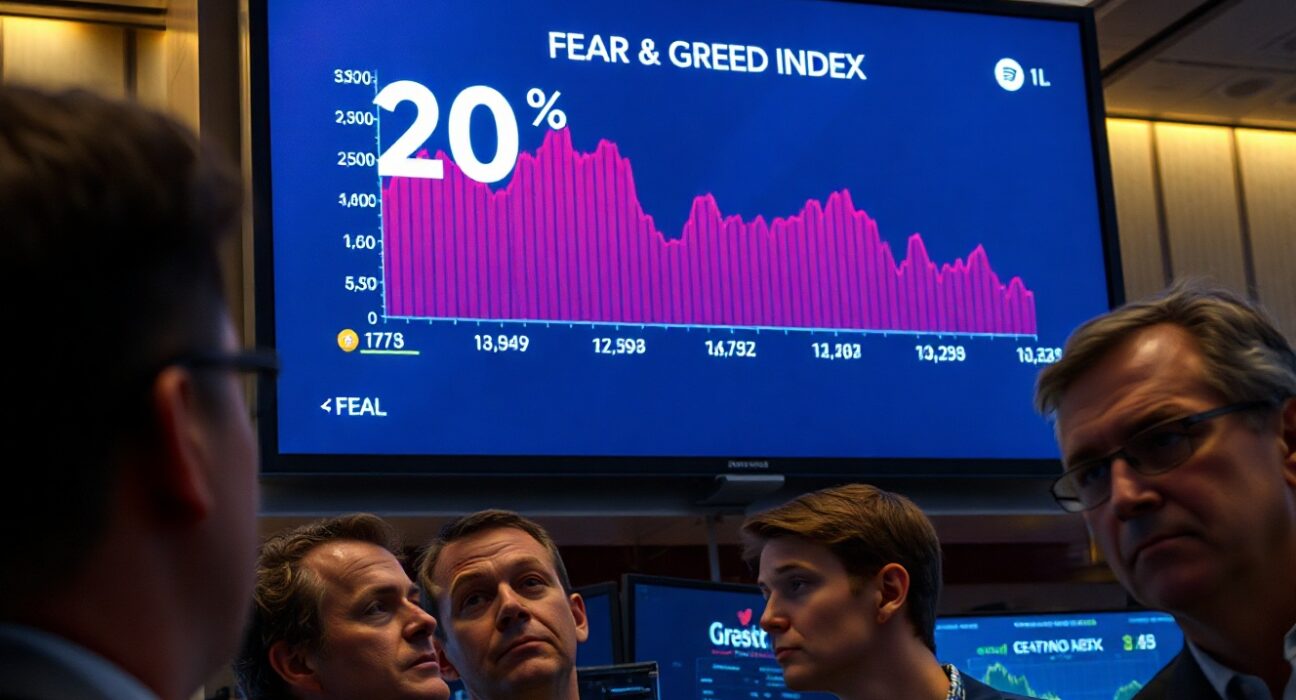
The cryptocurrency market is showing signs of deep unease as CoinMarketCap’s proprietary Fear & Greed Index dropped to 20 today, down one point from the previous day. The reading firmly places the market in the ‘extreme fear’ territory, a zone historically associated with heightened selling pressure and bearish sentiment.
Understanding the Fear & Greed Index
The index, which ranges from 0 to 100, measures market sentiment by aggregating multiple data points. A score closer to 0 indicates extreme fear, while a score closer to 100 signals extreme greed. The current reading of 20 suggests that investors are overwhelmingly cautious, often a precursor to potential market bottoms or further declines depending on broader macroeconomic factors.
The calculation methodology includes several weighted components:
- Price momentum: The deviation of the top 10 cryptocurrencies by market capitalization from their 30-day and 90-day moving averages.
- Market volatility: Measured by the maximum drawdown of the top 10 coins over the past 30 days.
- Derivatives data: Put/call ratios from major exchanges, indicating whether traders are hedging or speculating on downside.
- Stablecoin Supply Ratio (SSR): The ratio of stablecoin market cap to the total market cap of all other cryptocurrencies. A high SSR often indicates buying power is sidelined.
- Search volume: CoinMarketCap’s own search data for trending coins, which can reflect retail interest.
What Extreme Fear Signals
Historically, extended periods of extreme fear have sometimes marked local bottoms in the crypto market, as weak hands sell and long-term buyers begin accumulating. However, the index is not a timing tool. It reflects current sentiment, which can persist or deepen depending on external events such as regulatory news, macroeconomic shifts, or major exchange developments.
The drop to 20 follows a period of sustained volatility, with Bitcoin trading below key support levels and altcoins experiencing significant drawdowns. The derivatives market has also shown elevated hedging activity, with put options volume rising relative to calls.
Implications for Traders and Investors
For short-term traders, extreme fear readings can present contrarian opportunities, but they also carry high risk. The market may remain irrational longer than traders can remain solvent. For long-term investors, such readings may signal attractive entry points, but only if fundamental analysis supports the valuation.
It is important to note that the Fear & Greed Index is a sentiment indicator, not a predictive one. It does not forecast price movements but rather reflects the emotional state of the market participants at a given moment.
Conclusion
The Crypto Fear & Greed Index at 20 underscores a market gripped by caution and uncertainty. While extreme fear can sometimes precede a recovery, it also reflects real concerns about near-term price direction. Investors should use this data as one of many tools in their decision-making process, combining sentiment analysis with fundamental and technical research. The coming days will be critical in determining whether this fear deepens or begins to subside.
FAQs
Q1: What does a Fear & Greed Index of 20 mean?
A reading of 20 indicates extreme fear in the cryptocurrency market. It suggests that investors are highly cautious, selling pressure may be dominant, and sentiment is bearish.
Q2: Is a low Fear & Greed Index a buy signal?
Not necessarily. While historically extreme fear has sometimes coincided with market bottoms, the index is a sentiment measure, not a price predictor. It should be used alongside other analysis.
Q3: How often is the Crypto Fear & Greed Index updated?
The index is updated daily by CoinMarketCap, based on the previous day’s data. It reflects the most recent available sentiment readings.
Frequently Asked Questions
What does a Fear & Greed Index reading of 20 actually mean for crypto prices?
A reading of 20 indicates ‘extreme fear,’ meaning investors are overwhelmingly cautious, which historically has sometimes signaled a market bottom but can also precede further declines depending on broader factors.
How is the Crypto Fear & Greed Index calculated?
It aggregates several weighted factors including price momentum, market volatility, derivatives data like put/call ratios, the Stablecoin Supply Ratio, and search volume from CoinMarketCap.
Should I buy or sell when the index hits extreme fear?
The index is not a timing tool; extreme fear can mark a local bottom where long-term buyers accumulate, but sentiment can persist or worsen, so it’s best used as a general sentiment gauge rather than a buy/sell signal.
What does the Stablecoin Supply Ratio (SSR) tell us in this context?
A high SSR means there is a large amount of stablecoin buying power sitting on the sidelines, suggesting that investors are waiting on the fence rather than actively buying crypto.
Why did the Fear & Greed Index drop to 20 recently?
The drop follows sustained volatility and Bitcoin trading below key support levels, combined with broader macroeconomic concerns and regulatory news that have made investors highly cautious.
Disclaimer: The information provided is not trading advice, Bitcoinworld.co.in holds no liability for any investments made based on the information provided on this page. We strongly recommend independent research and/or consultation with a qualified professional before making any investment decisions.
