

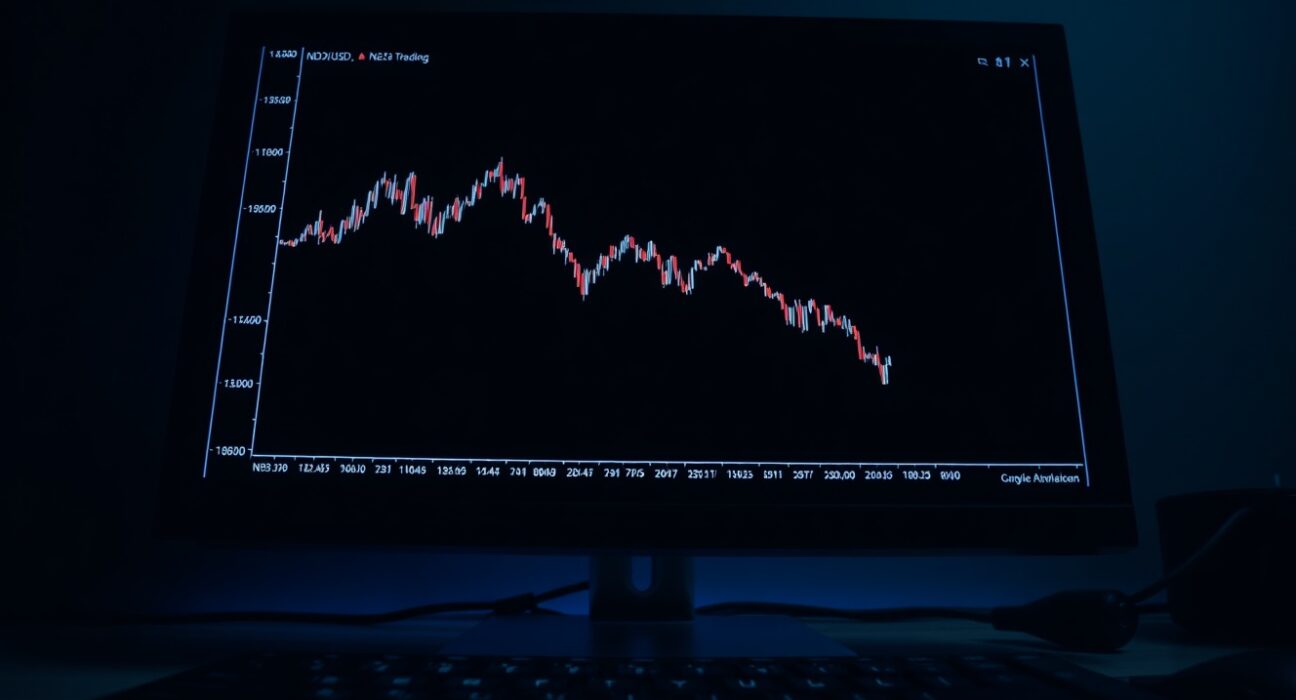
The New Zealand Dollar extended its recent decline against the US Dollar on Thursday, with the NZD/USD pair falling to near the 0.5650 mark. The move reinforces a prevailing bearish bias that has gripped the currency pair over the past several trading sessions, driven by a combination of technical breakdowns and fundamental headwinds.
Technical Breakdown Deepens
The slide toward 0.5650 comes after the pair failed to hold above the 0.5700 psychological level earlier this week. From a technical perspective, the NZD/USD remains under pressure, trading below both its 50-day and 200-day simple moving averages. The Relative Strength Index (RSI) has dipped further into bearish territory, currently hovering near 35, suggesting that sellers are firmly in control without the pair being oversold just yet.
Key support levels to watch include the 0.5630 area, which served as a floor in late February. A decisive break below that could open the door toward the 0.5600 handle. On the upside, resistance now stands at 0.5680, followed by the more significant barrier at 0.5720.
Fundamental Drivers Weighing on Kiwi
The New Zealand Dollar’s weakness is not occurring in isolation. The US Dollar has regained strength amid shifting expectations for Federal Reserve interest rate policy. Recent US economic data, including stronger-than-expected retail sales and persistent inflation readings, have reduced the likelihood of aggressive rate cuts in the near term. This has boosted US Treasury yields and, by extension, the greenback.
On the domestic front, the Reserve Bank of New Zealand (RBNZ) has maintained a cautious tone. While inflation has moderated, the central bank has signaled that it is in no rush to ease policy, which has left the Kiwi without a clear catalyst for recovery. Additionally, softer dairy auction prices—a key export for New Zealand—have added to the currency’s headwinds.
What This Means for Traders
For forex traders, the current setup suggests that short positions on NZD/USD remain favored as long as the pair stays below 0.5700. However, with the pair approaching a known support zone, the risk of a short-term bounce increases. Traders should watch for any signs of a bullish reversal pattern, such as a hammer candlestick or bullish divergence on the RSI, before considering long positions.
The broader outlook remains tilted toward further downside, particularly if the US Dollar continues to benefit from a hawkish Fed repricing. Any dovish shift in RBNZ rhetoric or a sharp deterioration in global risk appetite could accelerate the decline.
Conclusion
The NZD/USD pair’s slide to 0.5650 reflects a clear bearish bias driven by technical deterioration and a strengthening US Dollar. While the pair is approaching a potential support zone, the fundamental backdrop offers little reason for optimism in the near term. Traders should remain cautious and watch for key breakout levels before committing to new positions.
FAQs
Q1: What is the next key support level for NZD/USD?
The next major support is at 0.5630, followed by the psychological 0.5600 level. A break below these could signal further downside toward 0.5550.
Q2: Why is the New Zealand Dollar falling?
The decline is primarily driven by a stronger US Dollar, as markets price in a slower pace of Fed rate cuts. Soft dairy prices and cautious RBNZ commentary have also weighed on the Kiwi.
Q3: Is it a good time to buy NZD/USD?
Given the prevailing bearish bias and lack of a clear reversal signal, buying at current levels carries significant risk. Traders typically wait for a confirmed bounce above resistance or a bullish divergence on momentum indicators before considering long positions.
Disclaimer: The information provided is not trading advice, Bitcoinworld.co.in holds no liability for any investments made based on the information provided on this page. We strongly recommend independent research and/or consultation with a qualified professional before making any investment decisions.
