

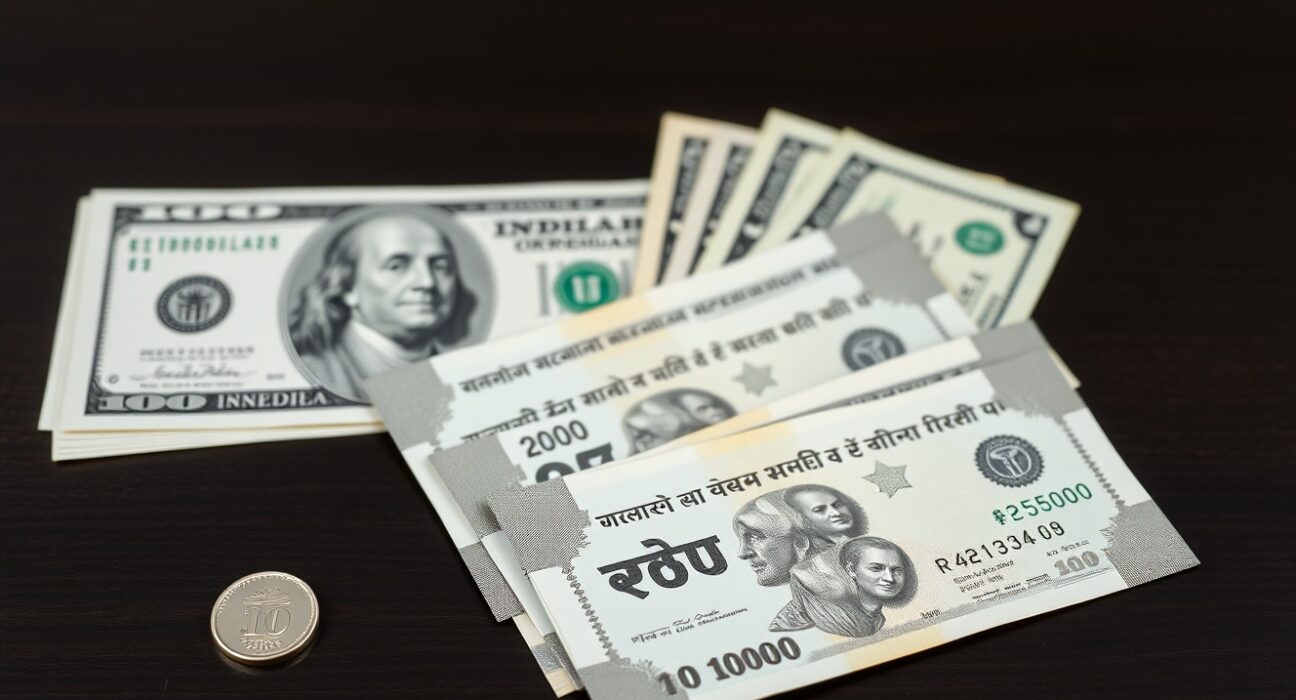
The Indian Rupee’s potential for appreciation against the US Dollar remains limited due to a combination of active Reserve Bank of India (RBI) intervention and persistent global trade uncertainties, according to a recent analysis from Societe Generale.
Societe Generale’s View on Rupee Dynamics
Analysts at the French multinational investment bank suggest that while the Rupee may see occasional upward moves, these gains are likely to be capped. The primary factor is the RBI’s strategy of accumulating foreign exchange reserves, which involves buying US Dollars to prevent the Rupee from strengthening too rapidly. This policy helps support Indian exporters by keeping their goods competitively priced in global markets.
Key Factors Limiting Rupee Strength
Several interconnected factors are contributing to the constrained outlook for the Indian currency:
- RBI’s Dollar Buying: The central bank’s routine intervention in the forex market to manage volatility and build reserves creates a natural ceiling for the Rupee.
- Trade Deficit Concerns: India’s import bill, particularly for crude oil, remains high. A stronger Rupee would make imports cheaper, potentially widening the trade deficit further, a scenario the RBI is keen to manage.
- Global Risk Aversion: Ongoing geopolitical tensions and uncertainty surrounding global trade policies keep investors cautious, often favoring the safe-haven US Dollar over emerging market currencies like the Rupee.
Implications for Businesses and Investors
For importers, the constrained Rupee means continued higher costs for goods and raw materials purchased in Dollars. Exporters, however, may find a competitive edge. For investors, the currency outlook suggests that while the Rupee is unlikely to depreciate sharply, significant appreciation is also improbable in the near term. This creates a relatively stable, albeit range-bound, environment for forex trading and cross-border investments.
Conclusion
The Societe Generale analysis underscores a reality for the Indian Rupee: its trajectory is heavily influenced by the RBI’s policy priorities and external economic headwinds. While the currency may gain ground on positive domestic data or favorable global cues, these gains are expected to be limited, reinforcing a cautious outlook for the USD/INR pair in the coming months.
FAQs
Q1: Why is the Indian Rupee’s appreciation limited according to Societe Generale?
The primary reason is the Reserve Bank of India’s (RBI) active intervention in the forex market. The central bank often buys US Dollars to prevent the Rupee from strengthening too quickly, a strategy aimed at supporting exports and managing currency volatility.
Q2: How does RBI intervention affect the USD/INR exchange rate?
By purchasing US Dollars, the RBI increases demand for the Dollar and adds supply of Rupees in the market. This action helps to stabilize the Rupee and prevents it from appreciating too much, effectively creating a ceiling for the Rupee’s value against the Dollar.
Q3: What are the main risks for the Indian Rupee in the current environment?
The key risks include a high trade deficit driven by oil import costs, global economic uncertainty that drives investors toward safe-haven assets like the US Dollar, and any unexpected shifts in RBI policy or global trade tariffs.
Disclaimer: The information provided is not trading advice, Bitcoinworld.co.in holds no liability for any investments made based on the information provided on this page. We strongly recommend independent research and/or consultation with a qualified professional before making any investment decisions.
