

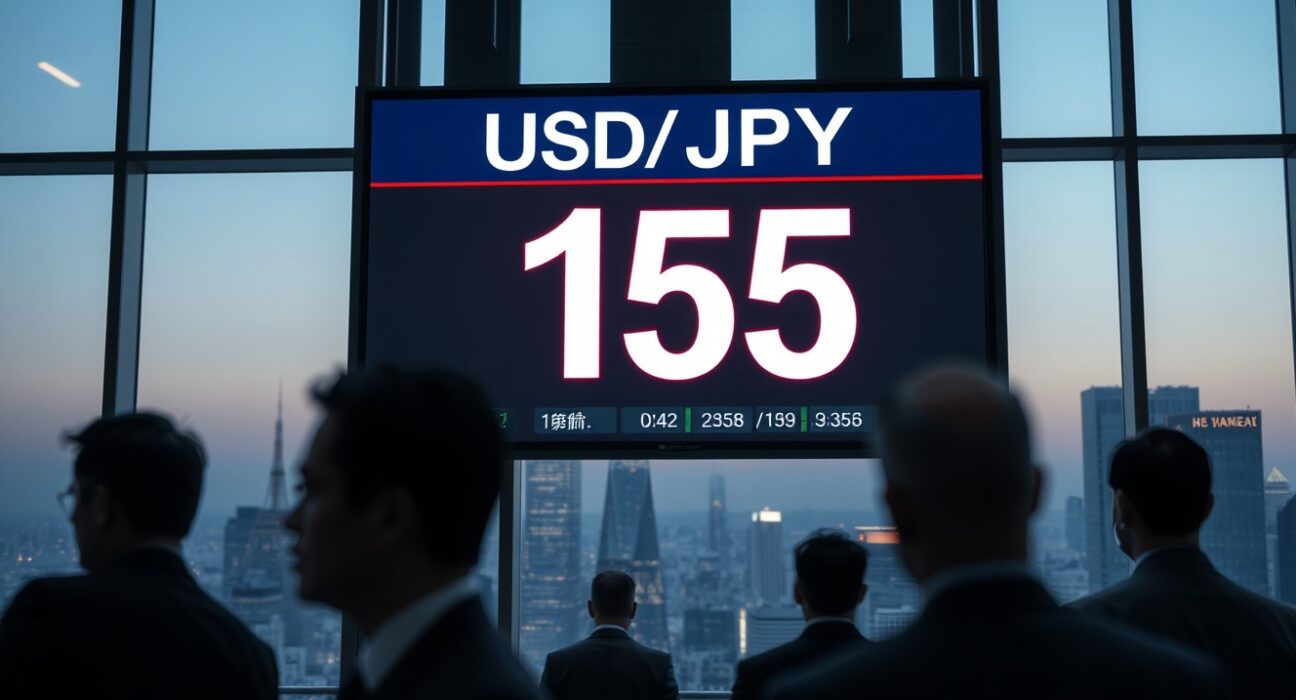
The Japanese yen has fallen to its weakest level against the U.S. dollar in 40 years, breaching key psychological thresholds despite repeated verbal warnings from Tokyo officials about potential currency intervention. The slide comes as global markets recalibrate expectations around Federal Reserve interest rate policy, widening the interest rate differential that has driven the yen lower for months.
Yen’s Historic Decline: What’s Driving the Sell-Off
The USD/JPY pair surged past the 155 mark earlier this week, a level that many analysts had viewed as a potential trigger for direct intervention by the Bank of Japan (BOJ) or the Ministry of Finance. The move extends a multi-year downtrend that has seen the yen lose roughly one-third of its value against the dollar since early 2021.
The primary driver remains the stark divergence in monetary policy. While the Federal Reserve has held interest rates at elevated levels to combat persistent inflation, the BOJ has maintained its ultra-loose stance, keeping short-term rates near zero. This gap makes dollar-denominated assets more attractive to yield-seeking investors, putting relentless downward pressure on the yen.
BOJ Governor Kazuo Ueda and Finance Minister Shunichi Suzuki have both issued increasingly stern warnings in recent weeks, stating that they are watching currency moves with “a high sense of urgency” and are prepared to take “decisive steps” against excessive volatility. However, markets have largely shrugged off these comments, viewing them as lacking the teeth of actual intervention.
Intervention Warnings vs. Market Reality
Japan intervened in the currency market in September and October 2022, spending roughly $60 billion to support the yen when it approached 152 against the dollar. That intervention temporarily stabilized the currency, but the underlying interest rate differential remained, and the yen resumed its decline once the BOJ stopped buying.
Traders are now questioning whether intervention is even feasible at current levels. Analysts point out that the cost of intervention is high and the effects are often short-lived unless accompanied by a shift in monetary policy. The BOJ’s next policy meeting is scheduled for later this month, and markets are closely watching for any hint of a rate hike or a reduction in bond purchases.
“The BOJ is caught between a rock and a hard place,” said a senior currency strategist at a Tokyo-based bank. “Raising rates could slow the economy and increase the cost of Japan’s massive public debt. But doing nothing risks a further collapse in the yen, which hurts consumers and small businesses through higher import prices.”
Impact on Japanese Consumers and Global Markets
The yen’s weakness has created a two-tiered economy in Japan. Export giants like Toyota and Sony benefit from cheaper yen, which boosts the value of their overseas earnings when repatriated. However, households and small businesses are struggling with the highest inflation in decades, driven by soaring costs for imported energy, food, and raw materials.
For global markets, a weaker yen increases the cost of Japanese imports for other countries and can fuel volatility in Asian currency markets. The Chinese yuan and South Korean won have also faced pressure as investors adjust portfolios in response to the yen’s slide.
Conclusion
The yen’s decline to 40-year lows underscores the profound impact of divergent central bank policies on currency markets. While Japanese officials have signaled readiness to intervene, the fundamental driver—the Fed’s tight policy versus the BOJ’s loose stance—remains unchanged. Markets will now focus on upcoming U.S. inflation data and the BOJ’s policy decision for clearer direction. For now, the yen’s fate appears tied more to Washington than Tokyo.
FAQs
Q1: Why is the yen falling to 40-year lows?
The primary reason is the wide interest rate gap between the U.S. and Japan. The Federal Reserve has raised rates aggressively, while the Bank of Japan keeps rates near zero, making dollar assets more attractive and putting downward pressure on the yen.
Q2: Will Japan actually intervene to support the yen?
Japan has intervened in the past, most recently in 2022. However, intervention is expensive and often only provides temporary relief. The government has issued strong warnings, but actual intervention depends on the pace and volatility of the move, not just the level.
Q3: How does a weak yen affect the average Japanese consumer?
A weaker yen makes imported goods—such as food, fuel, and energy—more expensive, driving up inflation. While large exporters benefit, households face higher living costs, and small businesses that rely on imports struggle with thinner margins.
Frequently Asked Questions
Why is the yen falling to 40-year lows?
The yen is plunging because of a wide interest rate gap between the U.S. Federal Reserve’s high rates and the Bank of Japan’s near-zero rates, which makes dollar assets more attractive and drives the yen lower.
What is the key level that could trigger Japanese intervention?
The USD/JPY pair breaching the 155 level is widely seen as a potential trigger for direct intervention by the Bank of Japan or the Ministry of Finance.
Has Japan intervened in the currency market before?
Yes, Japan intervened in September and October 2022, spending about $60 billion to support the yen when it approached 152 against the dollar.
Why are traders ignoring Japan’s verbal warnings about intervention?
Markets have largely shrugged off the warnings because they lack the teeth of actual intervention, and the underlying interest rate differential remains unchanged.
How much has the yen lost against the dollar since early 2021?
The yen has lost roughly one-third of its value against the U.S. dollar since early 2021.
Disclaimer: The information provided is not trading advice, Bitcoinworld.co.in holds no liability for any investments made based on the information provided on this page. We strongly recommend independent research and/or consultation with a qualified professional before making any investment decisions.
