

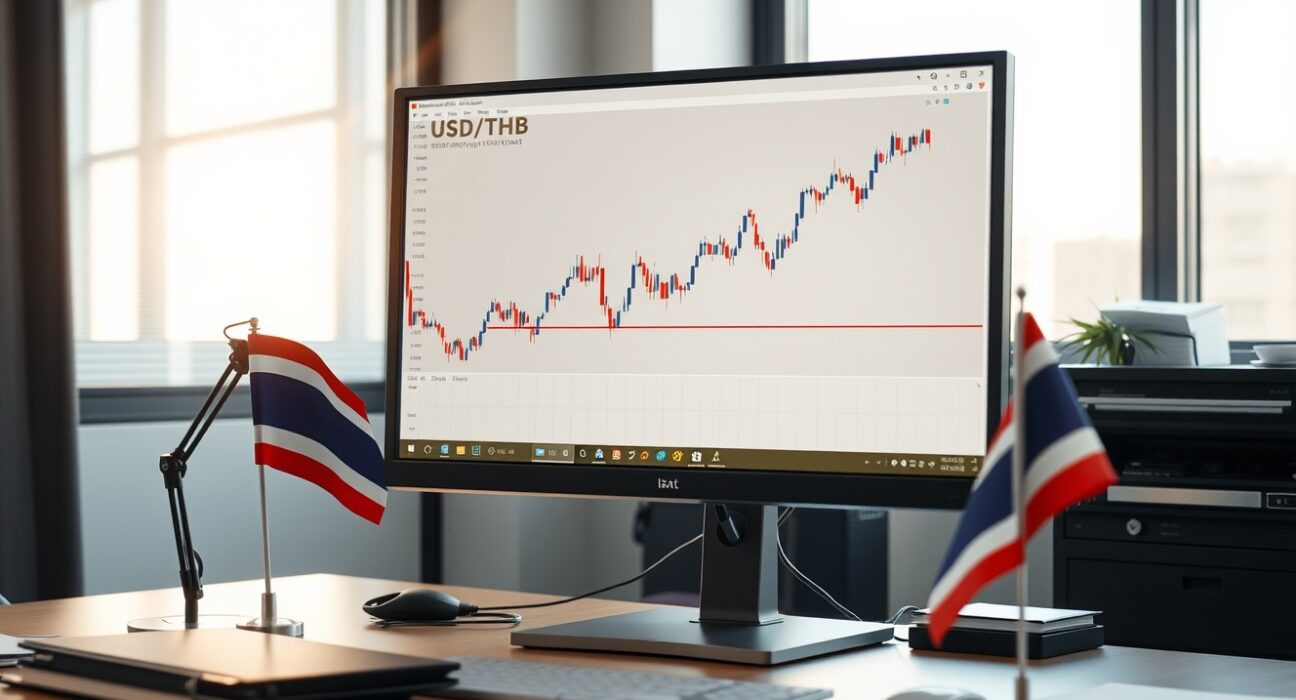
Analysts at Commerzbank have issued a note highlighting the Thai Baht’s recent resilience, attributing the currency’s stability to a combination of favorable domestic economic conditions and manageable external pressures. The assessment provides a measured outlook for the Baht against a backdrop of global monetary policy shifts and regional trade dynamics.
Domestic Factors Bolster the Baht
According to the Commerzbank analysis, Thailand’s improving macroeconomic fundamentals are playing a key role in supporting the Baht. The country has benefited from a steady recovery in tourism and a rebound in private consumption, which have helped offset headwinds from a slowing global economy. Additionally, Thailand’s robust foreign exchange reserves provide a buffer against sudden capital outflows, a factor that has historically underpinned confidence in the Baht.
The analysts noted that the Bank of Thailand’s (BoT) cautious monetary policy stance has also contributed to stability. By maintaining a careful balance between supporting growth and controlling inflation, the central bank has avoided the kind of policy shocks that can destabilize emerging market currencies.
External Environment and Regional Context
While domestic conditions are supportive, Commerzbank also acknowledged the influence of the broader external environment. The relative weakness of the US Dollar in recent months has provided a tailwind for many Asian currencies, including the Baht. However, the analysts cautioned that this dynamic could shift if the Federal Reserve signals a more aggressive tightening path.
Regional trade flows also remain a factor. Thailand’s export sector, while facing some demand softness from key markets like China and the US, has shown signs of diversification. The ongoing recovery in regional supply chains has helped maintain a steady flow of export revenues, which supports the Baht’s current account balance.
What This Means for Investors and Businesses
For businesses operating in Thailand or those with exposure to the Baht, the Commerzbank analysis suggests a period of relative predictability. A stable currency reduces the risk of sudden cost increases for importers and provides a more reliable environment for long-term planning. For forex traders, the analysis indicates that the Baht may continue to trade in a narrow range in the near term, barring any major external shocks.
The analysts emphasized that while the current outlook is stable, risks remain. A sharper-than-expected global economic slowdown or a sudden shift in investor risk appetite could test the Baht’s resilience. However, for now, the currency appears well-supported by its domestic foundations.
Conclusion
Commerzbank’s assessment underscores the Thai Baht’s position as a relatively stable currency within the emerging market space. Supported by solid domestic fundamentals, a cautious central bank, and a moderately favorable external environment, the Baht is expected to maintain its composure in the coming weeks. The analysis serves as a useful reference for market participants seeking a grounded perspective on one of Asia’s more resilient currencies.
FAQs
Q1: What is the main reason Commerzbank sees for the Thai Baht’s stability?
Commerzbank cites Thailand’s strong macroeconomic fundamentals, including a tourism recovery, healthy foreign exchange reserves, and the Bank of Thailand’s cautious policy stance, as key factors supporting the Baht.
Q2: Could the Thai Baht weaken in the near future?
While the outlook is stable, risks include a sharper global economic slowdown, a more aggressive US Federal Reserve, or a sudden shift in investor risk appetite that could test the Baht’s resilience.
Q3: How does the Thai Baht compare to other emerging market currencies?
The Baht is considered relatively stable due to Thailand’s strong reserves and current account position, making it less volatile than many of its emerging market peers, though it remains sensitive to global risk sentiment.
Disclaimer: The information provided is not trading advice, Bitcoinworld.co.in holds no liability for any investments made based on the information provided on this page. We strongly recommend independent research and/or consultation with a qualified professional before making any investment decisions.
