

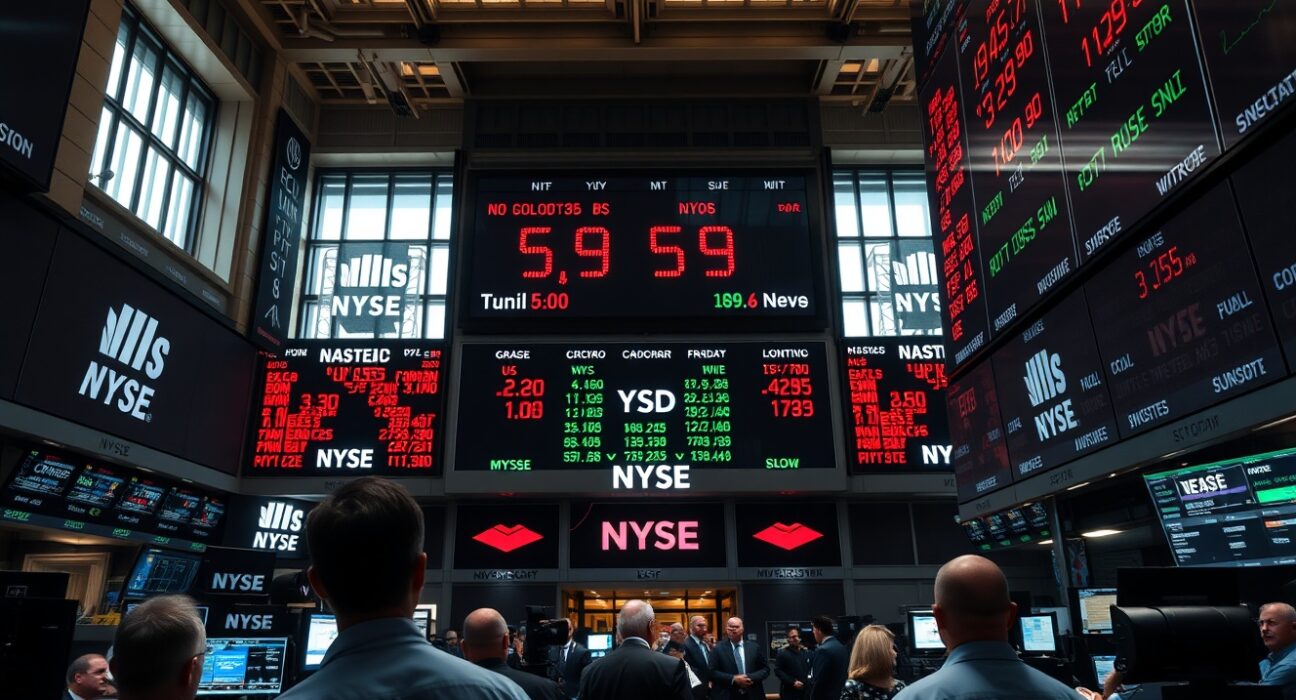
U.S. stocks closed in the red on Tuesday, with the technology-heavy Nasdaq leading the decline as investors weighed mixed corporate earnings and ongoing uncertainty around interest rate policy. The S&P 500 fell 0.45%, the Dow Jones Industrial Average slipped 0.25%, and the Nasdaq Composite dropped 1.16%.
Tech Sector Drags Broader Market
The Nasdaq’s sharper decline reflected broad weakness in major technology and growth stocks, which have faced renewed pressure from elevated valuations and cautious forward guidance from several large-cap firms. The S&P 500’s more moderate loss was cushioned by relative strength in defensive sectors such as utilities and healthcare, suggesting a cautious rotation underway among institutional investors.
Dow Jones Holds Up Better
The Dow’s comparatively mild decline was supported by gains in select industrial and financial names, which benefited from resilient consumer spending data and steady corporate earnings reports. However, the index was unable to hold positive territory as late-day selling pressure intensified across the board.
Market Implications for Investors
Tuesday’s session underscores a market grappling with conflicting signals: resilient economic data on one hand, and persistent inflation concerns that keep the Federal Reserve’s next move uncertain. For retail and institutional investors alike, the divergence between the Dow and the Nasdaq highlights the importance of sector diversification in the current environment. The tech-heavy Nasdaq remains particularly sensitive to interest rate expectations, as higher-for-longer rates compress valuations on growth stocks with distant future earnings.
Conclusion
Tuesday’s broad-based decline reflects a market in a cautious holding pattern. While the Dow and S&P 500 showed relative resilience, the Nasdaq’s drop signals ongoing vulnerability in high-growth sectors. Investors will be closely watching upcoming economic data and Fed commentary for clearer directional cues.
FAQs
Q1: Why did the Nasdaq fall more than the Dow and S&P 500?
The Nasdaq is heavily weighted toward technology and growth stocks, which are more sensitive to interest rate expectations. Elevated valuations and cautious corporate outlooks added selling pressure on these names.
Q2: What does a lower close mean for the overall market trend?
A single day’s decline does not indicate a trend reversal. However, persistent weakness in the tech sector may signal broader risk-off sentiment if it continues over several sessions.
Q3: Should investors be concerned about the current market direction?
Moderate pullbacks are normal in a bull market. The key risk remains uncertainty around inflation and Fed policy. Diversified portfolios with exposure to both growth and defensive sectors are better positioned to weather short-term volatility.
Disclaimer: The information provided is not trading advice, Bitcoinworld.co.in holds no liability for any investments made based on the information provided on this page. We strongly recommend independent research and/or consultation with a qualified professional before making any investment decisions.
