

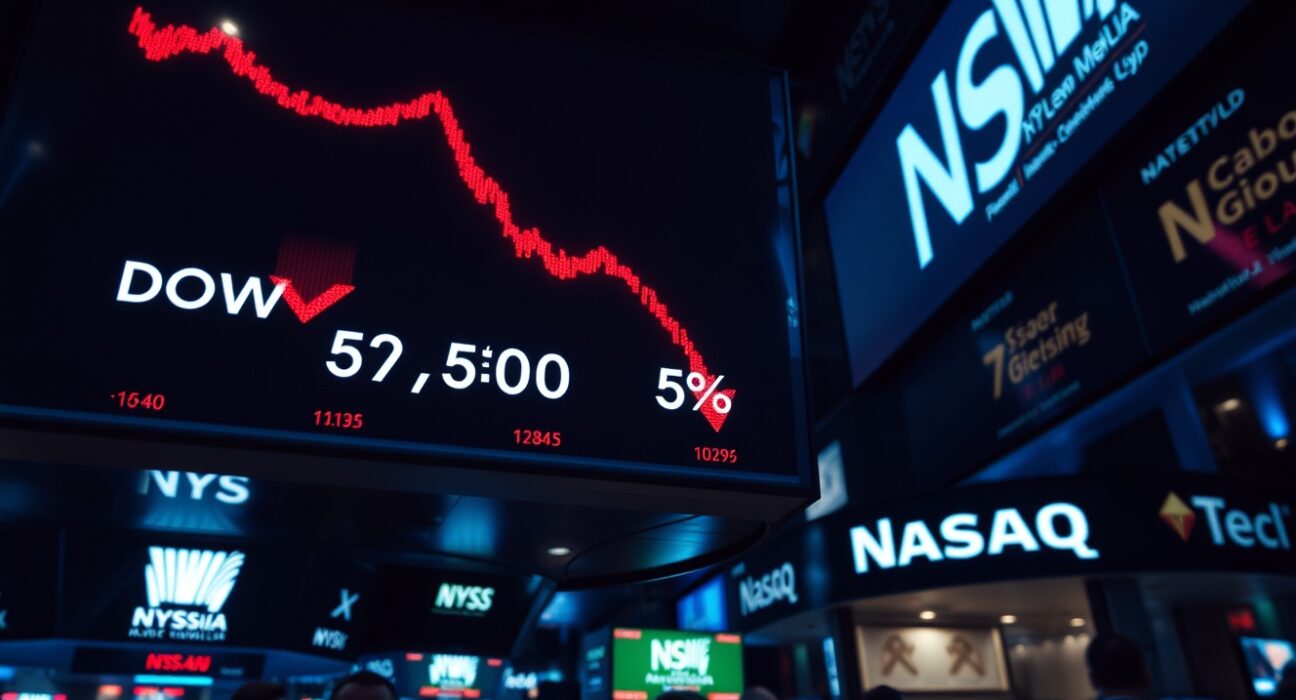
U.S. stock markets opened sharply lower on Wednesday, with all three major indices posting losses exceeding 1% in midday trading. The Dow Jones Industrial Average fell 1.57%, while the S&P 500 dropped 1.07% and the Nasdaq Composite slid 1.09%, reflecting broad-based selling pressure across sectors.
Broad Sell-Off Across Indices
The decline was led by the Dow, which shed over 500 points at its session low. The S&P 500, a broader gauge of market health, fell below key technical levels, while the tech-heavy Nasdaq extended its intraday losses to 1.09% as growth and technology stocks faced renewed headwinds. The simultaneous drop across all three indices suggests a risk-off sentiment among investors, with few safe havens emerging within equities.
What’s Driving the Decline?
Market participants pointed to a combination of factors fueling the sell-off. Rising bond yields, renewed inflation concerns, and cautious remarks from Federal Reserve officials have dampened expectations for near-term interest rate cuts. Additionally, weaker-than-expected corporate earnings reports from several large-cap companies weighed on investor confidence. Geopolitical uncertainties also contributed to the cautious mood, with traders reducing exposure ahead of key economic data releases later this week.
Implications for Investors
For retail and institutional investors alike, Wednesday’s move underscores the ongoing volatility that has characterized markets in recent months. The simultaneous decline in the Dow, S&P 500, and Nasdaq suggests that the selling is not confined to a single sector or style, but rather reflects a broader reassessment of risk. Investors should monitor upcoming inflation reports and Fed commentary for further signals on the direction of monetary policy.
Conclusion
Wednesday’s broad market decline, with the Dow, S&P 500, and Nasdaq all trading more than 1% lower, highlights persistent investor anxiety over interest rates, earnings, and economic uncertainty. As the trading session continues, market participants will be watching for any reversal or stabilization, though the current trend points to a cautious, risk-off environment.
FAQs
Q1: Why did the Dow fall more than the Nasdaq and S&P 500?
The Dow’s larger percentage decline was driven by steep losses in a few of its heavyweight components, particularly in industrial and financial stocks, which are more sensitive to interest rate expectations.
Q2: What does a 1% drop in the S&P 500 mean for the broader market?
A 1% decline in the S&P 500 is considered a significant move and often signals broad selling pressure. It can indicate shifting investor sentiment and may lead to further volatility if key support levels are broken.
Q3: Should I be worried about my portfolio after this decline?
Single-day declines are common in equity markets. While Wednesday’s drop is notable, it does not necessarily signal a prolonged downturn. Investors should assess their portfolio’s diversification and risk tolerance rather than reacting to short-term moves.
Disclaimer: The information provided is not trading advice, Bitcoinworld.co.in holds no liability for any investments made based on the information provided on this page. We strongly recommend independent research and/or consultation with a qualified professional before making any investment decisions.
