

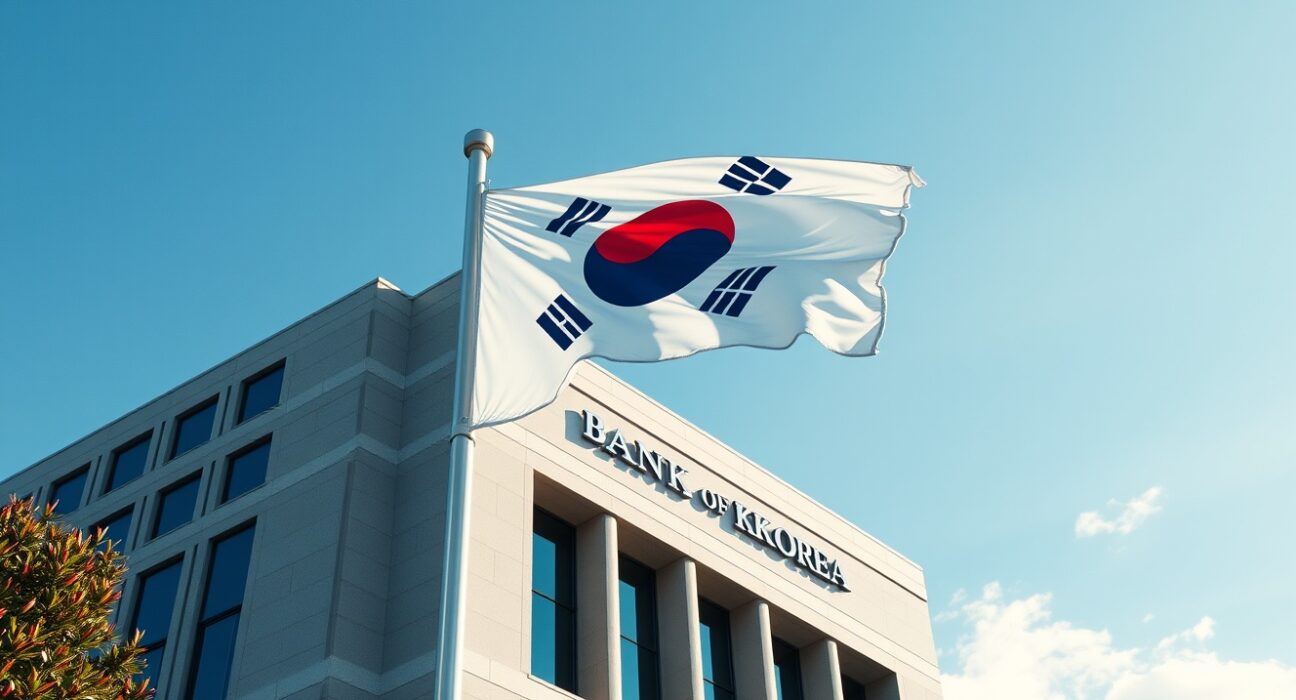
Analysts at DBS Group Research have indicated that the South Korean Won (KRW) may find support for a potential rate hike, driven by robust export performance and persistent inflationary pressures. The assessment, detailed in a recent research note, highlights the delicate balancing act facing the Bank of Korea (BOK) as it navigates between sustaining economic growth and curbing price rises.
Export Strength and Inflation Dynamics
South Korea’s export sector has shown remarkable resilience, with key industries like semiconductors and automobiles driving strong overseas demand. This export momentum is a critical factor underpinning the Won, as it bolsters the country’s current account surplus and provides a buffer against external volatility. However, this strength also contributes to domestic inflationary pressures, as increased corporate earnings and a tight labor market fuel consumer spending.
Inflation in South Korea has remained stubbornly above the BOK’s target range. While global energy and commodity prices have eased, domestic demand-driven inflation, particularly in services and food, has proven stickier than anticipated. DBS analysts suggest that this combination of strong external demand and persistent domestic inflation creates a compelling argument for monetary tightening.
Implications for Monetary Policy
The BOK has maintained a cautious stance, pausing its rate hike cycle in recent months to assess the impact of previous increases and monitor global economic uncertainties. However, the DBS analysis suggests that the window for further tightening may be reopening. A rate hike would aim to preemptively curb inflation expectations and prevent the economy from overheating, while also supporting the Won against a backdrop of a broadly strong US dollar.
The implications for the Won are significant. A rate hike would increase the yield differential in favor of South Korean assets, potentially attracting foreign capital inflows and providing a further boost to the currency. This would be a welcome development for importers and consumers, as a stronger Won helps to lower the cost of imported goods and raw materials.
Market and Consumer Impact
For financial markets, the prospect of a rate hike introduces both opportunity and risk. Bond yields are likely to rise, and the equity market may see sectoral rotations, with export-heavy stocks potentially benefiting from a stronger currency. For consumers and businesses, higher borrowing costs could dampen domestic demand, particularly in the housing and construction sectors. However, the primary benefit would be the stabilization of purchasing power through controlled inflation.
Conclusion
The DBS analysis underscores a pivotal moment for South Korean monetary policy. The confluence of strong export-led growth and stubborn inflation presents a strong case for the BOK to resume its rate hiking cycle. The decision will ultimately depend on incoming economic data and the BOK’s assessment of global financial conditions, but the balance of risks increasingly points toward a tighter policy stance in the coming months. The Won stands to be a direct beneficiary of such a move, reinforcing its position as a stable and supported currency in the Asian market.
FAQs
Q1: Why would a rate hike support the South Korean Won?
A higher interest rate makes South Korean assets more attractive to foreign investors, increasing demand for the Won and pushing its value higher.
Q2: What are the main factors DBS cites for a potential rate hike?
DBS points to strong export performance and persistent, above-target inflation as the primary drivers that could justify further monetary tightening.
Q3: What are the risks of a rate hike for the South Korean economy?
Higher rates could slow down domestic demand, particularly in interest-rate-sensitive sectors like housing and construction, and increase borrowing costs for businesses and consumers.
Disclaimer: The information provided is not trading advice, Bitcoinworld.co.in holds no liability for any investments made based on the information provided on this page. We strongly recommend independent research and/or consultation with a qualified professional before making any investment decisions.
