

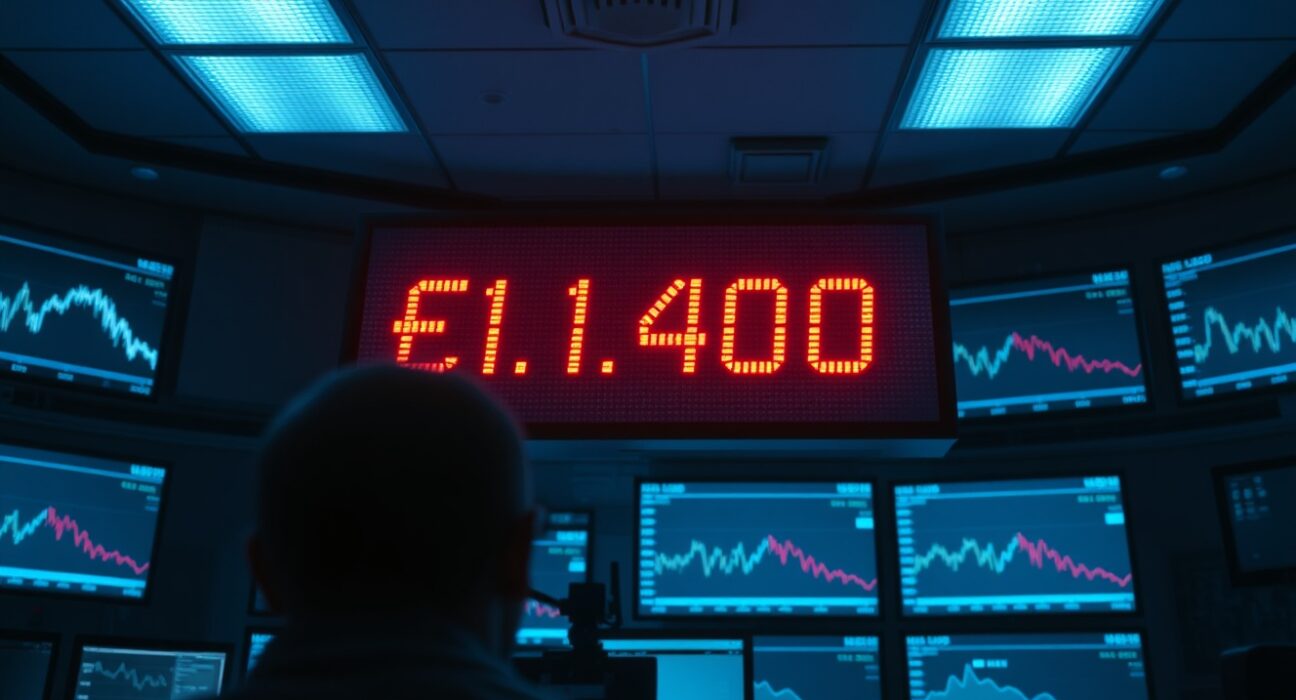
The euro weakened against the US dollar on Monday, with the EUR/USD pair approaching the 1.1400 level, as escalating tensions between the United States and Iran drove investors toward the safe-haven greenback. The move reflects growing risk aversion in global currency markets amid heightened geopolitical uncertainty.
Geopolitical Risk Drives Dollar Demand
The US dollar strengthened broadly as news of increased military posturing and diplomatic friction between Washington and Tehran rattled markets. Historically, the dollar benefits from its status as the world’s primary reserve currency during periods of geopolitical stress, as investors seek liquidity and stability.
The euro, meanwhile, faced additional headwinds from a cautious European Central Bank (ECB) outlook and slowing economic data in the eurozone. The combination of external geopolitical pressure and internal economic concerns has pushed the single currency to its lowest level in several weeks.
Technical and Market Context
The 1.1400 level represents a key psychological support zone for EUR/USD. A sustained break below this threshold could open the door for further downside toward the 1.1350 region, analysts note. However, any de-escalation in US-Iran tensions could trigger a sharp reversal, as short-term positioning appears heavily skewed toward dollar longs.
Trading volumes were elevated during the Asian and early European sessions, with currency options markets pricing in increased volatility. The CBOE Volatility Index (VIX) also ticked higher, confirming a broader risk-off sentiment across financial markets.
Implications for Traders and Investors
For forex traders, the current environment demands heightened caution. The dollar’s safe-haven appeal may persist as long as the geopolitical situation remains unresolved. Importers and exporters with exposure to EUR/USD should consider hedging strategies to mitigate sudden exchange rate swings.
Beyond the immediate currency impact, the escalation could influence ECB policy discussions. A persistently weak euro may raise imported inflation, potentially complicating the central bank’s rate path. Markets will closely watch any official statements from both the US and Iranian governments for signs of de-escalation or further confrontation.
Conclusion
The euro’s slide toward 1.1400 underscores how quickly geopolitical events can reshape currency markets. While the dollar’s safe-haven bid remains intact for now, the situation remains fluid. Traders and analysts alike will be monitoring headlines closely, as any shift in tone could trigger rapid repositioning. The key takeaway for market participants is to remain flexible and risk-aware in an environment where political developments are driving price action more than economic fundamentals.
FAQs
Q1: Why does the US dollar strengthen during geopolitical tensions?
The US dollar is considered a safe-haven currency because of the size and liquidity of US financial markets, the dollar’s role in global trade, and the stability of US institutions. During crises, investors globally tend to buy dollars and dollar-denominated assets, pushing the currency higher.
Q2: What level is key for EUR/USD after breaking below 1.1400?
The next major support level is around 1.1350, followed by 1.1280. On the upside, resistance is now at 1.1450 and then 1.1500. A return above 1.1500 would signal a potential reversal of the current bearish pressure.
Q3: How might the ECB respond to a weaker euro?
A weaker euro can increase import prices, potentially adding to inflationary pressures. This could influence the ECB’s monetary policy stance, possibly delaying rate cuts or maintaining a tighter policy than otherwise expected. However, the ECB’s primary focus remains on domestic inflation and growth data.
Disclaimer: The information provided is not trading advice, Bitcoinworld.co.in holds no liability for any investments made based on the information provided on this page. We strongly recommend independent research and/or consultation with a qualified professional before making any investment decisions.
