

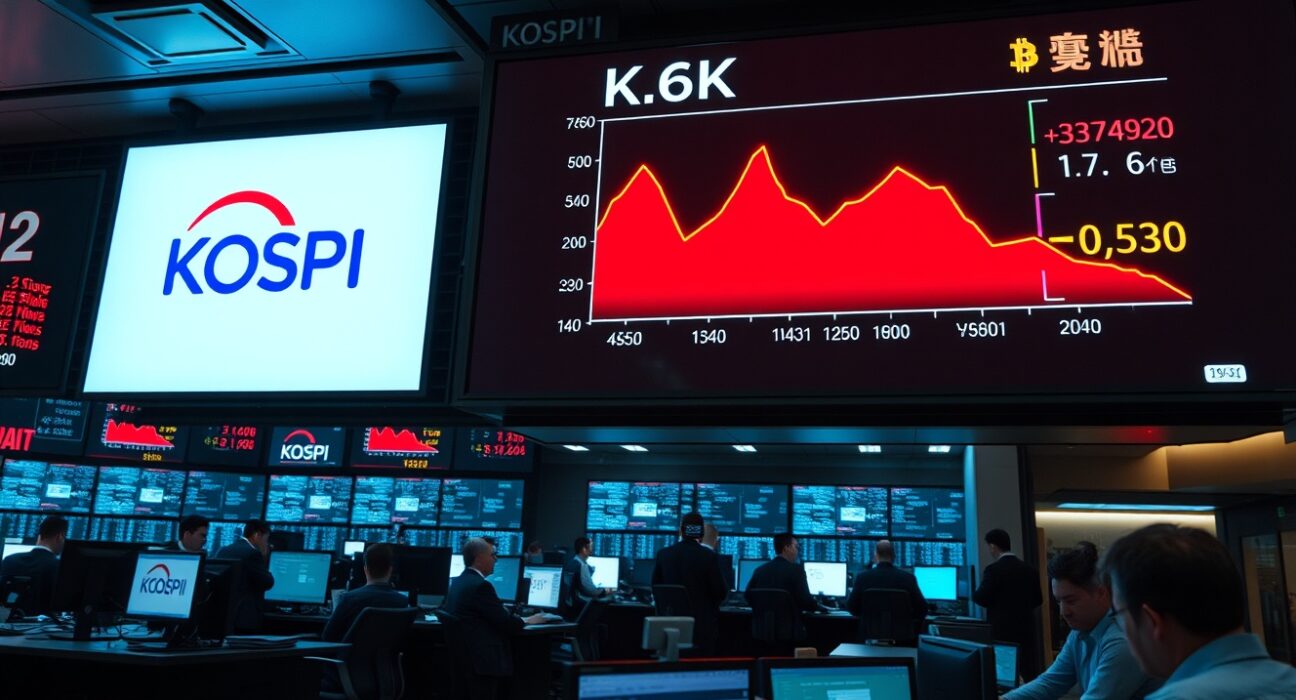
South Korea’s benchmark KOSPI index suffered its worst single-day drop in years, plunging over 8% intraday and triggering a circuit breaker. The sharp decline has raised concerns among market analysts that the shock could spread beyond equities, dragging down U.S. stocks and cryptocurrency markets.
KOSPI’s Collapse and the AI Semiconductor Slowdown
The KOSPI’s crash was driven largely by a steep sell-off in semiconductor and AI-related stocks. SK Hynix, a key player in the global AI chip supply chain, fell 38% in under three weeks. Analysts point to this as evidence that the once-booming AI and semiconductor sector is rapidly losing momentum.
According to crypto analyst Hupzy, the KOSPI’s decline signals a broader shift in investor sentiment. He warned that Bitcoin could break below critical support levels if the sell-off continues, particularly if U.S. markets follow Asia’s downturn.
Risk-Off Sentiment Spills Into Crypto
The correlation between traditional equities and cryptocurrencies has been a recurring theme in 2024 and 2025. However, the current situation may break existing patterns, with panic-selling in South Korean stocks exerting direct downward pressure on digital assets.
Crypto influencer Ash Crypto noted that spreading panic in the stock market is putting downward pressure on all risk assets, including cryptocurrencies. If U.S. markets open lower, the crypto sell-off is expected to intensify, potentially dragging Bitcoin and altcoins to new local lows.
What This Means for Crypto Investors
For crypto investors, the KOSPI crash serves as a reminder that digital assets remain highly sensitive to macroeconomic shocks. While cryptocurrencies have often been touted as a hedge against traditional market volatility, recent trends show they are increasingly behaving like high-beta risk assets.
If the KOSPI’s decline triggers a broader risk-off move across global markets, Bitcoin could test key support levels around $50,000, with altcoins facing even steeper corrections.
Conclusion
The KOSPI’s sudden collapse has introduced a new layer of uncertainty for both equity and crypto markets. With AI and semiconductor stocks leading the decline, the risk of contagion to U.S. markets and digital assets is real. Investors should prepare for increased volatility and monitor whether U.S. markets confirm the bearish signal from Asia.
FAQs
Q1: Why did the KOSPI crash?
The KOSPI plunged over 8% intraday, triggering a circuit breaker, primarily due to a sharp sell-off in semiconductor and AI stocks like SK Hynix, which fell 38% in under three weeks.
Q2: How could the KOSPI crash affect Bitcoin?
Analysts warn that panic-selling in equities could spill over into crypto markets, pushing Bitcoin below key support levels, especially if U.S. markets follow the downturn.
Q3: Is the AI and semiconductor boom ending?
The rapid decline in stocks like SK Hynix suggests that investor enthusiasm for AI and semiconductor sectors is fading, raising concerns about a broader market correction.
Disclaimer: The information provided is not trading advice, Bitcoinworld.co.in holds no liability for any investments made based on the information provided on this page. We strongly recommend independent research and/or consultation with a qualified professional before making any investment decisions.
