

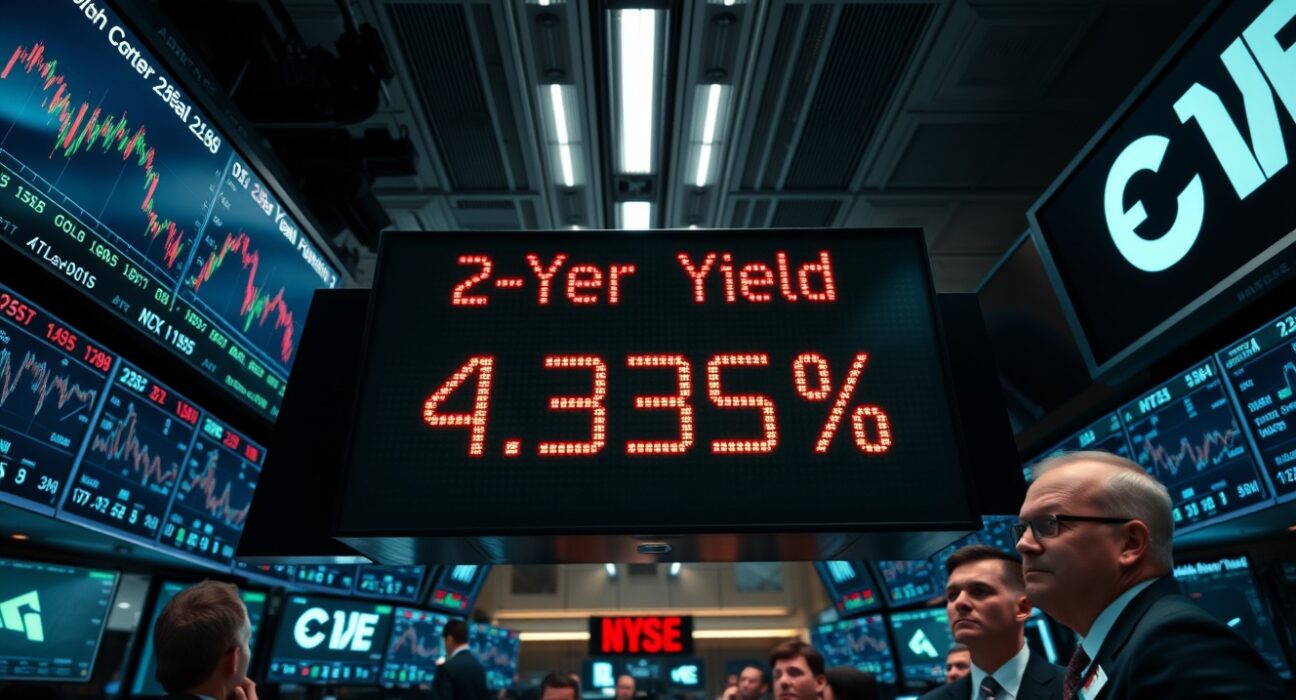
Short-dated U.S. Treasury yields surged to their highest level in a month on Wednesday, driven by a combination of renewed trade policy uncertainty under the Trump administration and a more hawkish-than-expected tone from the Federal Reserve’s latest meeting minutes. The move reflects a sharp repricing of short-term interest rate expectations among bond investors.
Yields Jump on Policy Crosscurrents
The 2-year Treasury note yield, the most sensitive to changes in Federal Reserve policy expectations, rose as much as 8 basis points to reach 4.35%, its highest since late March. The 5-year yield also climbed, touching 4.12%, as traders recalibrated the likelihood of rate cuts later this year. The selloff in short-dated bonds accelerated after the release of the Fed’s April 30-May 1 meeting minutes, which revealed that several officials discussed the possibility of further rate hikes if inflation remained stubbornly high.
At the same time, news that the Trump administration had imposed new trade restrictions on Chinese technology imports added a layer of geopolitical risk. Market participants interpreted the move as a potential catalyst for renewed supply chain disruptions and higher import costs, both of which could keep inflation elevated and complicate the Fed’s policy path.
Fed Minutes Reinforce Caution
The Federal Reserve’s minutes showed that policymakers remained wary of easing monetary policy prematurely. While the committee voted unanimously to hold the federal funds rate steady at 5.25%-5.50%, the discussion revealed a growing divide between those who saw progress on inflation and those who worried that recent data — including stronger-than-expected consumer spending and sticky services inflation — warranted a more cautious stance.
“Participants noted that inflation had eased over the past year but remained above the Committee’s 2% objective,” the minutes stated. Several officials emphasized that they needed to see “more evidence” that inflation was on a sustainable downward path before cutting rates.
What This Means for Borrowers and Investors
The rise in short-dated yields has immediate consequences for consumers and businesses. Short-term borrowing costs, including those for credit cards, auto loans, and adjustable-rate mortgages, are directly tied to these yields. Higher yields also reduce the present value of future cash flows, putting downward pressure on growth-oriented stocks and real estate investment trusts.
For bond investors, the move signals that the market is pricing out the possibility of a rate cut at the Fed’s June meeting and assigning only a 40% probability to a cut by September, down from 65% just two weeks ago. The shift has also steepened the yield curve slightly, with the spread between 2-year and 10-year yields narrowing to -28 basis points, still inverted but less deeply so than earlier this year.
Conclusion
The combination of Trump-era trade policy uncertainty and a Federal Reserve that remains hesitant to signal near-term rate cuts has pushed short-dated Treasury yields to one-month highs. For investors, the key question is whether inflation data in the coming weeks will validate the market’s hawkish repricing or force another reassessment. For now, the bond market is sending a clear message: the path to lower rates is neither smooth nor imminent.
FAQs
Q1: Why do short-dated yields matter more than long-dated yields?
Short-dated yields, particularly the 2-year Treasury yield, are the most sensitive to Federal Reserve interest rate expectations. They directly influence consumer borrowing costs and are a key indicator of market sentiment about the near-term direction of monetary policy.
Q2: How does trade policy affect Treasury yields?
New trade restrictions can raise import costs and disrupt supply chains, fueling inflationary pressures. Higher inflation expectations typically push bond yields higher as investors demand greater compensation for the erosion of purchasing power.
Q3: Will the Fed cut rates this year?
The market currently sees a reduced probability of a rate cut before September. The Fed has signaled it needs sustained evidence that inflation is moving sustainably toward 2% before easing. Future data on consumer prices, employment, and economic growth will be critical in shaping the outcome.
Disclaimer: The information provided is not trading advice, Bitcoinworld.co.in holds no liability for any investments made based on the information provided on this page. We strongly recommend independent research and/or consultation with a qualified professional before making any investment decisions.
