

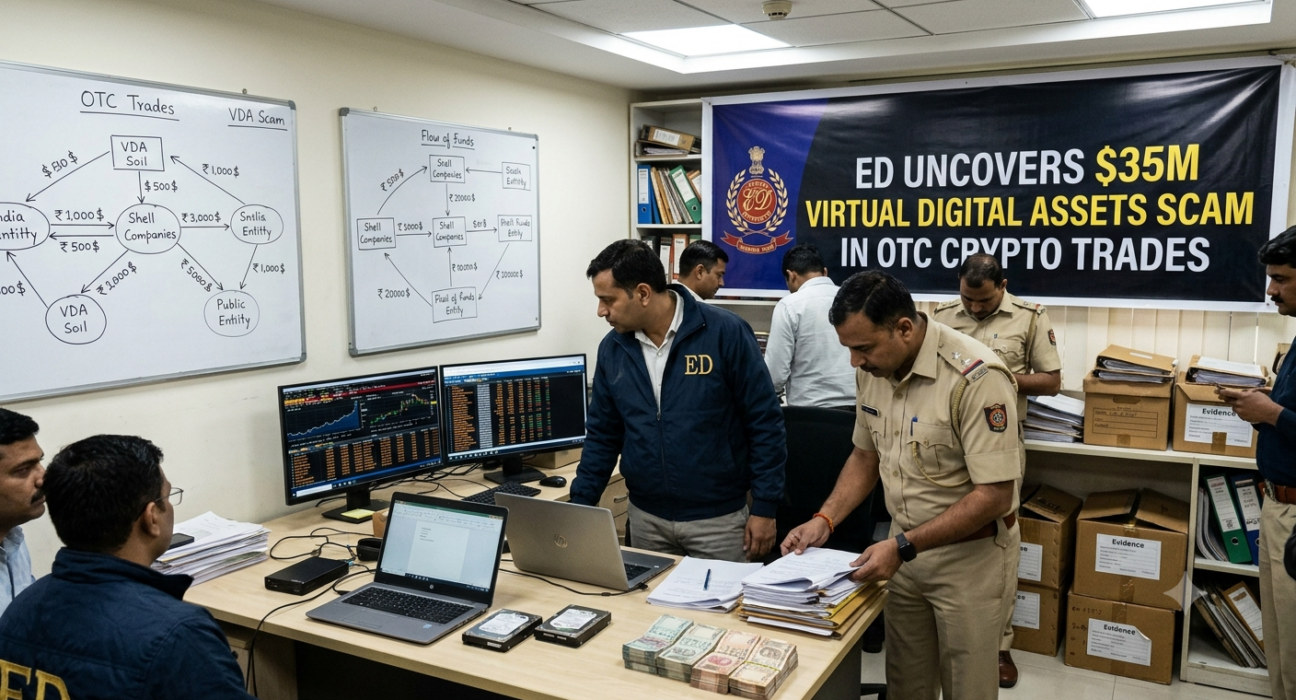
Virtual Digital Assets scam investigations led by the Directorate of Enforcement (ED) have uncovered a $35 million USD fraud involving fraudulent Over the Counter (OTC) crypto trades. The ED, Bangalore Zonal Office initiated the investigation under the Prevention of Money Laundering Act (PMLA), 2002, following a complaint filed by a Dutch entity with the Cyber Crime Police Station, South Andaman. This article details the modus operandi of the accused, key evidence seized during search operations, and the ongoing efforts to uncover the full scope of the financial crime.
What Are the Key Details of the ED Virtual Digital Assets Scam Investigation?
As of July 21, 2026, the Directorate of Enforcement (ED) has officially expanded its investigation into an international cryptocurrency fraud scheme targeting institutional and foreign investors.
- Primary Investigation Authority: Directorate of Enforcement (ED), Bangalore Zonal Office.
- Legal Framework: Prevention of Money Laundering Act (PMLA), 2002.
- Origin of Case: FIR registered by the Cyber Crime Police Station, South Andaman, based on a criminal complaint filed by a Dutch entity.
- Key Accused Named: Mohammed Waseem, Saurabh Diwan, Vaibhav Gupta, and the main mastermind Ravindra K (based in Bangalore).
- Targeted Cryptocurrency Tokens: MultiverseX, Kava, BEAM, GRASS, SUI, VANA, AGLD, and other Virtual Digital Assets (VDAs).
- Estimated Total Value of Scam: Approximately $35 Million USD, significantly exceeding the $10 Million USD initially reported in the original FIR.
- Seized Assets: Digital devices, email records, crypto wallets, and 8,700 USDT in Virtual Digital Assets.
How Did the Accused Execute the OTC Crypto Investment Fraud?
The investigation revealed a sophisticated multi-stage modus operandi designed to build trust with high-net-worth foreign entities before siphoning their capital.
- Targeting & Communication Channels: Accused individuals acted as self-styled Key Opinion Leaders (KOLs) across Telegram, WhatsApp, Instagram, and custom websites to propagate private token placements.
- Building Initial Trust: The accused initialised smaller Over-The-Counter (OTC) transactions smoothly to artificially build credibility with the Dutch entity.
- Promising Discounted Allocations: The perpetrators falsely claimed direct tie-ups with blockchain developers, offering guaranteed, steeply discounted allocations of prominent tokens like SUI, BEAM, and MultiverseX.
- Withholding Token Distributions: Once multi-million dollar investments were transferred into controlled crypto wallets, the accused abruptly stopped delivering tokens as market prices surged.
- Routing Proceeds of Crime: Multi-million dollar funds were routed directly to Ravindra K in Bangalore, who served as the primary mastermind overseeing the OTC transaction pipelines.
- Diversion of Funds: Proceeds of crime were siphoned for personal expenses, investments in movable/immovable properties, and unapproved business activities.
What Evidence Was Recovered During the ED Search Operations?
On July 18, 2026, and July 19, 2026, the ED conducted extensive searches across multiple locations to disrupt the criminal network and secure critical evidence.
- Incriminating Digital Evidence: Digital Devices, Emails, and hardware/software wallets used to obscure and divert proceeds of crime were confiscated.
- Direct Asset Seizures: Virtual Digital Assets totaling 8,700 USDT were directly frozen and seized during search actions.
- Foreign Investor Impact: Searches revealed numerous foreign entities and investors were cheated using similar fraudulent tactics but have yet to file formal criminal complaints.
Frequently Asked Questions
What is the Virtual Digital Assets scam involving OTC trades in India?
The Virtual Digital Assets scam involves self-styled Key Opinion Leaders (KOLs) who fraudulently promise discounted token allocations for popular cryptocurrencies via private Over the Counter (OTC) trades. Investigators from the Directorate of Enforcement (ED) discovered that perpetrators used private communication channels like Telegram to lure foreign investors, siphon multi-million dollar investments, and divert the proceeds into private properties and wallets.
How did the ED uncover the $35 Million USD crypto fraud?
The Directorate of Enforcement (ED) launched a PMLA investigation after an initial FIR was registered by the Cyber Crime Police Station, South Andaman on behalf of a Dutch entity. Subsequent search operations conducted on July 18–19, 2026 revealed that the true scope of the fraud reached $35 Million USD, surpassing the initial $10 Million USD estimate reported in the original complaint.
Who are the main individuals accused in the Bangalore ED crypto case?
The primary individuals named in the ED investigation include Mohammed Waseem, Saurabh Diwan, and Vaibhav Gupta, who solicited investments under the pretense of guaranteed crypto allocations. The ED identified Ravindra K, operating out of Bangalore, as the primary mastermind managing the wallets and laundering the proceeds derived from the fraudulent OTC transactions.
Strategic Significance & Next Steps
This Virtual Digital Assets scam case highlights the rising regulatory scrutiny surrounding Over the Counter (OTC) cryptocurrency trades and private token presales globally. As sovereign enforcement agencies like India’s Directorate of Enforcement strengthen cross-border intelligence sharing and leverage advanced blockchain forensics, unlisted token brokers face unprecedented compliance demands. Investors and institutional funds must prioritize verified custody solutions and direct developer interactions to safeguard assets against increasingly complex OTC fraud networks.
Disclaimer: The information provided is not trading advice, Bitcoinworld.co.in holds no liability for any investments made based on the information provided on this page. We strongly recommend independent research and/or consultation with a qualified professional before making any investment decisions.
