

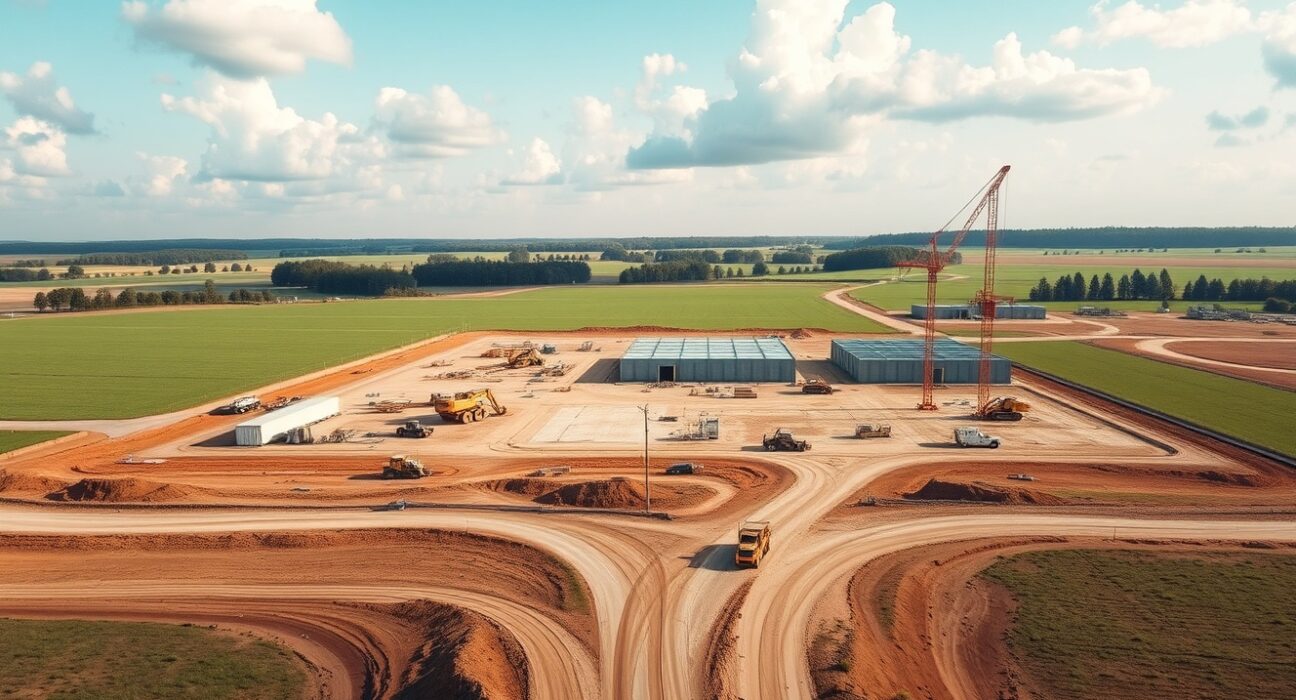
OpenAI announced Wednesday that it plans to spend $750 billion on infrastructure through 2030, a figure roughly 25% higher than its previous estimate earlier this year, according to the Wall Street Journal. The renewed spending blitz comes as the company’s flagship Stargate data center project appears to have stalled. The first major commitment under this expanded plan is Project Camellia, a $20 billion data center campus in Effingham County, Georgia, northwest of Savannah.
Project Camellia: Scale and power demands
The Georgia campus will span 1,400 acres and require at least 3.2 gigawatts of power from Georgia Power, the region’s utility. The generating capacity is expected to become available between 2028 and 2032. OpenAI has stated it will “pay the full cost of the infrastructure and electric-service costs” for the new facility, a move that addresses concerns about ratepayer subsidies for large industrial users.
The Georgia Public Service Commission (PSC) adopted a rule last year preventing utilities from passing on costs associated with new users drawing more than 100 megawatts, effectively shielding residential customers from the financial burden of powering large-scale AI infrastructure. Georgia Power has also said OpenAI will reduce its power draw by up to 1 gigawatt during periods of high demand on the grid, a demand-response measure designed to maintain grid stability.
Tax incentives and unanswered questions
Effingham County has granted OpenAI a 50% property tax abatement for 15 years, according to the Effingham Herald. Neither OpenAI nor Georgia Power has disclosed how Project Camellia will be powered. Bitcoin World reached out to both companies for specifics but did not immediately receive a reply.
Regulatory filings offer some clues. In December, Georgia Power received PSC approval to produce an additional 9,885 megawatts of capacity, and the utility expects to have all of it contracted by the end of 2026. The OpenAI deal accounts for roughly one-third of that new capacity. Based on documents filed with the PSC, most of the new generation will come from natural gas. The utility plans to build or buy from third parties about 5.8 gigawatts of natural gas generating capacity, about a quarter of which will come from more polluting simple-cycle turbines. Altogether, the new fossil fuel capacity will more than double Georgia Power’s natural gas fleet. The remainder will be supplied by grid-scale batteries and solar.
Construction timeline and leadership
While electricity from Georgia Power is expected to start flowing in 2028, OpenAI has not provided a timeline for when the first GPU will be operational. That could happen sooner than 2028, given that the company recently hired Brett Mayo to lead data center construction. Mayo previously oversaw the Colossus data center in Memphis for xAI, which was built in record time. However, Colossus has faced controversy: a lawsuit filed by the NAACP and the Southern Environmental Law Center alleges that the facility has taken a toll on local air quality, as it has been running dozens of unpermitted natural gas turbines, claiming exemption from federal clean air regulations.
Why this matters
OpenAI’s $750 billion spending plan underscores the staggering capital requirements of the AI industry, which is racing to build the physical infrastructure needed to train and deploy increasingly powerful models. The scale of investment also highlights the growing tension between technological progress and environmental impact, as data centers drive a surge in fossil fuel demand in regions like Georgia. For readers, this story is relevant because it affects energy costs, grid reliability, local tax bases, and the pace of climate emissions — all of which have direct consequences for communities and ratepayers.
Conclusion
OpenAI’s expanded infrastructure spending plan represents one of the largest corporate commitments to data center construction in history, but it also raises significant questions about power sourcing, environmental impact, and the long-term sustainability of AI growth. As Project Camellia moves forward, regulatory filings and public disclosures will provide further clarity on how the company balances its ambitious goals with the realities of energy generation and community impact.
FAQs
Q1: What is Project Camellia?
Project Camellia is a $20 billion data center campus planned by OpenAI in Effingham County, Georgia, spanning 1,400 acres and requiring at least 3.2 gigawatts of power. It is the first major project under OpenAI’s expanded $750 billion infrastructure spending plan through 2030.
Q2: How will the data center be powered?
OpenAI and Georgia Power have not disclosed the specific power sources. However, regulatory filings indicate that most of Georgia Power’s new capacity will come from natural gas, supplemented by grid-scale batteries and solar. The utility expects to have all new capacity contracted by the end of 2026.
Q3: What are the environmental concerns?
Environmental groups and local advocates have raised concerns about air quality and increased fossil fuel use. The Colossus data center in Memphis, built by the same executive now leading OpenAI’s construction, has faced a lawsuit over unpermitted natural gas turbines. The Georgia project could more than double Georgia Power’s natural gas fleet.
Disclaimer: The information provided is not trading advice, Bitcoinworld.co.in holds no liability for any investments made based on the information provided on this page. We strongly recommend independent research and/or consultation with a qualified professional before making any investment decisions.
