

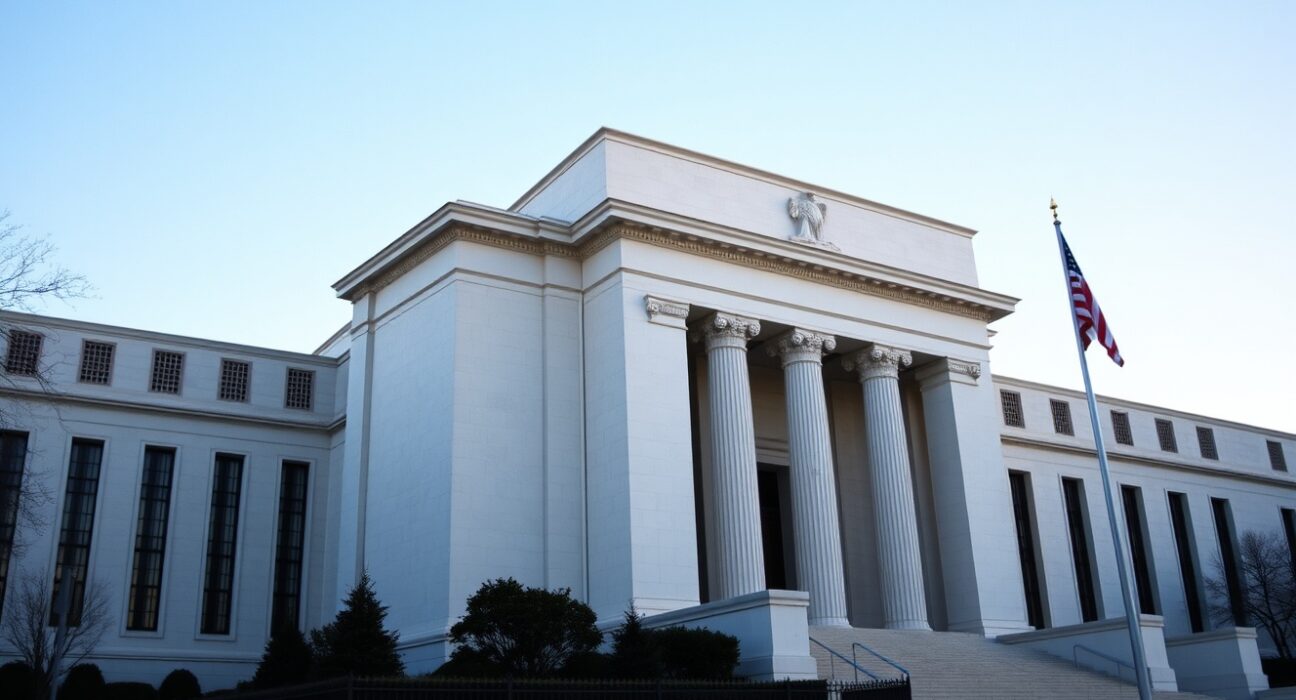
The Federal Reserve has decided to hold interest rates steady while closely monitoring persistent inflation risks, according to a recent analysis from Commerzbank. This decision, widely anticipated by markets, signals a cautious approach as the central bank balances price stability with economic growth.
Commerzbank’s Analysis of the Fed’s Decision
Commerzbank economists note that the Fed’s decision to maintain the current rate level reflects a wait-and-see stance. The analysis highlights that while inflation has moderated from its peaks, it remains above the Fed’s 2% target. The central bank is likely to require more evidence of a sustained downward trend before considering rate cuts. The bank’s statement emphasized that the labor market remains strong, which could keep upward pressure on wages and prices.
Market Implications and Outlook
The decision to hold rates has immediate implications for investors and borrowers. Mortgage rates, credit card interest, and business loan costs are expected to remain elevated in the near term. Financial markets have reacted with cautious optimism, as the Fed’s steady hand provides some predictability. However, Commerzbank warns that any resurgence in inflation data could force the Fed to pivot back to a more hawkish stance. The path forward depends heavily on upcoming economic reports, including consumer price index (CPI) data and employment figures.
Why This Matters for the Broader Economy
For consumers, the rate hold means borrowing costs will not decrease in the immediate future, impacting everything from home buying to auto loans. For businesses, it signals a continued environment of higher financing costs, which can affect investment decisions and expansion plans. The Fed’s primary challenge remains navigating the so-called ‘last mile’ of inflation reduction, where stubborn price pressures in services and housing persist.
Conclusion
The Federal Reserve’s decision to hold rates steady, as analyzed by Commerzbank, underscores a deliberate strategy to manage inflation without disrupting economic growth. The coming months will be critical, with data-dependent decisions likely to shape the trajectory of monetary policy through the remainder of the year.
FAQs
Q1: What is the Federal Reserve’s current interest rate?
The Federal Reserve has held its benchmark interest rate in the current range, as confirmed in its latest policy statement. The specific rate is determined by the Federal Open Market Committee (FOMC) and is widely reported following each meeting.
Q2: Why is Commerzbank’s analysis significant?
Commerzbank is a major European financial institution with a dedicated research team that provides in-depth analysis of global central bank policies. Their insights are valued by investors and market participants for their independent perspective and detailed economic modeling.
Q3: What could cause the Fed to change its stance?
The Fed’s next moves will be driven by incoming data on inflation, employment, and economic growth. A significant decline in inflation or a sharp slowdown in the labor market could prompt rate cuts, while stubbornly high inflation could lead to further rate hikes.
Disclaimer: The information provided is not trading advice, Bitcoinworld.co.in holds no liability for any investments made based on the information provided on this page. We strongly recommend independent research and/or consultation with a qualified professional before making any investment decisions.
