

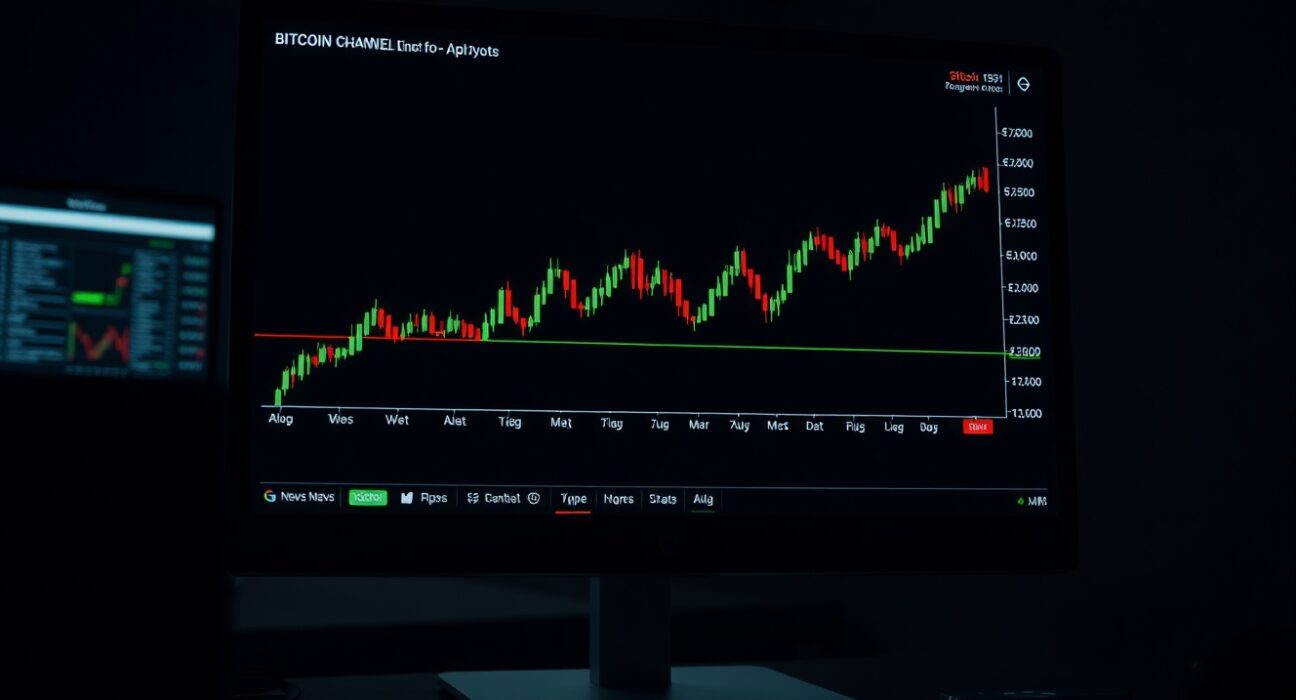
Bitcoin’s price action continues to trade within a well-defined long-term trend channel, failing to break out decisively despite recent market volatility. As of mid-2025, the leading cryptocurrency remains constrained by a multi-year trendline that has defined its price trajectory since late 2022, leaving traders and analysts questioning when—or if—a breakout will materialize.
Understanding the Long-Term Trend
The current trend channel for Bitcoin has been forming over approximately two and a half years, with the price oscillating between a lower support zone and an upper resistance boundary. This pattern is visible on weekly and monthly charts, where each attempt to push above the upper trendline has been met with selling pressure, pushing the price back into the channel. The failure to break away from this established trend is significant because it suggests that the market lacks the momentum or conviction needed to establish a new price regime.
Why the Breakout Hasn’t Happened
Several factors contribute to Bitcoin’s inability to escape its trend channel. Macroeconomic uncertainty, including fluctuating interest rates and regulatory developments in key markets, has kept institutional investors cautious. Additionally, on-chain data shows that long-term holders have been distributing coins during recent rallies, creating overhead supply that caps upward moves. Trading volumes have also been inconsistent, with spikes during selloffs but not enough sustained buying pressure to drive a clean breakout.
Implications for Traders and Investors
For short-term traders, the trend channel provides clear support and resistance levels that can be traded with defined risk. However, for long-term investors, the failure to break out raises questions about Bitcoin’s near-term upside potential. A sustained move above the upper trendline would likely require a major catalyst, such as a favorable regulatory ruling, a significant shift in monetary policy, or a surge in institutional adoption. Until then, the price is likely to remain range-bound, with the risk of a breakdown below support if negative sentiment intensifies.
What Comes Next
The longer Bitcoin trades within this channel, the more significant the eventual breakout or breakdown becomes. Historically, prolonged consolidation phases in Bitcoin have preceded major directional moves. Analysts are watching for a close above the upper trendline on strong volume as a bullish signal, while a drop below the lower support could indicate a bearish reversal. Until a clear move occurs, the prevailing trend remains sideways within the channel.
Conclusion
Bitcoin’s failure to break away from its long-term trend channel underscores the market’s current indecision. While the cryptocurrency has shown resilience by holding above key support levels, it has not yet demonstrated the strength needed to enter a new upward phase. For now, the trend channel remains the dominant framework for understanding Bitcoin’s price action, and market participants should watch for a decisive move in either direction before adjusting their positions.
FAQs
Q1: What is a long-term trend channel in Bitcoin?
A long-term trend channel is a price pattern formed by connecting a series of higher lows (support) and higher highs (resistance) over an extended period. Bitcoin’s current channel has been in place since late 2022, with the price oscillating between these two boundaries.
Q2: Why is Bitcoin failing to break out of its trend channel?
The failure to break out is due to a combination of factors, including macroeconomic uncertainty, inconsistent trading volumes, and selling pressure from long-term holders. Without a major catalyst, the price lacks the momentum to push above resistance.
Q3: What should traders do while Bitcoin is in a trend channel?
Traders can use the channel’s support and resistance levels for range-bound trading strategies, buying near support and selling near resistance. However, they should also set stop-losses to manage the risk of a breakout or breakdown, which could lead to significant price moves.
Disclaimer: The information provided is not trading advice, Bitcoinworld.co.in holds no liability for any investments made based on the information provided on this page. We strongly recommend independent research and/or consultation with a qualified professional before making any investment decisions.
